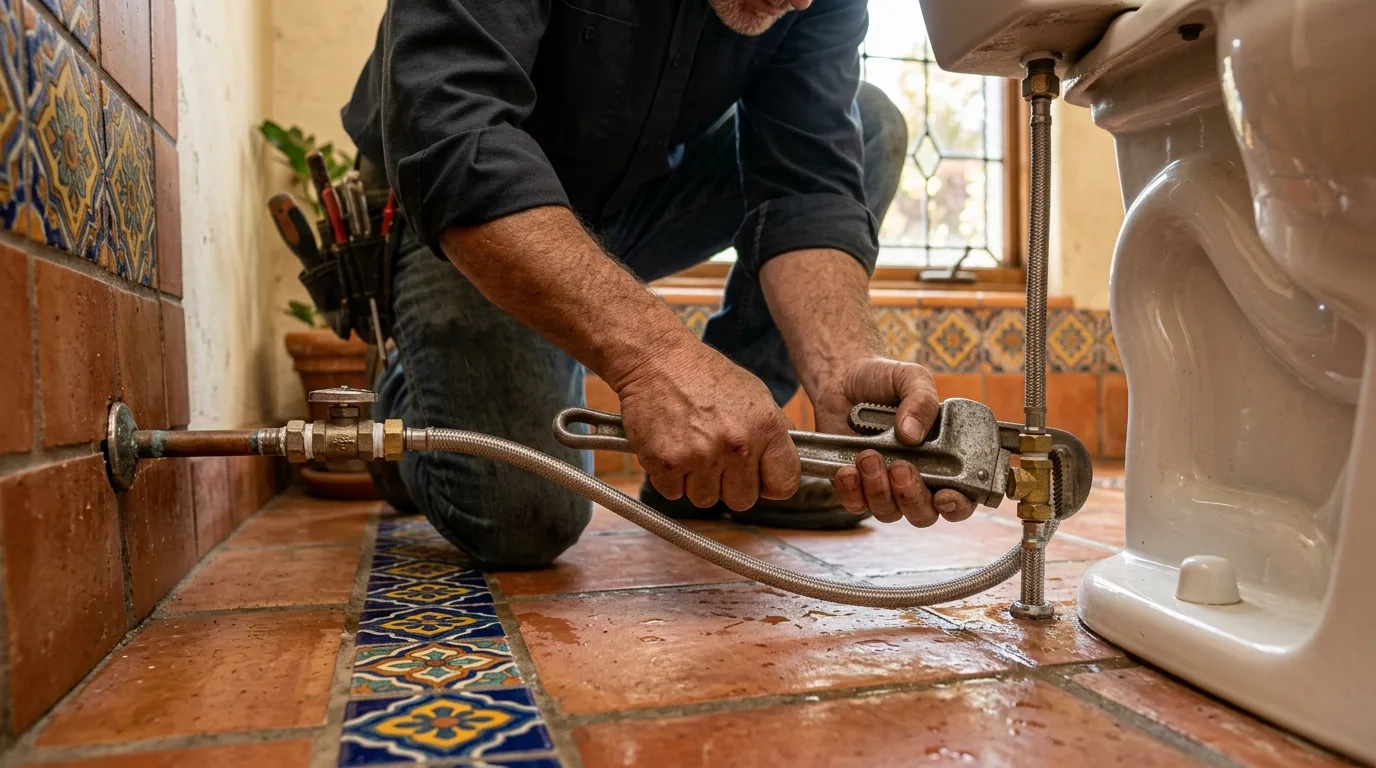
Toilet repair and installation in Orange, CA. Including the 1920s bathrooms
Tanks that never stop, bowls that rock, seals that have been leaking into the subfloor for a year, and rough-in distances modern fixtures do not match. Measured first, then done once.
Water or staining at the base? Stop flushing it and call; that leak is going under the floor.
What to expect
Answered 24/7
Every hour, every day, including holidays.
Same-day & emergency
Urgent calls get moved to the front of the queue.
Upfront pricing
A number you approve before work begins.
No hidden fees
The price you agreed to is the price you pay.
Workmanship terms upfront
Ask the plumber what their own workmanship terms are before work starts.
Symptoms
What each complaint usually turns out to be
Most toilet problems are cheap parts and half an hour. A few are the floor underneath, and those are the ones worth catching early.
Runs continuously, or refills by itself. Almost always the flapper or the fill valve. It is silent, it is wasteful, and it is the most common invisible water user in any house. The food-colouring test settles it: a few drops in the tank, wait twenty minutes without flushing, and look for colour in the bowl.
Weak or incomplete flush. Sometimes a flapper closing too early or a chain adjustment. Sometimes mineral scale blocking the rim jets and the siphon jet, which is a hard-water problem and clears with descaling. On an older low-flow model, sometimes it is simply a design that never worked well.
Rocks when you sit on it. Loose closet bolts if you are lucky, a failing flange or a soft subfloor if you are not. A rocking toilet breaks the wax seal, and a broken seal leaks into the floor rather than onto it.
Water or staining at the base, or a spongy floor. Stop using it and call. That is a failed seal or a cracked horn, and every flush is going under the flooring.
Sewage smell in the bathroom. A dry or failed seal, or a venting problem. Not just unpleasant; it means the trap is not doing its job.
Blocks repeatedly. If one toilet blocks often, suspect scale, the model, or something lodged in the trapway. If it blocks while other fixtures drain slowly, the problem is the main line, not the toilet.
Cracked tank or bowl. Not repairable. A hairline crack becomes a flood without warning.
Water at the base, or a floor that gives underfoot? Stop flushing it and call today.
Older houses
Why a swap in a 1920s bathroom is rarely a swap
Replacing a toilet in a house built in the last thirty years takes an hour. In the older parts of the city it regularly takes a morning, and for reasons that are worth knowing before you buy a fixture.
Rough-in distance
The distance from the wall to the closet bolts is standard now. It was not always. Older bathrooms around Old Towne and the Cypress Street Barrio frequently have a rough-in that modern bowls do not match, which means either a specific model, an offset flange, or moving the drain.
The flange and the floor
Under a hundred-year-old toilet you find cast-iron flanges rusted thin, lead bends, flanges sitting below a floor that has had two layers of tile added over the decades, and subfloor softened by years of a slow seal leak. None of that is visible until the old fixture is lifted, which is why an honest plumber says "I will know when it is up" instead of quoting the floor blind.
Supply and shutoff
The angle stop is often original, seized with scale, and will not close, and sometimes will not reopen. Replacing it is a small job that turns into a bigger one when the supply pipe behind it is corroded galvanized.
Tile you cannot replace
Original hex tile, terrazzo, and period tile floors cannot be bought again. Work in those bathrooms is planned around what can be lifted and what cannot. It is slower on purpose.
Old Towne exteriors
Interior fixture work is interior work. But if a job needs a new vent penetration or anything visible from outside, Old Towne is a National Register historic district and the City of Orange maintains Historic Preservation Design Standards covering exterior changes. Your plumber can explain what the city usually expects; we do not obtain historic approvals for you.
Buy the fixture after the measurement
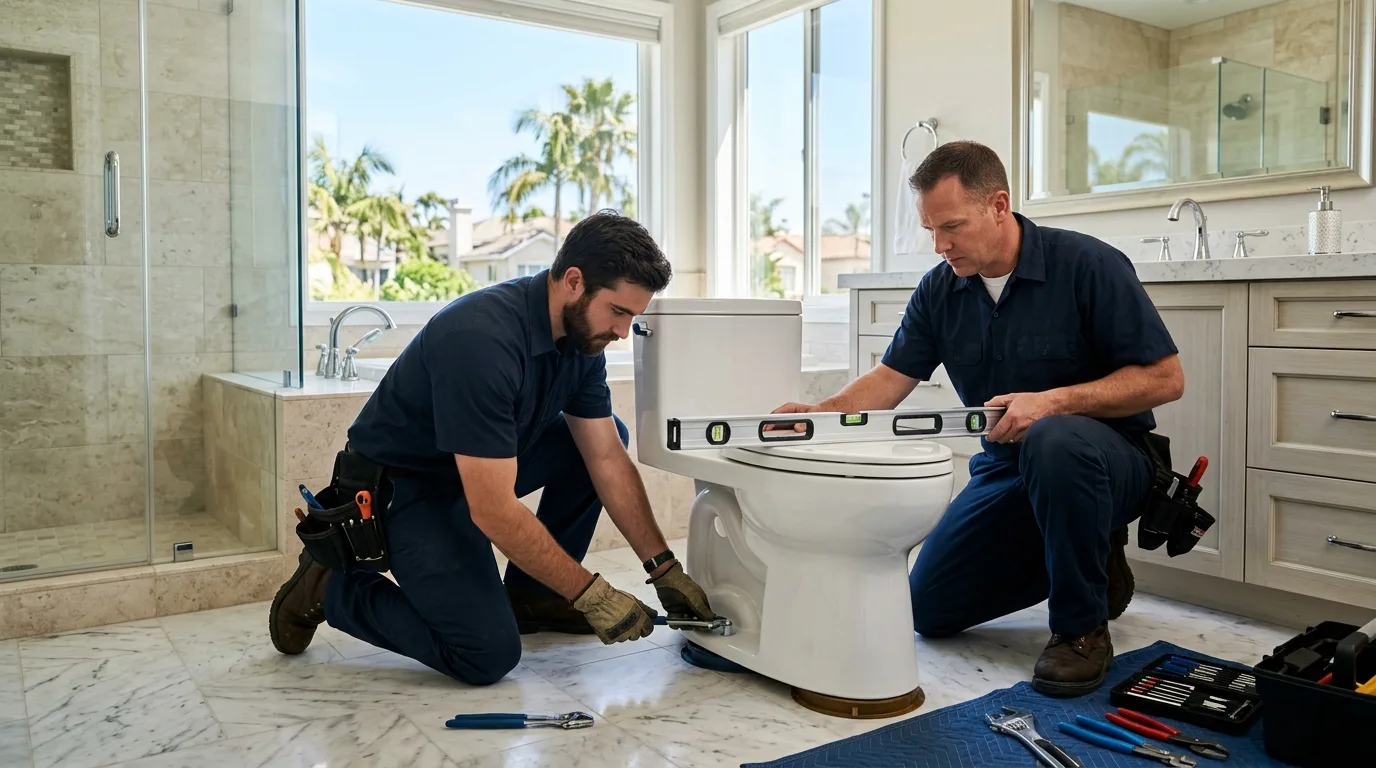
The most common wasted afternoon in older-house plumbing: a homeowner buys a toilet, the plumber arrives, and the rough-in does not match. Have the rough-in measured first, then buy. Ten minutes of measuring saves a return trip and a restocking fee.
Small job, done properly
A rocking toilet is a floor repair waiting to happen.
Get the seal, the flange and the shutoff dealt with together while it is still cheap.
Installation
What a proper installation includes
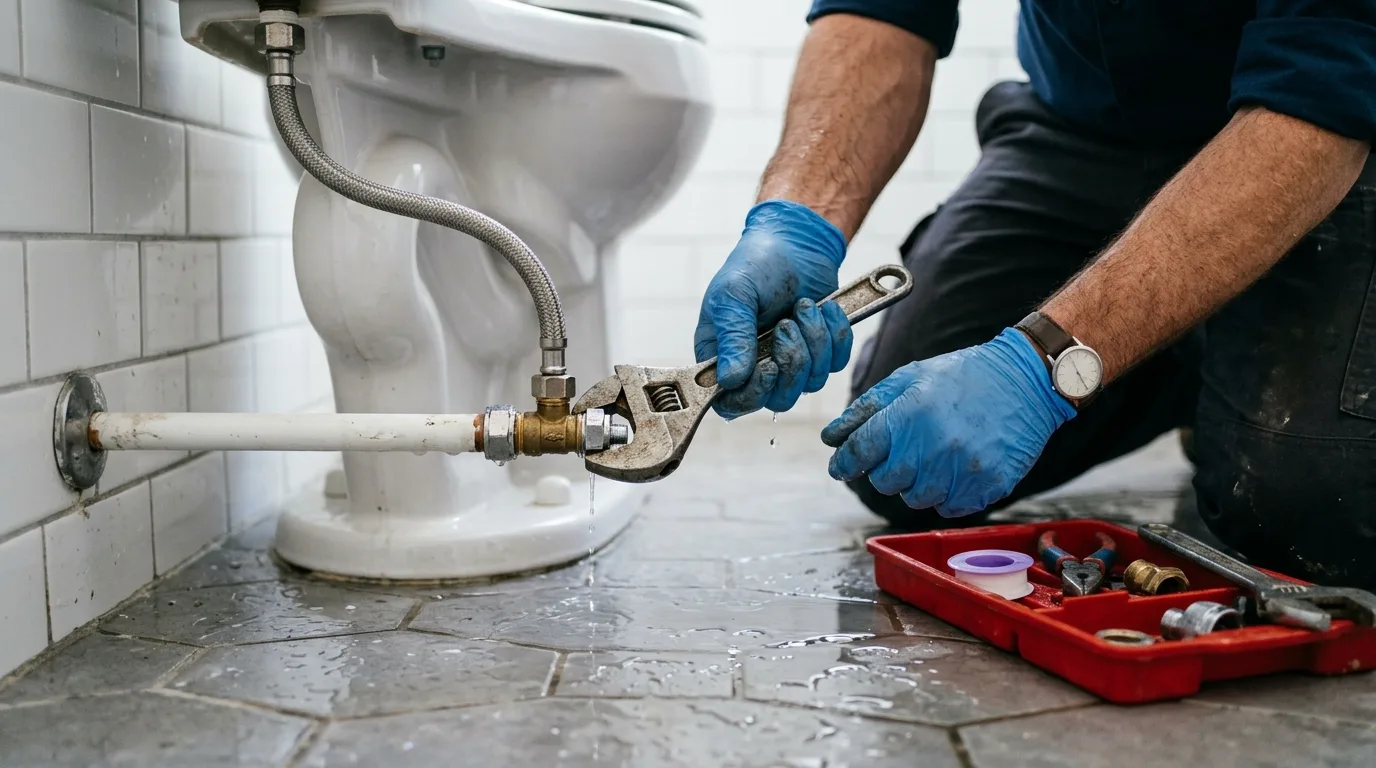
Measure first. Rough-in distance, available space, and whether the existing flange is sound and at the right height relative to the finished floor.
Deal with the flange. Repair, replace, or shim it to the floor level. A flange sitting too low under added tile layers is the single most common cause of a toilet that leaks again a year later.
New seal, new bolts, new supply. Wax or waxless seal as appropriate, stainless closet bolts, a new braided supply line, and a new quarter-turn angle stop so the next person can actually shut the water off.
Set level and secure, without over-tightening. Porcelain cracks. Shims where the floor is uneven, which in an old house it will be.
Caulk the visible perimeter, leave the back open. So that a future leak shows itself instead of hiding under the fixture.
Test properly. Several flushes, check for movement, check the base, check the shutoff holds. Then haul the old fixture away.
Also worth mentioning if it applies: comfort-height bowls, bidet seats that need a nearby outlet, and wall-hung or macerating units for a basement or ADU conversion. Each changes what the install involves.
Money
What changes the price
- Repair or full replacement
- Condition of the flange
- Rough-in mismatch
- Subfloor damage found underneath
- Angle stop and supply condition
- Fixture supplied by you or the pro
- Upstairs or ground floor
- Original tile to work around
- After-hours or scheduled
The honest caveat on any old-house toilet job: what is under the fixture is unknown until it is lifted. A good quote says so, gives you a firm price for the expected work and a clear basis for anything found underneath, rather than a single number that quietly assumes the best case.
Have the rough-in measured before you buy anything. It is the difference between one visit and two.
Straight answers
Toilet questions, answered without a callout charge
My toilet runs constantly. Is that expensive?
Usually not; it is nearly always the flapper or the fill valve, both inexpensive parts and a quick job.
It is worth doing promptly, because a running toilet is the most common silent water waster in a house and it shows up on the bill.
How do I know if my toilet is leaking at the base?
Look for staining or damp at the base, a floor that feels spongy nearby, or a fixture that rocks slightly when you sit down. A rocking toilet has usually broken its seal.
Once the seal is broken, water goes under the flooring rather than onto it, which is why this one is worth acting on quickly.
Can you replace a toilet in an old house with the same fixture footprint?
Sometimes, and it should be measured before anything is bought. Older bathrooms in Orange often have a rough-in distance that modern bowls do not match.
Solutions include a specific model, an offset flange, or relocating the drain, very different jobs, so the measurement comes first.
Why does my toilet flush weakly?
Often mineral scale blocking the rim and siphon jets, which is a hard-water problem in this area and clears with descaling. Sometimes a flapper closing too early or a chain that needs adjusting.
On some early low-flow models the flush was never good, and replacement is the only real fix.
I bought a toilet already. Will you install it?
Yes, that is common. Just have the rough-in verified against the fixture before the visit, because a mismatch means a return trip.
Note that a fixture you supply is warranted by the retailer rather than the plumber.
What if there is damage to the floor under the toilet?
It happens regularly in older houses where a seal has leaked slowly for years. It is only visible once the fixture is lifted.
A good plumber tells you what they find, what is needed, and what it costs before continuing. Subfloor repair may involve a separate trade.
Can you install a bidet seat or a comfort-height toilet?
Yes. A bidet seat usually needs a nearby GFCI outlet, which may mean an electrician. Comfort-height bowls are a straight swap if the rough-in matches.
Mention it when you call so the right parts are on the truck.
My toilet blocks all the time. Is that the toilet or the drain?
If only that fixture blocks and everything else drains fine, suspect the toilet, scale in the trapway, an object lodged, or a poor design.
If other fixtures are also slow or gurgling, the problem is the main line and a camera inspection is the sensible next step.
Do you take the old toilet away?
Standard on most installations, but confirm it is in the quote. It is one of the small items a very low bid tends to omit.
Tell us the symptom and the age of the bathroom. That usually names the job.
Often part of the same job
Related services and neighbourhoods
One number, any hour
Get it fixed before the floor is part of the job.
We will connect you with a local plumbing pro who works on older bathrooms without breaking what cannot be replaced.