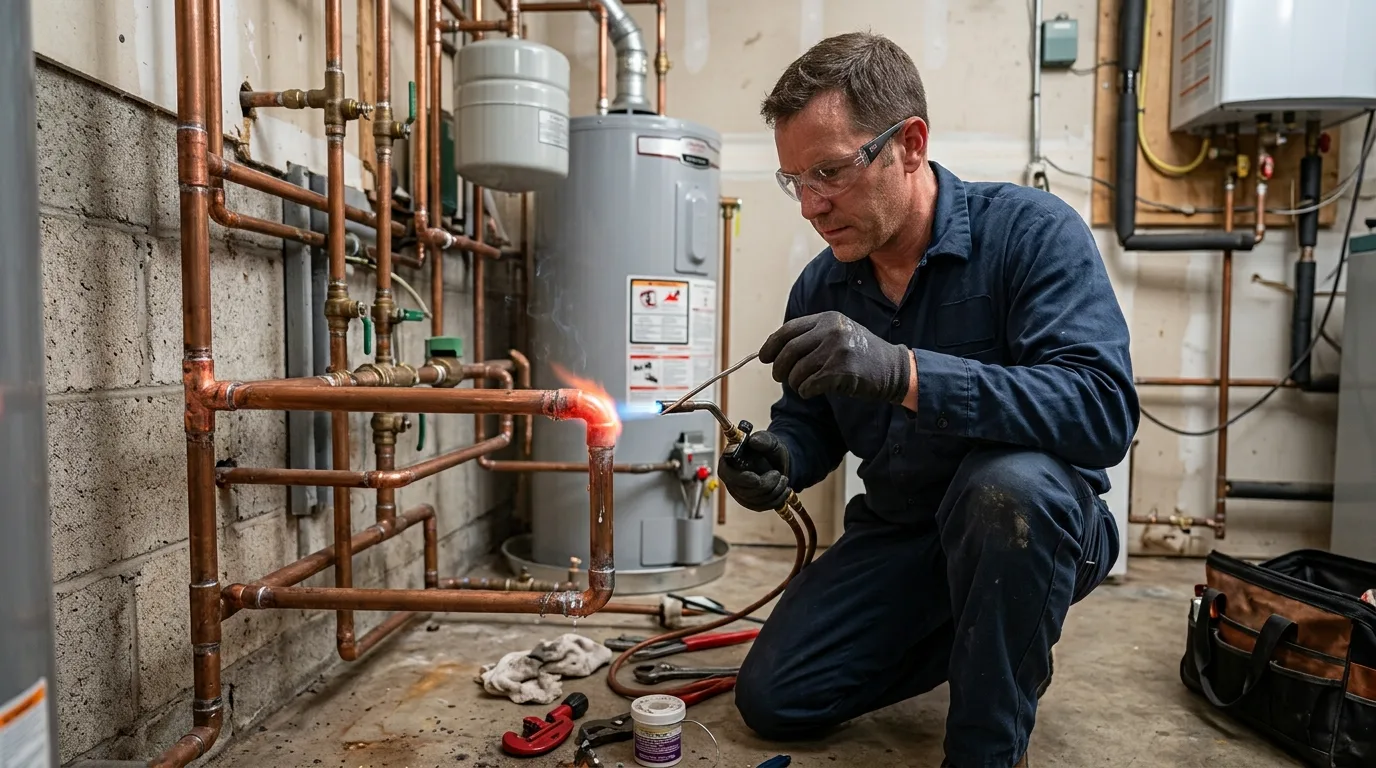
Whole-home repiping in Orange, CA. Retiring pipe that has done its century
Galvanized steel narrowed to half its bore, copper starting to pinhole in three rooms at once, flow that dies when two taps run. Copper or PEX, quoted with the access openings and the patching counted in.
Already had two or three leaks? Add up what they cost before you call this the expensive option.
What to expect
Answered 24/7
Every hour, every day, including holidays.
Same-day & emergency
Urgent calls get moved to the front of the queue.
Upfront pricing
A number you approve before work begins.
No hidden fees
The price you agreed to is the price you pay.
Workmanship terms upfront
Ask the plumber what their own workmanship terms are before work starts.
The decision
When repiping stops being drastic and starts being cheaper
Nobody wants to repipe a house. The question is not whether you want to; it is whether you are already paying for one in instalments.
Three or more leaks in a couple of years. The clearest signal there is. Money spent on the third emergency section repair is money that does not count toward the permanent fix. Add up what the last two years cost before deciding this is the expensive option.
Flow that has faded everywhere. Two fixtures running at once and neither works properly. Galvanized steel narrows from the inside as it corrodes, and no amount of fixture replacement fixes a pipe with half its bore left.
Rusty or brown water on the first draw. Particularly at hot taps, particularly after the house has been quiet overnight. That colour is the inside of your pipe arriving at the fixture.
Pinholes appearing in copper. One pinhole is a repair. A second and third in different rooms is a pattern in the material, not bad luck.
You are already opening walls. A kitchen or bathroom remodel, or an ADU conversion adding supply and drain runs, is the cheapest moment a repipe will ever be offered to you. The access is already paid for.
You are about to sell, or you just bought. A documented repipe is a straightforward thing to point at. An unaddressed galvanized system is a straightforward thing for a buyer to negotiate against.
Ask for both numbers: the repair in front of you, and the repipe. You cannot judge one without the other.
Materials
Copper or PEX, without the sales pitch
Both are legitimate. Anyone who tells you one is simply better is telling you about their own habits rather than your house.
Copper
Rigid, long-established, and unaffected by ultraviolet light, which matters wherever pipe is exposed. It holds its shape, it looks like plumbing, and inspectors and future buyers understand it instantly. Against it: it costs more in material and considerably more in labour, every joint is soldered or pressed, and it is not immune to what hard local water does over decades, pinholes in copper are why plenty of postwar houses here are being repiped now.
PEX
Flexible tubing that can be routed long distances with far fewer joints, often threaded through existing wall and ceiling cavities with much less demolition. Fewer joints means fewer failure points, and a home-run manifold layout gives you individual shutoffs and quieter, more even flow. It also handles the awkward geometry of an older house well. Against it: it must be protected from sunlight, it needs correct support and fittings, and some homeowners simply prefer metal.
What usually decides it
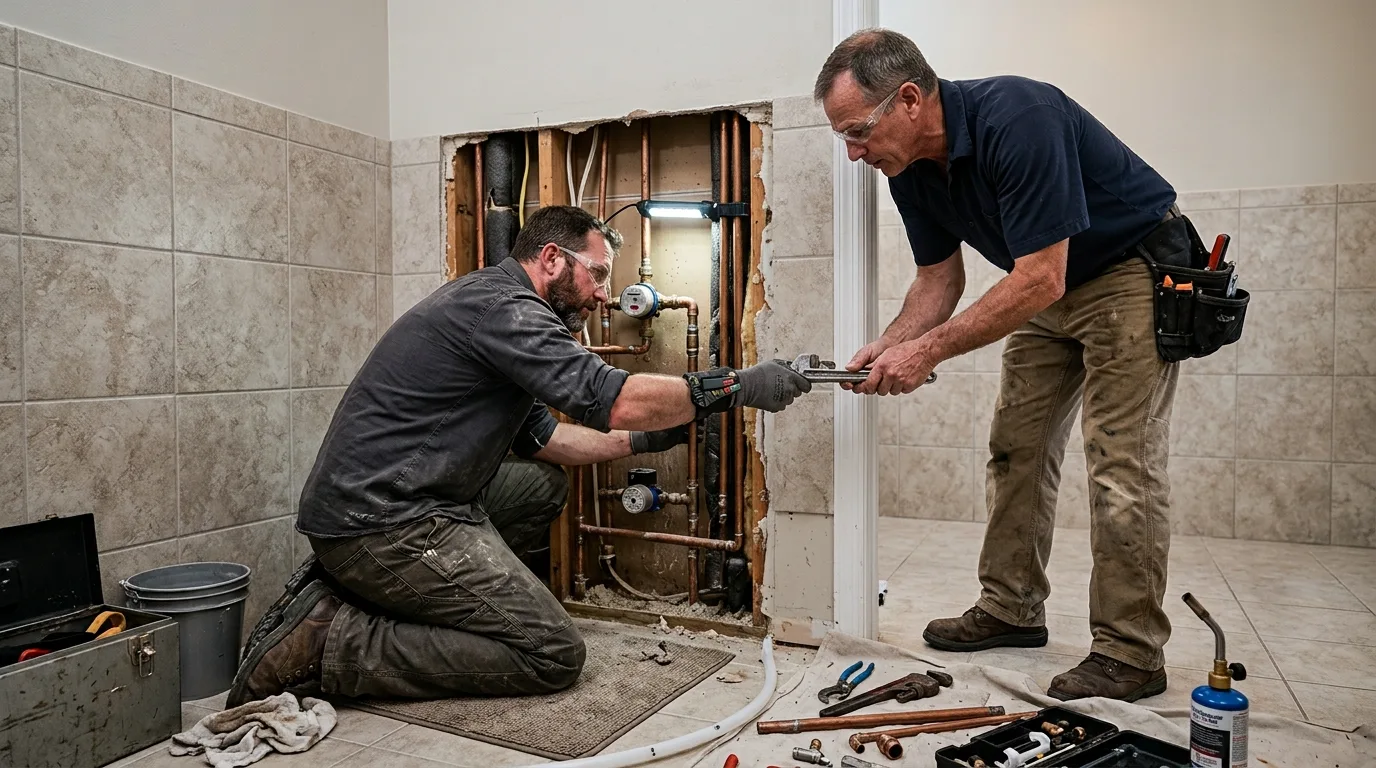
Access. In a 1915 house with plaster-and-lath walls, original trim and a tiled bathroom you would rather not disturb, PEX frequently wins because it needs fewer openings, and in Old Towne, fewer openings means less finish work on materials that cannot be replaced. In an open crawl space or a garage wall, copper is easy. Get the same house quoted both ways: the difference is often in the drywall and plaster, not the pipe.
Hard water is part of the calculation
Imported water in this part of Orange County is hard. It scales fixtures, tank heaters and tankless heat exchangers, and it works steadily on pipe from the inside. A repipe is a natural moment to decide whether whole-house softening or filtration is worth adding, because the pipe you are installing has to live in the same water the last one did.
Stop repairing the same system
The third emergency repair costs more than you think.
Get a repipe quoted properly, with the access openings and the patching spelled out.
What it is like to live through
The week, roughly
Walkthrough and plan. Every fixture is identified, the routes are worked out, and the access openings are agreed, where they will be cut, how big, and who patches them. This conversation is the single best predictor of whether you will be happy at the end.
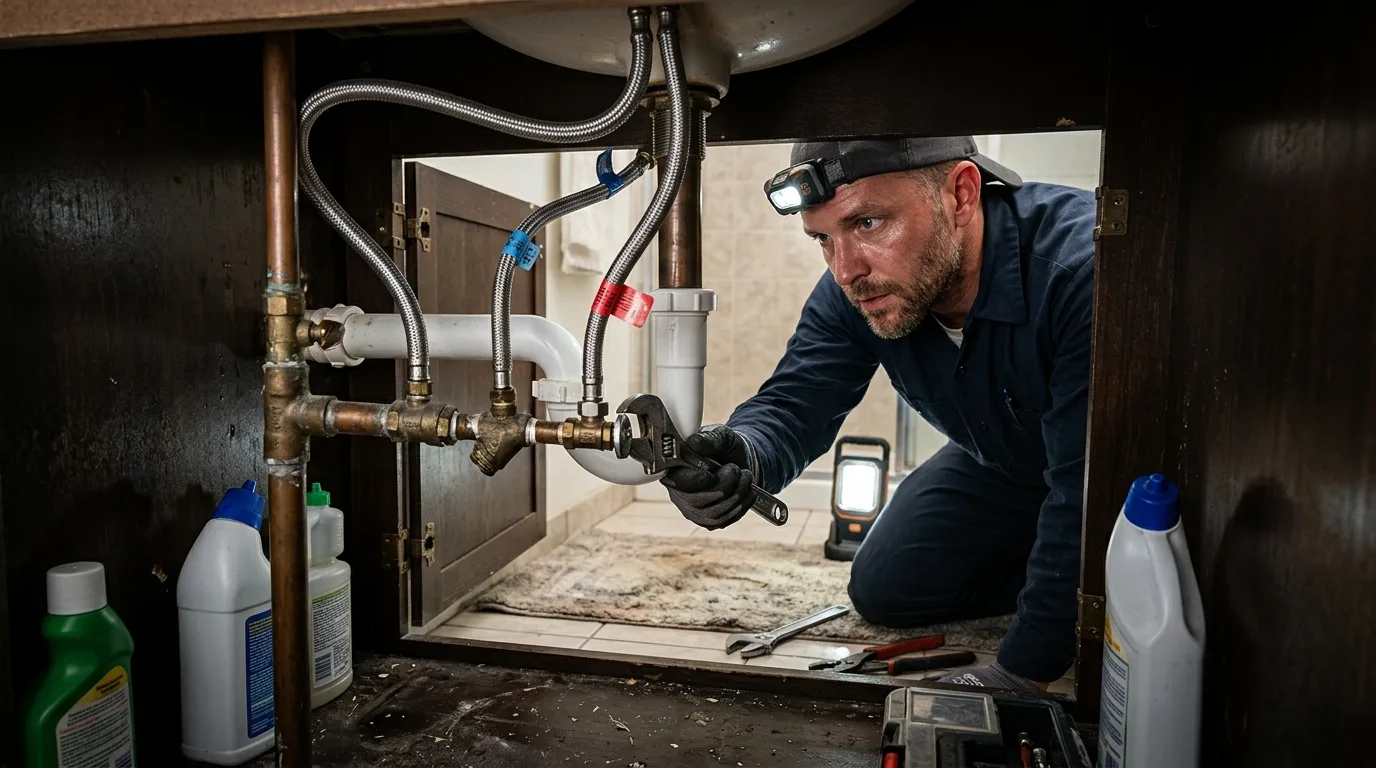
Open access. Neat, planned openings in drywall or plaster, generally high on walls and in ceilings. In an older house, expect care around original trim, tile and plaster: it takes longer and it is worth it.
Run the new system. New lines go in alongside the old ones while the existing plumbing keeps working. Most of the job happens with your water still on.
Cut over. The day the house switches to the new system. Water off for a good part of it, then back on. Ask which day this is so you can plan around it, especially in a one-bathroom house, which describes a lot of Old Towne.
Pressure test and inspection. The system is tested and, where a permit applies, inspected before anything is closed up. Do not let openings be patched before that happens.
Patch and finish. Drywall patching is often included; plaster matching, texture, paint and tile usually are not. Settle this in writing at the quote stage, because in a historic house the finish work can rival the plumbing.
Most single-storey houses of ordinary size are a few days rather than weeks. Two storeys, unusual layouts and difficult access add time.
Money
What drives a repipe quote
- Number of fixtures and bathrooms
- One storey or two
- Copper or PEX
- Slab, crawl space or attic routing
- Plaster-and-lath versus drywall
- How much patching is included
- Service line replaced at the same time
- Permit and inspection
- Historic district considerations
- Softener or regulator added
When you compare quotes, compare scope first. A cheap number that stops at bare pipe and leaves you with twenty openings and no patching is not cheaper; it is a different job. Ask every bidder the same three questions: what is included in patching, is the water service line part of it, and what happens to the old pipe.
Get it quoted both ways, copper and PEX, with patching spelled out. Then the comparison means something.
Straight answers
Repiping questions, including the ones about your walls
How do I know I need a repipe rather than another repair?
Count the last two years. Three or more leaks, faded flow across the whole house, discoloured first-draw water, or pinholes appearing in different rooms all point at the system rather than a spot.
A plumber should be willing to give you both numbers, the repair and the repipe, and let you decide.
Copper or PEX?
Both are legitimate. Copper is rigid, long-established and unaffected by sunlight. PEX needs far fewer joints and far fewer access openings, which in an older house often decides it.
Get the same house quoted both ways. The real difference is frequently in the plaster and drywall work, not the pipe.
How long will I be without water?
Not the whole job. New lines are run alongside the existing system, so most of the work happens with your water on. There is one cut-over day when supply is off for a good part of it.
Ask which day that is, particularly if the house has one bathroom.
Do you patch the walls?
Drywall patching is often included; plaster matching, texture, paint and tile usually are not. This varies by pro and it is the most common source of disappointment.
Get it in writing at the quote stage. In a historic house the finish work can rival the plumbing in cost.
Is a permit required?
Repiping generally requires a permit and inspection, and you want that inspection to happen before anything is closed up.
In Old Towne, exterior changes separately fall under the city’s Historic Preservation Design Standards. Interior repiping is usually straightforward; we do not obtain historic approvals for you.
Will it improve my water pressure?
If the cause was corroded galvanized pipe with a narrowed bore, yes, and the difference is usually dramatic.
If the restriction is in the service line from the meter, or a failed pressure regulator, repiping the house alone will not fix it, which is why those get tested first.
Should the main service line be done at the same time?
Often it makes sense. If the house is on original galvanized, the service line usually is too, and doing both together saves a second shutdown and a second mobilisation.
Ask for it as a separate line item so you can see what adding it actually costs.
What happens to the old pipe?
Generally it is abandoned in place inside walls and floors, with the sections that are in the way removed. Nobody demolishes a house to extract old pipe.
Ask specifically what is being removed versus abandoned, so there are no surprises during a future remodel.
Can it be done in an occupied house?
Yes, and most repipes are. Expect dust control, protected floors, and a few noisy days. The cut-over day is the disruptive one.
Plan meals and showers around that day and the rest is manageable.
Does hard water mean I should add a softener?
It is worth considering at the same time, because the new pipe lives in the same water the old pipe did. Softening slows scale in fixtures, tank heaters and tankless heat exchangers.
It is a separate decision with its own cost and maintenance, not a requirement. Ask for it priced alongside so you can judge.
Tell us the age of the house, the number of bathrooms and what has already failed.
Often part of the same job
Related services and neighbourhoods
One number, any hour
Do it once, properly.
We will connect you with a local plumbing pro who repipes older Orange houses and will quote copper and PEX side by side.