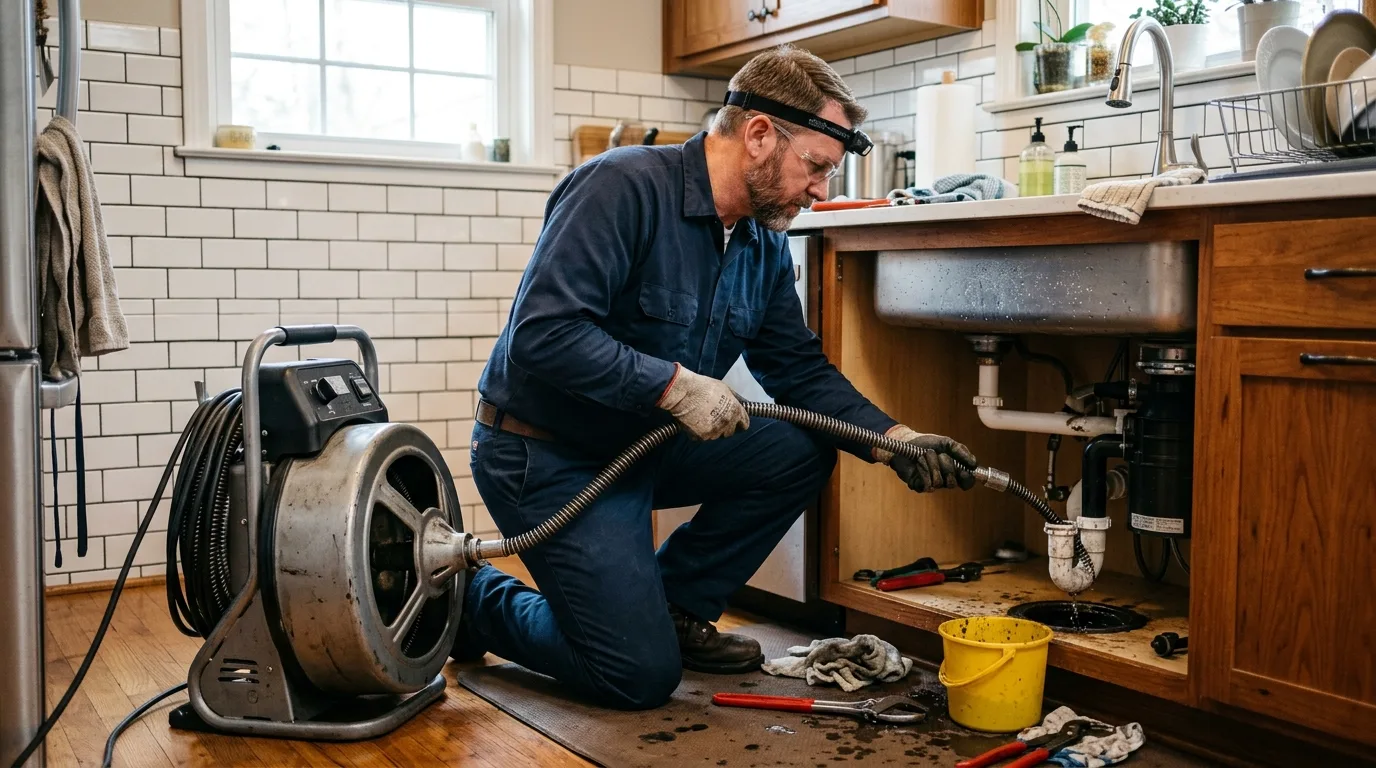
Drain cleaning in Orange, CA. Cleared, then explained
Slow bathroom sinks, kitchen lines closing up with grease, tubs that gurgle when a toilet flushes, garage floor drains backing up. Cabled or jetted depending on the pipe, with a camera when the line keeps closing.
Lowest drain in the house backing up? Stop using water everywhere, including the washing machine, and call.
What to expect
Answered 24/7
Every hour, every day, including holidays.
Same-day & emergency
Urgent calls get moved to the front of the queue.
Upfront pricing
A number you approve before work begins.
No hidden fees
The price you agreed to is the price you pay.
Workmanship terms upfront
Ask the plumber what their own workmanship terms are before work starts.
First question
One fixture, or the whole house?
This single distinction decides whether you have a small local blockage or a problem out at the main line, and you can answer it in two minutes.
Only one fixture is slow
A single slow sink, tub or shower with everything else draining normally means the blockage is local, in the trap, the tailpiece, or the branch line just beyond it. Hair and soap in a bathroom, grease and food in a kitchen. This is the straightforward version, cleared from the fixture or a nearby cleanout.
Several fixtures are slow, or the lowest one backs up
Two bathrooms draining slowly, a tub that gurgles when a toilet flushes, a shower that backs up when the washing machine drains, water appearing at a floor drain in the garage. That is the main line or the sewer lateral, and the water is finding the lowest exit it can. Stop using water in the house and call, every gallon you send down comes back up.
Gurgling, smells, or slow everywhere with nothing blocked
Air is the clue. Gurgling means the system cannot breathe properly, which points at a partial blockage or a blocked vent, common in older houses where a vent has been disturbed by a remodel, a roof job or a nesting bird.
If the lowest drain in the house is backing up, treat it as urgent. That is a main-line blockage, not a slow sink.
Cause
Why drains block in this city specifically
Blocked drains are universal. What varies is why, and in the City of Orange the reasons are unusually easy to name because so much of the drainage is original.
Cast iron that has scaled shut
Houses from the 1890s to the 1920s, and plenty of postwar ones too, drain through cast iron. Cast iron corrodes internally and grows a rough scale that catches everything passing through it. The pipe has not moved, its usable diameter has simply shrunk, which is why the same line blocks again a few months after being cabled.
Roots in clay laterals
Older tracts were planted with street trees that are now mature, and clay sewer laterals are jointed every few feet. Roots find the moisture at those joints, get in, and build a mat that catches solids. This is the single most common cause of repeat main-line blockages in the older neighbourhoods.
Grease, and the kitchen line
Kitchen drains fail differently from bathroom drains. Fats poured down warm set solid as they cool along the pipe wall, gradually narrowing it until one ordinary evening it closes. A garbage disposal makes it worse by adding fine solids for the grease to bind.
Bellied and offset pipe
Ground movement, settlement and root pressure over decades cause a section of line to sag or the joints to offset. Water stands in the low spot, solids settle out, and the blockage always reforms in the same place. Cabling clears the symptom; only a camera shows you the cause.
High-turnover housing
With Chapman University alongside Old Towne there is a substantial rental and student-housing segment nearby, and rentals see more of everything that should not go down a drain, wipes, cooking fat, hair, and the products marketed as flushable that are not.
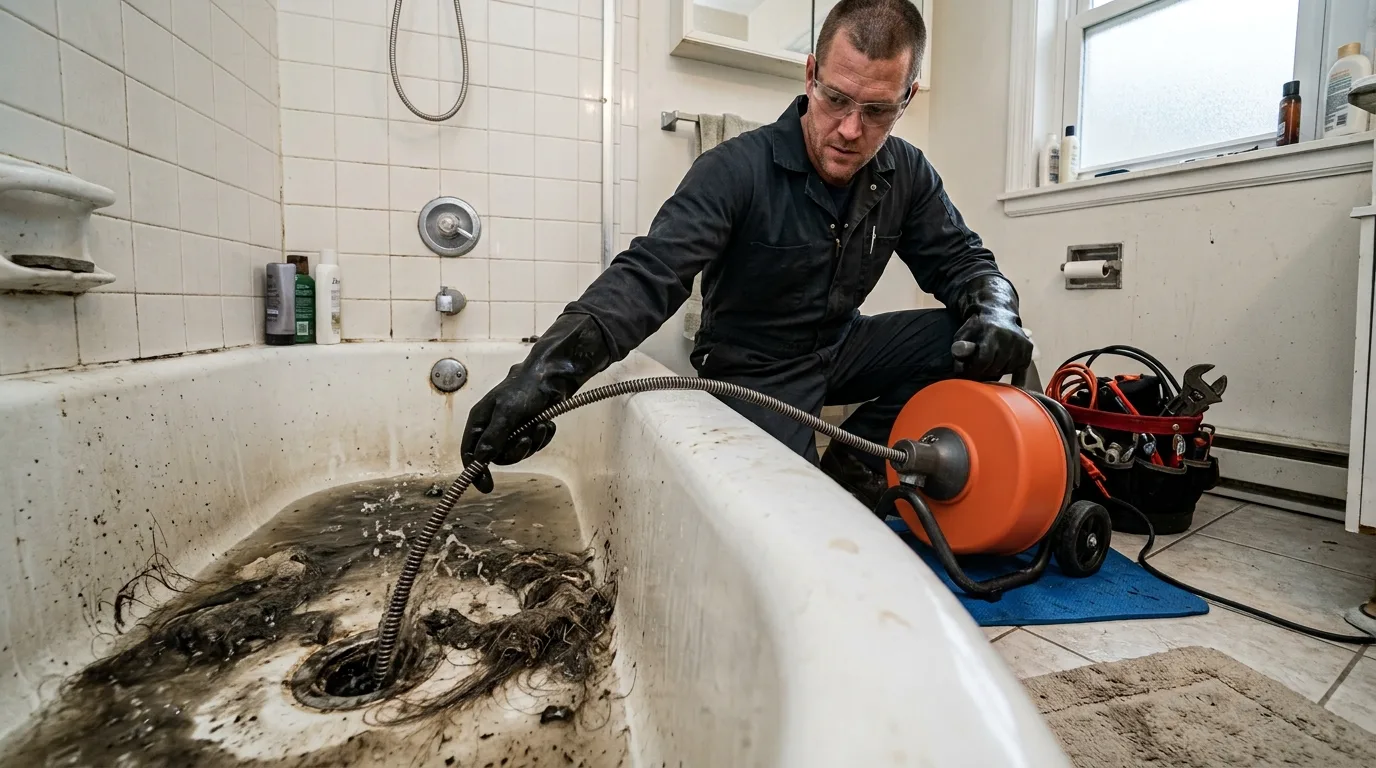
Please do not pour chemical drain cleaner down old cast iron
Caustic drain products sit against the pipe in a blocked line and attack already-corroded metal and old joints. They rarely clear a real blockage, they make the line more fragile, and they turn the standing water into something a plumber has to handle carefully. If you have already used some, say so on the phone; it matters for their safety, not for judgement.
The same drain, again
If a drain blocks twice in a year, cabling it a third time is not the answer.
Get a camera in the line and find out what is actually down there. We will connect you with someone who owns one.
Method
Cabling, jetting, or camera first
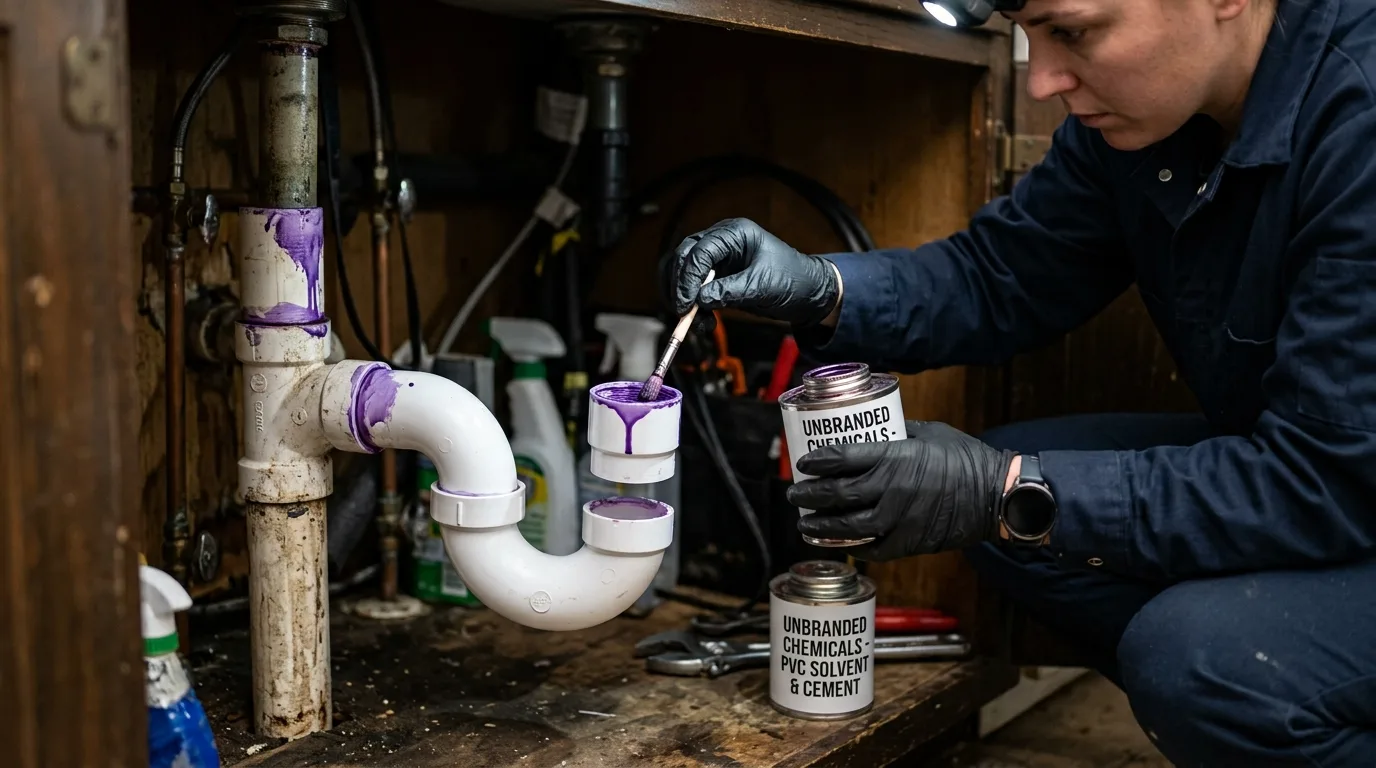
Cabling, the drain machine. A rotating steel cable is fed down the line to break through the blockage and pull material back. It is fast, it is the right first move on most single-fixture blockages, and on a main line it restores flow quickly. What it does not do is clean the pipe wall: cabling punches a hole through the obstruction rather than removing what is coating the pipe.
Hydro jetting, high-pressure water. Jetting scours the full diameter of the line, stripping grease, scale and root hair back to the pipe wall. It is the answer for a kitchen line with years of grease in it, or a lateral that keeps reblocking. It is not the answer for every pipe: badly corroded cast iron or a cracked clay line can be too fragile, which is why a camera comes first.
Camera inspection. A camera turns guesswork into a decision. It shows roots, a belly, an offset joint, a crushed section, or simply scale, and it shows whether the pipe can take jetting at all. On any repeat blockage, or before spending real money, the camera is the cheapest part of the job.
Trap and cleanout access. Where the plumber gets in matters. Some older houses in the historic core have no accessible exterior cleanout at all, and the line has to be entered through a pulled toilet or a roof vent, which changes the time and the price. If you know where your cleanout is, say so.
Money
What changes the price of a drain clearing
- Single fixture or main line
- Whether there is an accessible cleanout
- Cabling or jetting
- Camera inspection included
- Roots, grease or scale
- Pipe material and condition
- After-hours or scheduled
- Repeat blockage or first time
A useful way to think about it: clearing the blockage restores service, and inspecting the line tells you whether you have bought a month or a decade. Both are legitimate purchases. What you should not accept is being cabled repeatedly without anyone ever telling you why the line keeps closing.
Ask for the camera if this has happened before. It is the difference between a maintenance habit and a fix.
Straight answers
Drain questions people ask after the second blockage
One sink is slow. Is that urgent?
No, as long as everything else in the house drains normally. That is a local blockage in the trap or the branch line, and it will keep until a scheduled visit.
It becomes urgent when a second fixture joins in, or when the lowest drain in the house starts backing up.
Why does my drain block again a few months later?
Because cabling clears a path through the blockage rather than cleaning the pipe. If the underlying cause is scaled cast iron, a root mat at a clay joint, or a bellied section holding water, the line will reload in the same place.
A camera inspection identifies which of those it is, and that determines whether jetting, a spot repair or a lining is the real answer.
Is hydro jetting better than a drain machine?
For grease, scale and root hair, yes; it cleans the full diameter of the pipe rather than punching through the middle.
But it is not universally safe. Severely corroded cast iron or cracked clay can be too fragile for high pressure, which is exactly why a camera should come first.
Can I use a chemical drain cleaner while I wait?
We would rather you did not, particularly in an older house. Caustic products sit in a blocked line against corroded metal and old joints, rarely clear a real blockage, and make the standing water hazardous to work in.
A plunger or a hand auger on a single fixture is fine. If you have already used chemicals, tell the plumber before they open anything.
Everything drains slowly and the toilet gurgles. What does that mean?
Gurgling is air being pulled through water because the system cannot breathe or cannot flow. It usually means a partial main-line blockage or a blocked vent.
Multiple slow fixtures point downstream, toward the main line and the sewer lateral, rather than at any one drain.
What can I do to stop it happening again?
Keep fats and oils out of the kitchen sink, wipe pans before washing them. Use a hair catcher in showers. Nothing labelled flushable actually is, apart from toilet paper.
For a line with mature street trees over it, periodic jetting on a planned schedule is far cheaper than emergency clearances, and a camera pass will tell you if that is your situation.
Do you need to get on the roof or pull a toilet?
Only when there is no accessible cleanout, which happens in some older houses in the historic core. The plumber will explain the access options before starting, because they change the time and the price.
If you know where your cleanout is, mentioning it on the phone genuinely speeds things up.
Do you clear drains at multi-unit buildings and restaurants?
Yes. Shared-wall stacks in condos and townhomes, restaurant kitchen lines and grease-heavy commercial drains are all covered, and they are dispatched to pros who do that work rather than to a residential-only van.
Coordination with an HOA or a property manager is normal on those jobs.
Will you tell me the price first?
Yes. The plumber assesses the access and the type of blockage and gives you a number before starting, including any camera step.
No hidden fees, and no figures that move once the work is underway.
Tell us which fixtures are affected and whether anything is gurgling. That usually names the job on the spot.
Often part of the same job
Related services and neighbourhoods
One number, any hour
Get it flowing, and find out why it stopped.
We will connect you with a local plumbing pro who carries both a drain machine and a camera, and knows when to use which.