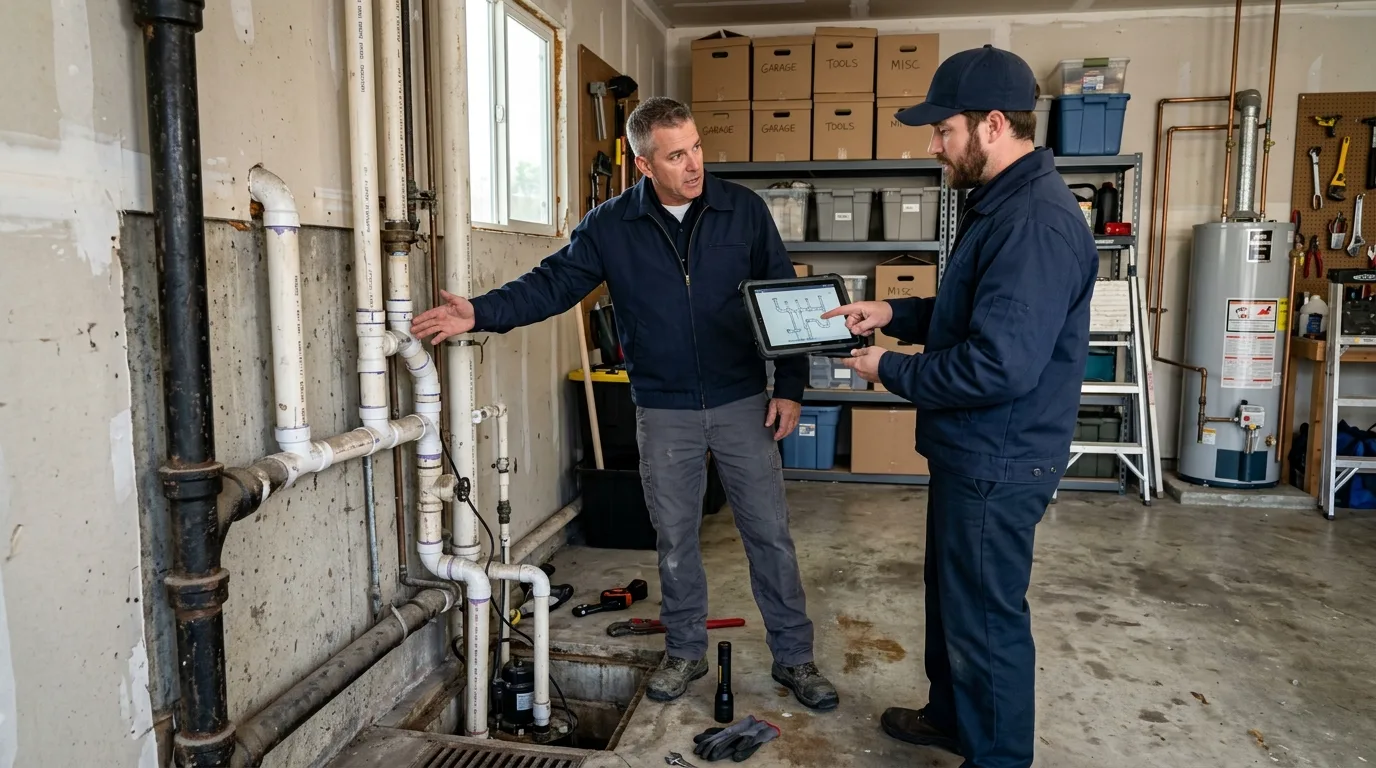
Sewer camera inspection in Orange, CA. Evidence before estimates
A camera down the lateral and a locator on the surface: roots, cracks, offsets, bellies and scale, each with a distance and a depth. The step that stops you paying for the wrong repair.
Buying an older house here? This is not part of a standard home inspection. Book it inside your contingency window.
What to expect
Answered 24/7
Every hour, every day, including holidays.
Same-day & emergency
Urgent calls get moved to the front of the queue.
Upfront pricing
A number you approve before work begins.
No hidden fees
The price you agreed to is the price you pay.
Workmanship terms upfront
Ask the plumber what their own workmanship terms are before work starts.
What you get to see
Everything a guess cannot tell you
A self-levelling camera on a push reel goes down the line and sends back video. A locator tracks the head from the surface, so findings come with a position and a depth. That combination is what turns an opinion into a decision.
Roots, and where they enter. Fine hair through a clay joint is early. A dense mat filling the pipe is late. Same symptom in the house, very different repair.
Offsets and cracks. Sections that have shifted, dropped or fractured. This is the difference between a line that needs cleaning and a line that needs work.
Bellies. Standing water where the pipe has sagged. Nothing else identifies this reliably, and it is the reason a line keeps reblocking in the same spot after every clearance.
Scale and grease. How much usable diameter is left in a cast-iron line, and whether the wall underneath looks sound enough to jet.
Material and transitions. Clay, cast iron, ABS, PVC, and the junctions between them, which is frequently exactly where the trouble is on a house with a century of remodels.
Foreign objects. Wipes, tools, roots, a collapsed liner from a previous repair, and things nobody can explain.
Position and depth. Marked on the surface, which is what makes a spot repair possible instead of an exploratory trench.
Insist on seeing the footage yourself. It is the cheapest leverage you will ever have on a sewer quote.
Timing
Four moments when it is clearly worth it
Before you buy an older house
A camera inspection of the lateral is not part of a standard home inspection, and on a property from the 1890s to the 1920s the lateral is very likely original clay or cast iron. On a hundred-year-old house in Old Towne this is one of the cheapest pieces of information available, and it either buys peace of mind or gives you a negotiating position on a genuinely large number. The same argument applies to any postwar tract house with mature trees along the parkway.
After the second blockage
One blockage can be bad luck. Two in the same line is a pattern, and a pattern has a physical cause; roots at a joint, a belly holding water, scale, an offset. Cabling it a third time buys months and tells you nothing.
Before agreeing to any sewer work
Nobody should quote you a lining, a bursting or a trench without footage. If a quote arrives with no video, that is the moment to pause. This is the largest single number in residential plumbing and it should be evidence-based.
After work is finished
A post-work pass confirms the line is clean, the liner cured properly, every branch was reinstated and the grade is what it should be. It also gives you a dated baseline to compare against in five years.
One more, less obvious: before a remodel or an ADU conversion that adds fixtures. Loading more drainage onto a lateral that is already marginal is how a manageable problem becomes an emergency during construction.
Ask for the recording
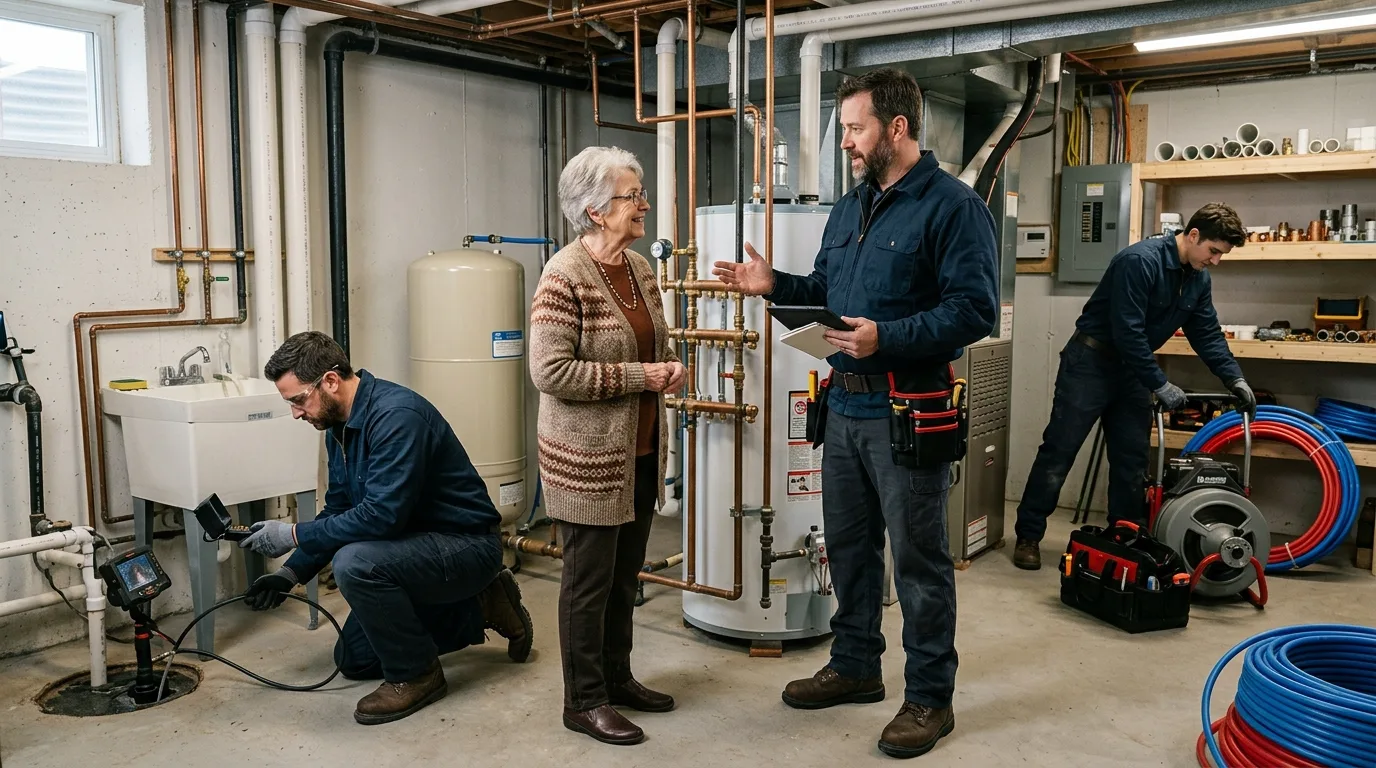
A copy of the video, a note of the distances where problems appear, and a plain-language summary of what was found. Three things, and they cost the plumber almost nothing to provide. With them you can get a second quote without paying for a second inspection, which is exactly why they are worth asking for up front.
Look before you spend
Sewer work is the biggest number in residential plumbing.
Do not authorise any of it without seeing inside the pipe first. An inspection costs a fraction of a wrong decision.
On the day
How the inspection runs
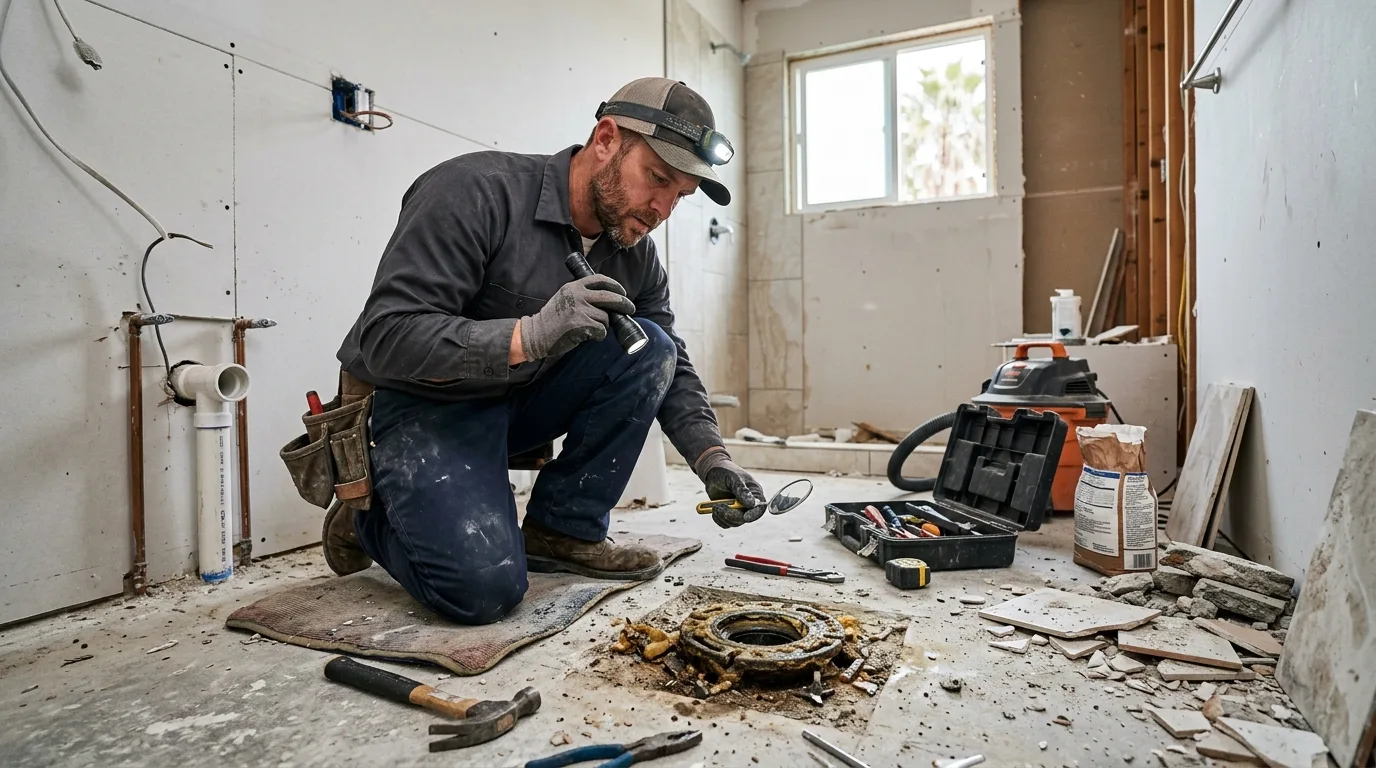
Access. Ideally an exterior cleanout. Most postwar and later tracts across El Modena, Olive, McPherson and Marlboro have one. Some older houses in the historic core have none, and access then means pulling a toilet or entering through a roof vent, which changes the time and the price, so it is established before the visit rather than at the door.
Clear enough to see. A line full of standing water or packed with roots shows you very little. Sometimes a preliminary clearance or a jetting pass has to happen first, and a good pro tells you that possibility exists before starting rather than after.
The pass. The camera is pushed the length of the lateral to the connection at the main, with footage counter distances called out as features appear. You should be watching, and you should ask questions while the head is still down there.
Locate and mark. Anything significant is traced from the surface and marked with position and depth. That is what makes a targeted repair possible.
The conversation. Three honest outcomes: sound, clean and no action needed; dirty and needing cleaning; or structurally failing and needing repair. A plumber who only ever reports the third one is not inspecting, they are selling.
Money
What an inspection depends on
- Cleanout access, or the lack of it
- Length of the lateral
- Clearance needed before viewing
- Locating and depth marking
- Recording and written summary
- Multiple lines or branches
- Pre-purchase report format
- Scheduled or same-day
Some pros credit the inspection against work you go ahead with, and some do not. Ask on the phone. Either policy is fair; not knowing which one applies is not.
Buying a house? Book it during your inspection window, not after closing.
Straight answers
Camera inspection questions worth asking
What can a sewer camera actually see?
Roots and where they enter, cracks, offset joints, bellies holding water, scale, pipe material and the transitions between materials, foreign objects, and the condition of the connection at the main.
Paired with a locator it also gives position and depth from the surface, which is what makes a targeted repair possible.
Do I need an inspection if the drains are working fine?
Not as routine maintenance on a modern house. It is worth it before buying an older property, before a remodel or ADU that adds fixtures, and any time a line has blocked more than once.
On a house from the 1890s to the 1920s with an original clay lateral, "working fine" and "sound" are not the same thing.
Is it included in a home inspection?
No. A standard home inspection does not put a camera down the sewer lateral, and this is one of the most common expensive surprises for buyers of older houses.
Book it separately, during your inspection contingency window.
What if there is no cleanout?
Access is then through a pulled toilet or a roof vent. It is routine, it takes longer, and it changes the price, which is why it is established before the visit.
If you know where your cleanout is, saying so on the phone genuinely helps.
Can the camera go through a blockage?
Not usually. A line packed with roots or full of standing water shows very little, so a clearance or jetting pass may be needed first to get a meaningful view.
A good pro warns you that this is possible before starting rather than presenting it as a surprise.
Will I get a copy of the video?
Ask for one, along with the distances where problems appear and a plain-language summary. Most pros will provide all three.
With that in hand you can get a second opinion on a repair quote without paying for a second inspection.
How long does it take?
A typical residential lateral with good access is usually well under an hour. Poor access, a long run on an equestrian or hillside parcel, or a line that needs clearing first all add time.
Does the camera tell you whether it needs lining or digging?
It gives you the facts that decide it: whether the pipe holds its shape, whether the grade is sound, how many offsets there are and where the failures sit.
A round, well-graded pipe with root intrusion at joints is a lining candidate. A collapse or a belly is not.
Who performs the inspection?
An independent local plumbing professional. Orange CA Plumbing Line is a referral service, not a plumbing contractor; we connect you with a pro who carries the camera and locator and does this work routinely.
Nothing is billed through us.
Tell us the age of the house and how often the line has blocked. We will tell you what kind of visit makes sense.
Often part of the same job
Related services and neighbourhoods
One number, any hour
See inside the pipe before you spend a dollar on it.
We will connect you with a local plumbing pro who will run the camera and hand you the footage.