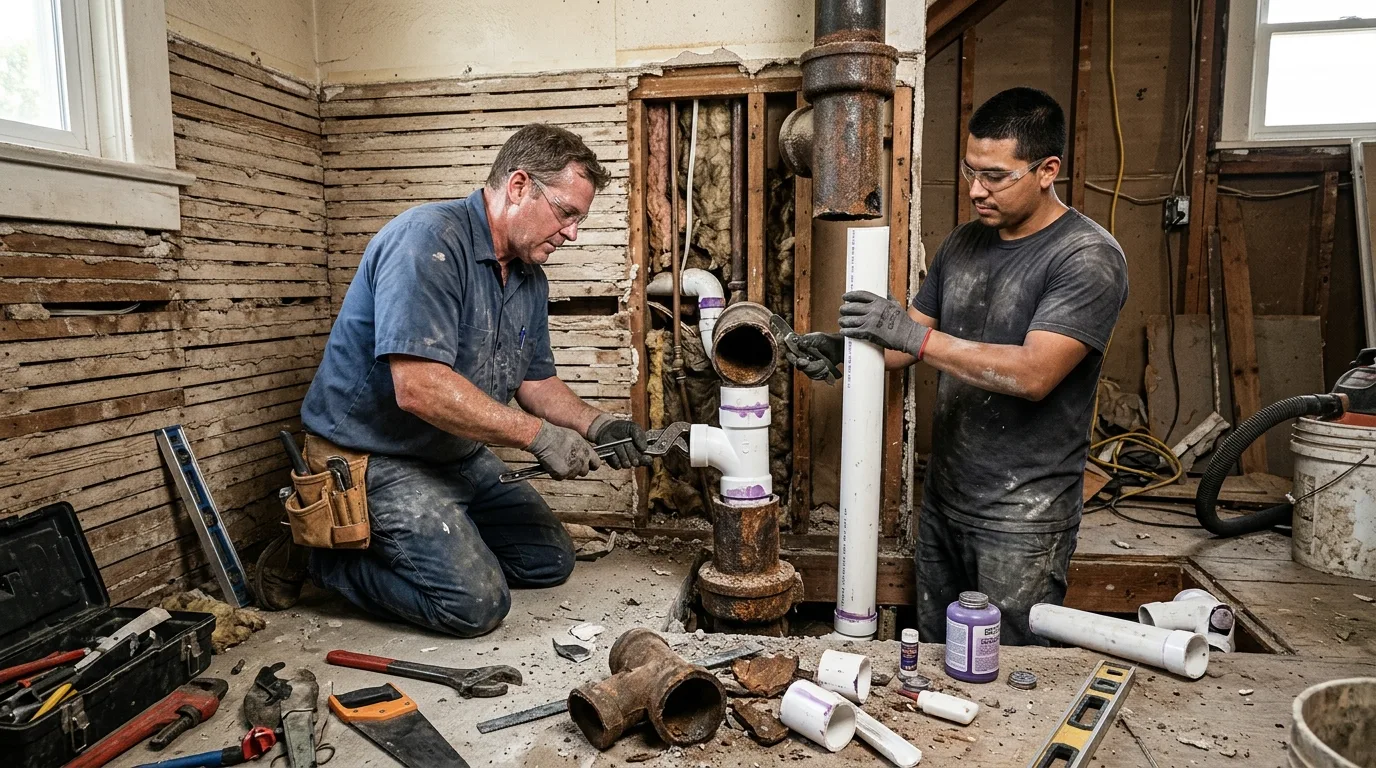
Sewer line repair in Orange, CA. The camera decides, not the salesman
Clay laterals with a joint every few feet and mature street trees above them. Cast iron scaled and cracking along the bottom. Long runs on hillside and equestrian parcels. Spot repair, lining, bursting or replacement, priced against what is actually in the ground.
Blocking every few months? That is structural. Get a camera in the line before spending anything else.
What to expect
Answered 24/7
Every hour, every day, including holidays.
Same-day & emergency
Urgent calls get moved to the front of the queue.
Upfront pricing
A number you approve before work begins.
No hidden fees
The price you agreed to is the price you pay.
Workmanship terms upfront
Ask the plumber what their own workmanship terms are before work starts.
The warnings
How a failing lateral tells you, in order
A sewer lateral rarely collapses without warning. It sends signals for months, and most of them get mistaken for ordinary drain trouble.
Repeat blockages in the same place. The single most reliable sign. A line that needs cabling every few months is not unlucky, something structural is catching solids in the same spot every time.
More than one fixture affected at once. Slow drains in two bathrooms, a tub gurgling when a toilet flushes, a washing machine discharge backing up into a shower. The problem is downstream of the house.
Backup at the lowest fixture or a floor drain. Waste water finds the lowest exit. A garage or laundry floor drain is often the first place it appears.
Smell outdoors, or unusually green grass in one strip. A cracked lateral leaks continuously. The lawn above it grows better than everything around it, and on a warm afternoon you can smell it.
A soft or sinking patch in the yard, driveway or patio. Escaping water washes out the soil supporting the surface above. Sinking ground over a known pipe run is a late-stage sign.
Rodents or insects appearing indoors. A broken lateral is an open route into the house from below.
Toilets that flush slowly with nothing blocking them. Bowl empties lazily, refills fine. The restriction is out in the line.
Any of the last three means get it inspected now, not after the next blockage.
Cause
Why laterals fail in the City of Orange
The sewer lateral is the private line running from your house out to the public sewer main, typically under the front yard, the driveway or the parkway strip. Responsibility for it is normally the property owner’s, out to the connection at the main, your plumber can confirm where the city’s responsibility begins for your particular property. What it is made of depends almost entirely on when the house was built.
Clay, and the joints
Vitrified clay was standard for decades and is still in the ground across the older parts of the city. It is remarkably durable as a material and hopeless as a system, because it comes in short sections with a joint every few feet. Roots find the moisture at those joints, enter, and expand until the joint offsets or the section cracks.
Cast iron, and scale
Cast iron laterals corrode internally. The interior roughens and narrows, catching everything that passes, and eventually the wall thins to the point of cracking or breaking through along the bottom of the pipe where flow sits.
Mature street trees
The older tracts were planted with trees that are now large, and their root systems have had fifty to a hundred years to find the wettest thing in the neighbourhood. In the historic core, in El Modena, Olive, McPherson and Marlboro, roots in the lateral are the leading cause of repeat main-line blockages.
Ground movement and long runs
Settlement, seismic activity and root pressure all shift buried pipe, producing bellies where water and solids stand, and offsets at joints. On the hillside streets of Cerro Villa Heights and Santiago Hills, and on the large parcels in Orange Park Acres, a lateral can run for a very long distance before it reaches the main, with more length to sag, more grade to lose, and more trees to pass.
Old repairs and unpermitted work
A century of remodels leaves transitions between clay, cast iron, ABS and PVC, some done properly, some done with a rubber coupling and optimism. Those junctions are frequently exactly where a camera finds the problem.
Buying an older house here?
A sewer camera inspection before you close is one of the cheapest pieces of information available on a hundred-year-old property, and it is not part of a standard home inspection. A lateral replacement is a serious number; finding out about it while the price is still being negotiated is a very different experience from finding out in your second month of ownership.
It will not improve on its own
A lateral that blocks every few months is telling you what is coming.
Get a camera in it and get real options priced. We will connect you with a pro who does laterals routinely.
The options
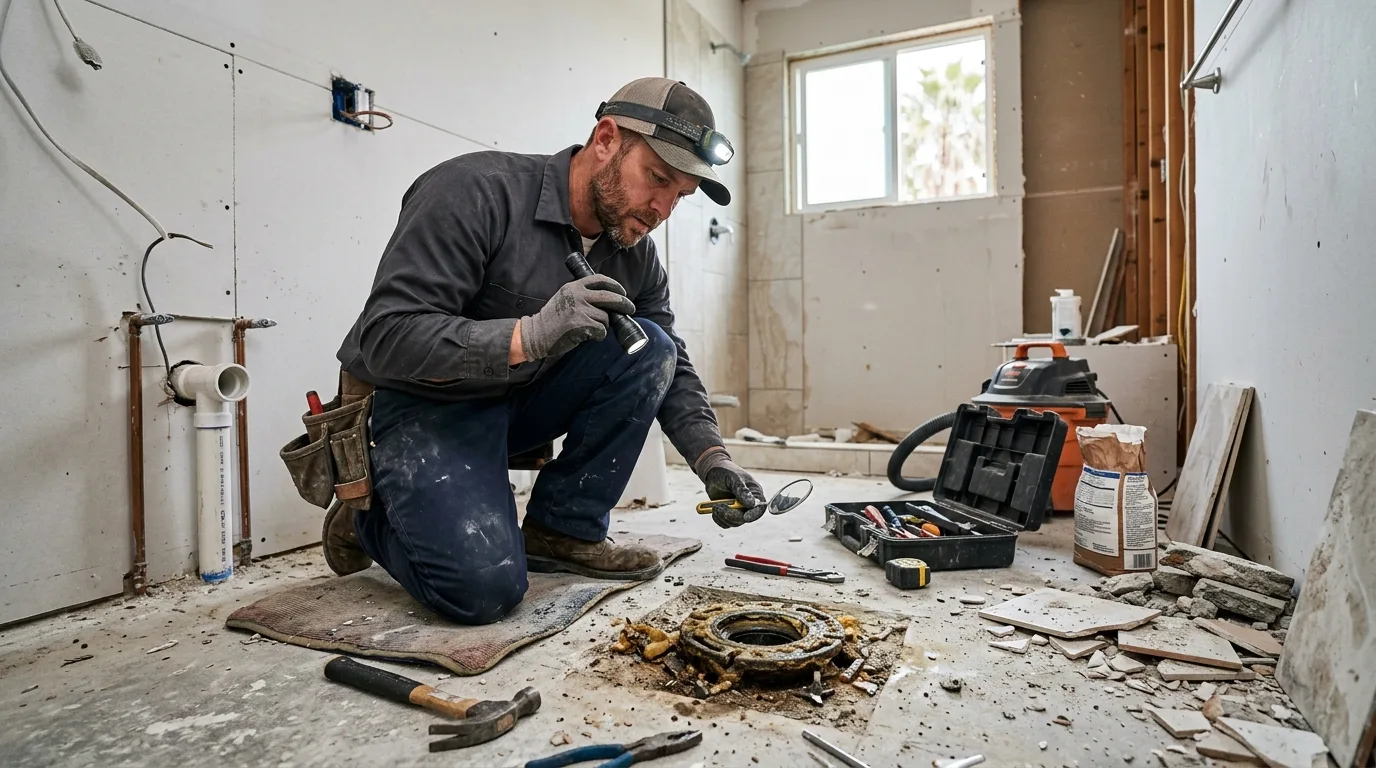
Four ways this gets fixed
Spot repair. One failed section is excavated and replaced while the rest of the lateral, verified sound on camera, stays in the ground. The cheapest real fix, and the right one when the camera shows a single defect in an otherwise good line.
Full replacement, open trench. The lateral is dug out and replaced end to end in modern pipe. It is definitive and it is disruptive: a trench across the yard, possibly the driveway, possibly the parkway strip, with the surface to restore afterwards. Sometimes it is unavoidable, a collapsed line, a severe belly that has to be re-graded, or a route that trenchless methods cannot follow.
Trenchless lining. A resin-saturated liner is drawn through the existing pipe and cured in place, forming a new jointless pipe inside the old one. No joints means no root entry. It needs a host pipe intact enough to line and a route without severe offsets, and it saves the driveway and the mature trees.
Pipe bursting. A new pipe is pulled through while a head fractures the old one outward. It handles some situations lining cannot and still avoids a full trench, though it needs access pits at each end.
Which one applies is not a preference; it is determined by what the camera shows and by what is above the pipe. A lateral running under a mature tree, a brick driveway or a period frontage in the historic core makes trenchless much more attractive. Anything that changes the exterior in Old Towne can carry extra review under the city’s Historic Preservation Design Standards, and work in the street or parkway generally means a permit and traffic control. Your plumber handles the plumbing permits; we do not obtain historic approvals for you.
Money
What determines the number
Sewer work has the widest cost range of anything on this site, because two houses on the same street can present completely different jobs.
- Length of the lateral
- Depth of the pipe
- Spot repair or full replacement
- Trenchless or open trench
- What is above it: lawn, driveway, street
- Mature trees in the route
- Permits and traffic control
- Surface restoration afterwards
- Historic district considerations
- Access for equipment
Two things to insist on before you sign anything. First, see the camera footage yourself, a lateral replacement quoted without visual evidence is a quote you cannot evaluate. Second, ask what is included in surface restoration, because concrete, brick, pavers and mature landscaping are a significant part of the total and the difference between a quote that includes them and one that does not is enormous.
Get the camera footage and a written scope. On a job this size, that is the minimum.
Straight answers
Sewer questions to ask before anyone quotes a trench
Am I responsible for the sewer lateral, or is the city?
The private lateral running from the house to the public main is normally the property owner’s responsibility out to the point of connection. Where exactly the city’s responsibility begins varies, and your plumber can confirm it for your property before any work is planned.
This is worth establishing early, because it determines who is paying for what portion of the line.
How do I know whether it needs a repair or just a cleaning?
A camera inspection. Roots and grease in a structurally sound pipe are a cleaning problem, jetting handles those. Cracks, offsets, bellies and collapsed sections are a repair problem.
The symptoms feel identical from inside the house, which is why nobody should quote you a sewer repair without looking first.
Can it be fixed without digging up my driveway?
Often, yes. Trenchless lining and pipe bursting both work through access points instead of a continuous trench, which is exactly why they exist.
They need a host pipe in good enough condition and a route without severe offsets. A camera survey determines whether your lateral is a candidate.
How long does a sewer line repair take?
A spot repair is often a one- to two-day job. A trenchless lining is commonly one to two days including preparation and curing. A full open-trench replacement takes longer, and surface restoration is additional time on top.
Permits and any required traffic control affect the schedule more than the plumbing does.
Will I be able to use water in the house during the work?
Expect periods with the drainage system out of service. On a one-day job that is a manageable inconvenience; on a longer replacement, the plumber will tell you which windows to plan around.
Ask about this specifically when the work is scheduled, particularly if the house has one bathroom.
Do the trees have to come out?
Not usually, and avoiding that is a strong argument for trenchless methods. A trench that severs major roots can compromise a mature tree even when the trunk is nowhere near the work.
If the root mass is inside the pipe route, that becomes part of the discussion, and it is one to have before excavation is booked rather than during.
Is a lining as good as a new pipe?
A correctly installed cured-in-place liner produces a continuous jointless pipe inside the old one, which removes the root entry points that cause most failures in clay laterals.
It is not right for every situation, a collapsed line or a severe belly needs excavation, because a liner follows the existing shape, including the sag.
Do you need a permit for this?
Sewer work generally requires a permit, and work in the street or parkway typically requires traffic control as well. Your plumber pulls the plumbing permits and arranges inspection.
Separately, in Old Towne, exterior changes fall under the city’s Historic Preservation Design Standards. We do not obtain historic approvals on your behalf, but your plumber can explain what the city usually expects.
I am buying a house in Old Towne. Should I have the sewer checked?
Yes. A camera inspection of the lateral is not part of a standard home inspection, and on a house from the 1890s to the 1920s the lateral is very likely original clay or cast iron.
It is a small cost that either gives you peace of mind or gives you a negotiating position on a genuinely large number.
Who performs the work?
An independent local plumbing professional. Orange CA Plumbing Line is a referral service, not a plumbing contractor; we connect you with a pro who covers your area and does sewer laterals routinely.
They inspect, quote, perform the work and stand behind their own workmanship. Nothing is billed through us.
Describe how often it blocks and what you can see in the yard. That usually tells us what kind of visit you need.
Often part of the same job
Related services and neighbourhoods
One number, any hour
Find out what is under the front yard.
We will connect you with a local plumbing pro who cameras the line first and shows you what they found.