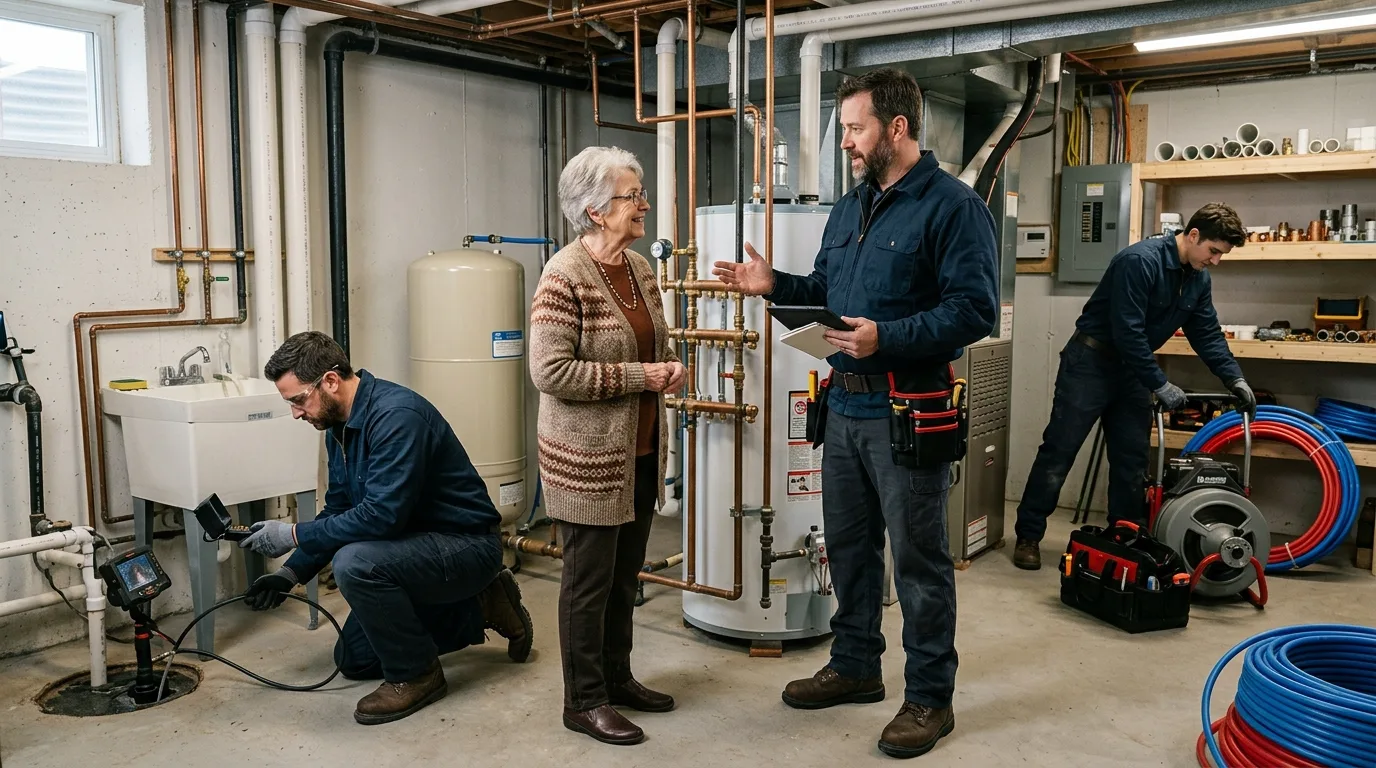
Trenchless sewer repair in Orange, CA. The pipe replaced, the yard left standing
Cured-in-place lining and pipe bursting reach the lateral through access points instead of a trench. Right for a root-invaded clay line under a driveway or a period frontage; wrong for a collapse or a belly. A camera decides which you have.
Already been quoted a trench? Get the footage looked at again before you agree to it.
What to expect
Answered 24/7
Every hour, every day, including holidays.
Same-day & emergency
Urgent calls get moved to the front of the queue.
Upfront pricing
A number you approve before work begins.
No hidden fees
The price you agreed to is the price you pay.
Workmanship terms upfront
Ask the plumber what their own workmanship terms are before work starts.
Two methods, one idea
Replace the pipe without replacing the yard
Trenchless work reaches the lateral through small access points instead of a continuous open trench. There are two established ways to do it, and they solve different problems.
Cured-in-place pipe lining
A flexible liner saturated with resin is pulled or inverted into the existing lateral, inflated against the pipe wall, and cured until it hardens. What you end up with is a continuous, jointless pipe formed inside the old one. Because there are no joints, there is nowhere for roots to enter, which addresses the single most common cause of failure in clay laterals across the older parts of the city. The liner takes up a little diameter and gives back a smoother wall, so flow is generally as good or better than the original clay.
Lining needs a host pipe that still holds its shape. It follows whatever it is lining, which is why a severe belly cannot be lined out: the sag stays a sag.
Pipe bursting
A bursting head is pulled through the old line, fracturing it outward into the surrounding soil while simultaneously drawing a new pipe in behind it. It handles situations lining cannot, a badly deteriorated or partially collapsed line, and it can install pipe of the same size or larger. It needs an access pit at each end and enough working room for the winch, so tight side yards and hardscape right up to the house complicate it.
What both avoid
A trench from the house to the street, cut through whatever is above the pipe: lawn, mature landscaping, a driveway, a brick walk, a patio, the parkway strip, sometimes the sidewalk. On many properties in Orange, restoring that surface costs more than the plumbing did.
Whether your lateral is a candidate is a question a camera answers, not a salesperson.
Honesty first
When trenchless is the wrong answer
Trenchless is sold hard in this industry, and it deserves the scepticism that comes with that. It is genuinely excellent technology used in the right situation and a waste of money in the wrong one.
A collapsed section
If the pipe has caved in, there is no path for a liner and often not enough structure for a bursting head to follow. That section gets excavated. Sometimes the answer is a hybrid: dig the one bad spot, line the rest.
A significant belly
Where a section has sagged and holds standing water, the grade is the problem. Lining preserves the sag and you keep the recurring blockage you were trying to buy your way out of. Re-establishing grade means opening the line.
Severe offsets or a route full of tight bends
Joints that have shifted far out of alignment, or a lateral with several sharp direction changes, may not accept a liner cleanly. The camera survey is what shows this.
No room for access
Both methods need entry and exit points and space for equipment. A house built to the property line with hardscape over the lateral route can leave nowhere practical to work.
When the line does not need replacing at all
This is the most common one. Roots and grease in a structurally sound clay lateral are a cleaning problem, jetting handles them for a fraction of the cost. If someone quotes a full lining without showing you footage of structural failure, get a second opinion.
The question that separates the two
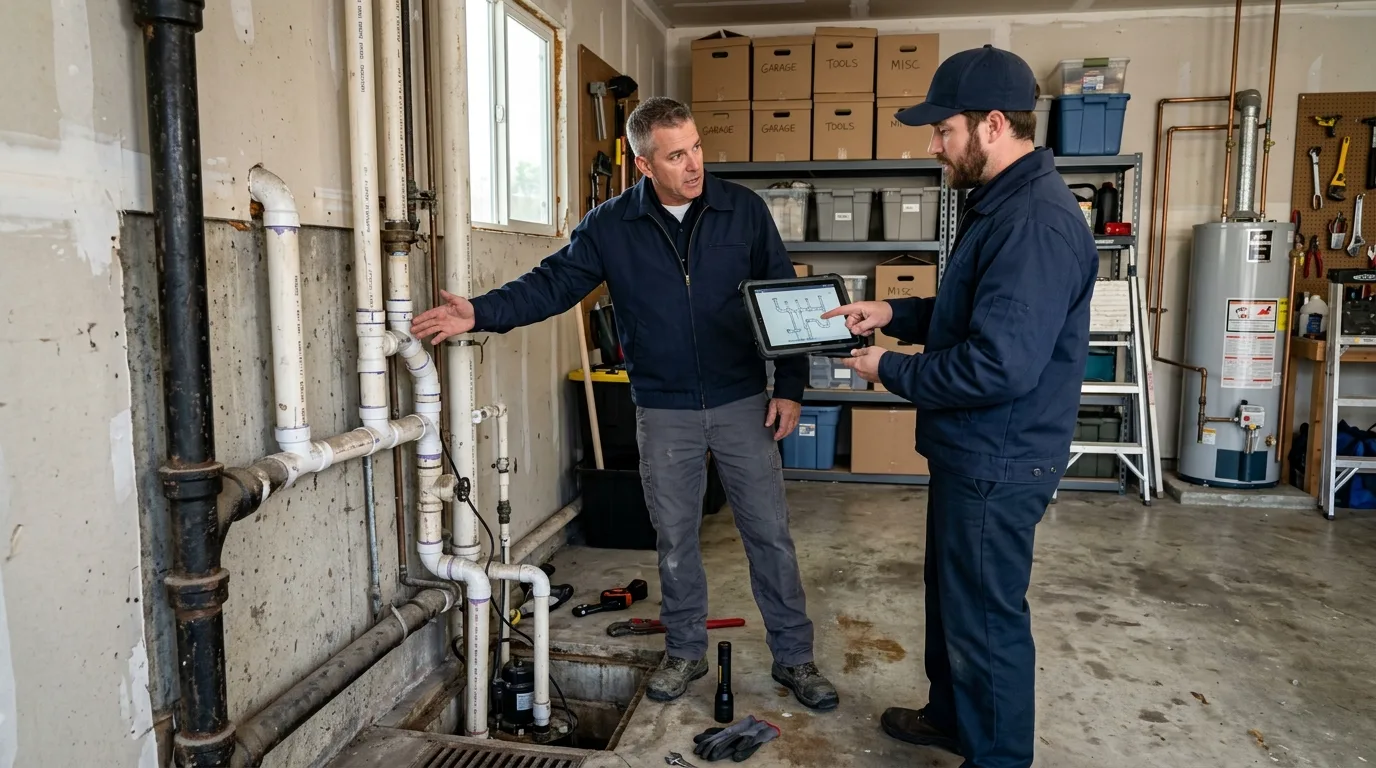
Ask to see the footage and ask one question: is this pipe failing structurally, or is it dirty? Roots at a joint in an otherwise round, well-graded pipe is dirty. Cracks, offsets, missing pipe bottom and standing water are structural. The first is a jetting bill. The second is a repair decision.
Keep the driveway, keep the trees
A trench is not the only way to replace a sewer lateral.
Get the line surveyed, then get lining, bursting and open-trench priced against each other.
On the day
How a lining job actually runs
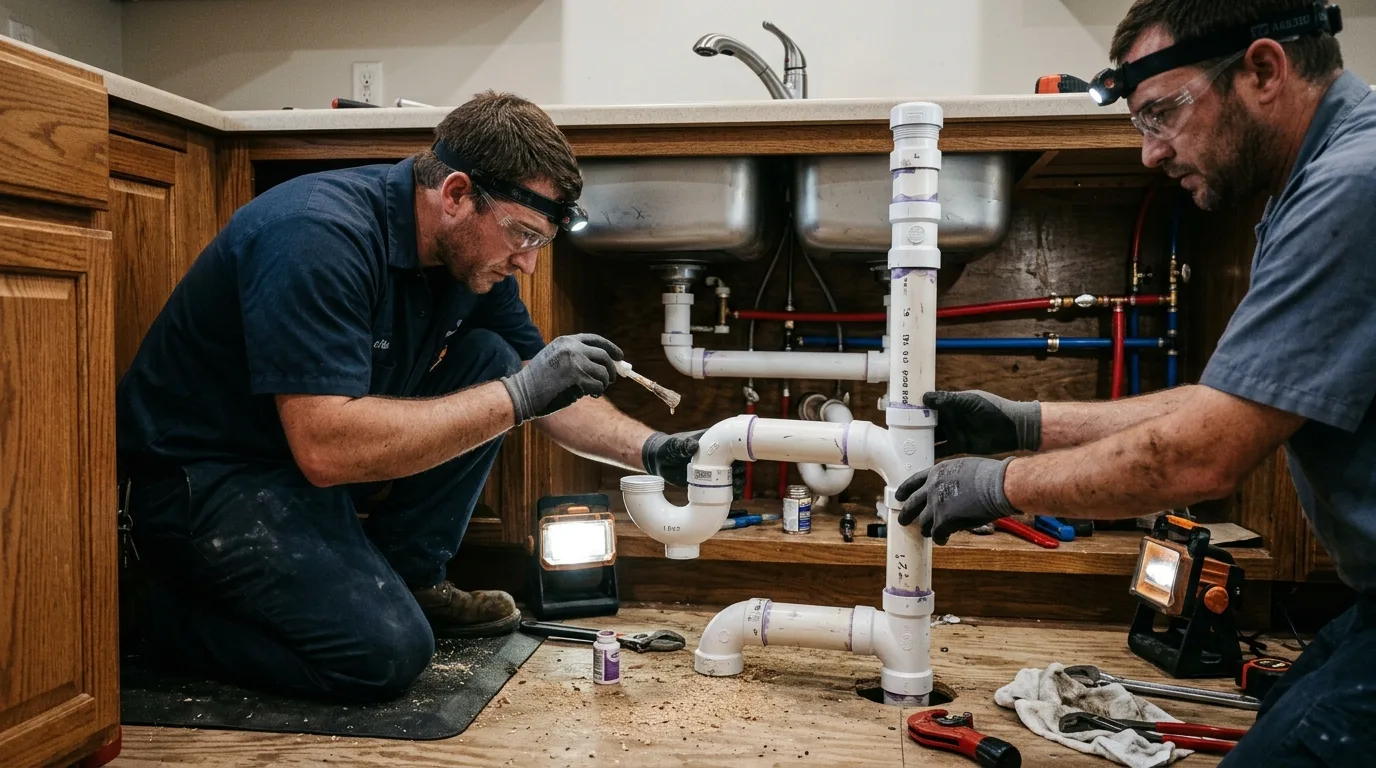
Survey and locate. The camera goes in and the line is traced and depth-marked from the surface, so everyone knows where the pipe runs before a shovel appears.
Clean the host pipe. Jetting and, where needed, mechanical cutting to take roots, scale and debris back to the pipe wall. A liner will not bond to a dirty pipe, so this step is not optional.
Access. Usually an existing cleanout plus one small pit. Far less surface disturbance than a trench, but not zero, expect a tidy excavation somewhere.
Measure, saturate, install. The liner is cut to length, wetted out with resin, and drawn or inverted into place, then inflated so it presses against the host pipe.
Cure. Ambient, hot water or steam depending on the system. This is the part where the house has no drainage, and it is worth asking how long that window will be before the day starts.
Reinstate and verify. Any branch connections are reopened, then the camera goes back in. You should be handed footage of the finished line, not a verbal assurance.
Most residential laterals here are a one- to two-day job including preparation. Permits and any required traffic control usually shape the schedule more than the plumbing does.
Why it matters in this city
What is sitting on top of your lateral
Old Towne and the Plaza District. Original clay laterals under period frontages, mature parkway trees, brick and concrete walks laid decades ago. Old Towne is a National Register historic district and the City of Orange maintains Historic Preservation Design Standards covering exterior changes, so a trench across a historic frontage is a bigger conversation than a trench across a lawn. Trenchless is often the path of least resistance here. Your plumber pulls plumbing permits; we do not obtain historic approvals for you.
Postwar and 1970s to 90s tracts. El Modena, Olive, McPherson and Marlboro generally have accessible cleanouts and simpler routes, which makes them straightforward candidates. What is usually at stake is a concrete driveway and forty years of landscaping.
Hillside and large-lot properties. On Cerro Villa Heights, Santiago Hills and the equestrian parcels of Orange Park Acres a lateral can run a very long way before it reaches the main. Length is exactly where trenchless earns its cost, and it is also where grade problems accumulate, so the survey matters more, not less.
Anything under the street. Work in the roadway or parkway typically means a permit and traffic control regardless of method. Trenchless reduces how much of it you need, not whether you need it.
What drives the cost
- Length of the lateral
- Diameter and pipe material
- Lining or bursting
- Cleaning and root cutting first
- Number of access pits
- Branch connections to reinstate
- Permits and traffic control
- Surface restoration
- Spot excavation needed as well
Compare quotes on total delivered cost, not the plumbing line item. An open-trench quote that excludes replacing a driveway and a quote for lining that includes everything can look very different on paper and land in the same place.
Ask what the warranty covers and for how long. On a liner, that answer is part of the product.
Straight answers
Trenchless questions, including the awkward ones
Is a liner really as good as a new pipe?
A correctly installed cured-in-place liner is a continuous pipe with no joints, which removes the root entry points that cause most lateral failures in this city.
It is not right for every line. A collapse or a significant belly needs excavation, because a liner follows the shape of whatever it is lining.
How long does trenchless work take?
Most residential laterals are one to two days including cleaning, installation and curing. Bursting can be quicker on the pipe itself but needs access pits dug at both ends.
Permits and traffic control affect the calendar more than the work does.
Will you still have to dig somewhere?
Almost always a little. Lining typically works from an existing cleanout plus one small pit; bursting needs a pit at each end.
The difference from open trenching is a couple of tidy excavations instead of a continuous cut across the property.
Can it be done under a driveway or a mature tree?
That is precisely the case trenchless is for. The pipe is replaced along its existing path without removing the surface above it.
Access points still have to go somewhere, and the plumber will plan those around hardscape and root zones.
Does the liner reduce the pipe diameter?
Slightly, and it also gives you a smooth continuous wall in place of jointed clay with root intrusion and scale. In practice flow is usually as good or better.
Where diameter genuinely cannot be given up, bursting installs same-size or larger pipe instead.
Do I need a permit?
Sewer work generally requires a permit, and work in the street or parkway typically requires traffic control. Your plumber pulls the plumbing permits and arranges inspection.
In Old Towne, exterior changes separately fall under the city’s Historic Preservation Design Standards. We do not obtain historic approvals on your behalf.
How do I know I actually need this rather than a cleaning?
Camera footage. Roots and grease in a round, well-graded pipe is a cleaning job, jetting is a fraction of the cost.
Cracks, offsets, missing pipe bottom or standing water are structural, and that is when replacement methods belong in the conversation.
Can branch lines be reconnected after lining?
Yes. Connections are reinstated after the liner cures, and the finished line is verified on camera.
Ask for that final footage. It is how you confirm every branch is open.
Who performs the work?
An independent local plumbing professional. Orange CA Plumbing Line is a referral service, not a plumbing contractor; we connect you with a pro who does trenchless work routinely.
They survey, quote, perform the work and stand behind their own workmanship. Nothing is billed through us.
Tell us what the camera showed and where the line runs. That is usually enough to say whether trenchless fits.
Often part of the same job
Related services and neighbourhoods
One number, any hour
Replace the lateral, not the landscaping.
We will connect you with a local plumbing pro who surveys first and prices trenchless against excavation honestly.