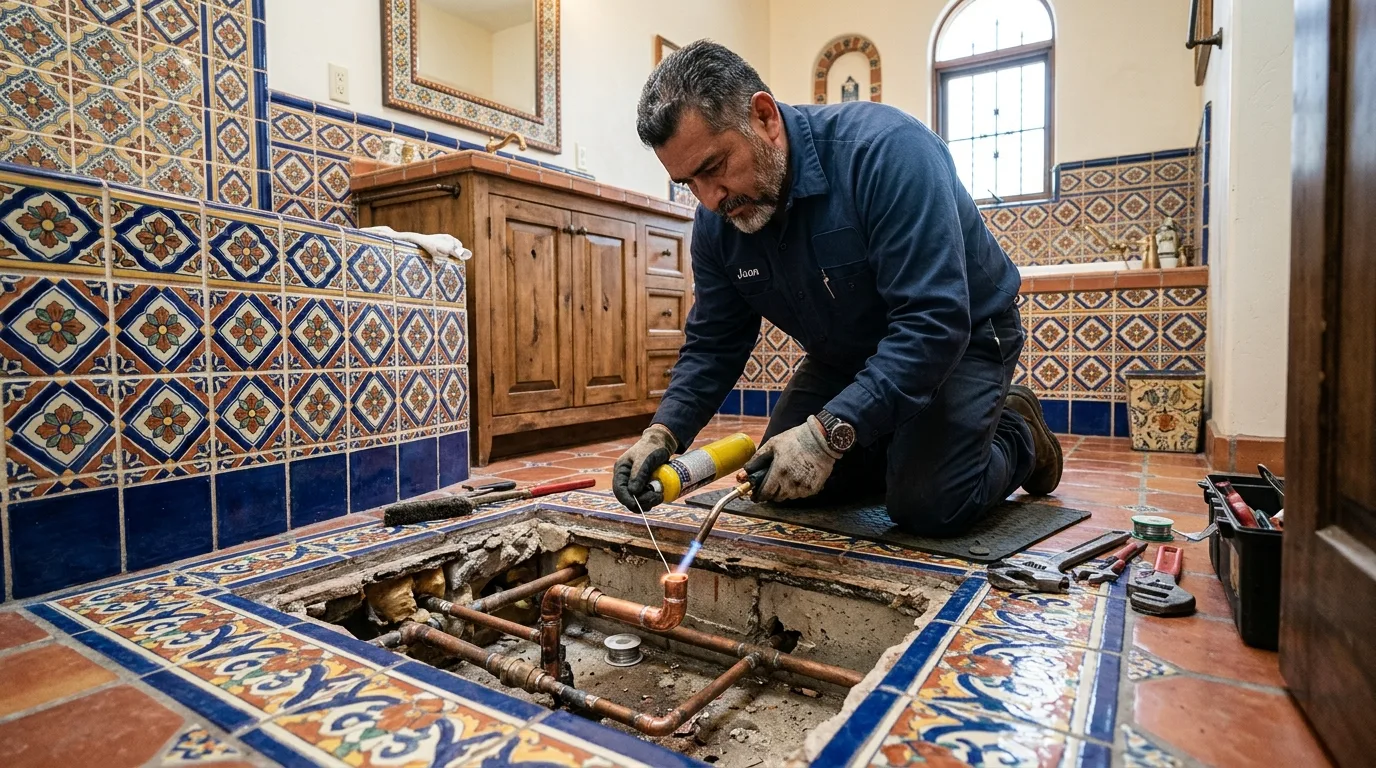
Slab leak repair in Orange, CA. Found first, opened only if it has to be
A warm patch on the floor, a meter that moves with everything off, a bill nobody can explain. Under-slab supply failures across the postwar tracts, and failing radiant heating loops in the Eichler slabs, two different problems, two different repairs.
Before you call, try the meter test. Fifteen minutes, and it turns a suspicion into a fact.
What to expect
Answered 24/7
Every hour, every day, including holidays.
Same-day & emergency
Urgent calls get moved to the front of the queue.
Upfront pricing
A number you approve before work begins.
No hidden fees
The price you agreed to is the price you pay.
Workmanship terms upfront
Ask the plumber what their own workmanship terms are before work starts.
How it announces itself
The signs, in the order people usually notice them
Slab leaks are quiet for a long time. The water has nowhere to go but sideways through the sub-base and up through the concrete, so by the time it is obvious it has usually been running for weeks.
A warm spot on the floor. The classic one. On a hot-water supply line under a slab, heat conducts up through the concrete and you can feel it barefoot. In an Eichler, the same symptom means something different, see below, because that distinction changes everything about the repair.
The meter moves with everything off. Close every fixture, shut the irrigation, then watch the meter dial. Any movement at all means water is leaving the system somewhere. This is the single most useful test you can do yourself before calling.
Water bill climbing for no reason. A slab leak does not announce itself; it shows up on a statement two months later as a number nobody can explain.
The sound of running water in a quiet house. Late at night, standing on the floor, with nothing on. People describe it as a hiss or a faint rush under their feet.
Damp or dark flooring, lifting tile, cupping hardwood. Moisture wicking up at a slab edge, along a baseboard, or through a grout line. Carpet that stays damp in one patch.
Cracks appearing or widening, doors that stop latching. Long-running under-slab water changes the soil under the foundation. When a leak has reached this stage it stops being only a plumbing problem.
Pressure that has dropped everywhere at once. Not one fixture, the whole house.
Two or more of those together is worth a call today rather than next week. Under-slab water gets more expensive the longer it runs.
The Orange-specific distinction
Two completely different things live under a slab here
In most cities, "slab leak" means one thing: a pressurised water supply line running under or through the concrete has failed. In the City of Orange there is a second possibility, and confusing the two wastes a great deal of money.
1. A failed supply line under the slab
Standard across the postwar and 1970s to 90s slab-on-grade tracts, El Modena, Olive, McPherson, Marlboro and the newer subdivisions. Copper hot and cold lines run in or beneath the concrete, and they fail at bends, at slab penetrations, where they were laid against rebar or aggregate, or simply where decades of hot water and hard local water have thinned the wall. Hot lines fail far more often than cold ones. The tell is a warm patch and a meter that will not sit still.
2. A failing radiant heating loop in the concrete
Orange is one of the few cities in the county with Eichler tracts, and all three, Fairhaven, Fairhills and Fairmeadow, designated local historic districts in 2018, were built with hydronic radiant heating pipe cast directly into the slab. Those loops are decades past their design life. The symptoms overlap with a supply leak, which is exactly the problem: a warm patch on the floor, a boiler or water heater that runs far longer than it used to, a gas bill climbing season over season, moisture at the slab edge, and a heating system that never quite gets the house warm.
The difference matters because the repair options are not the same. A supply line can be rerouted overhead in an afternoon and the house carries on. A radiant loop is the heating system: abandoning it means deciding how the house will be heated instead. That is a bigger conversation about cost, disruption and how a midcentury house with a flat roof and floor-to-ceiling glass actually feels to live in, and in a designated district, exterior changes carry their own review.
If you own an Eichler and a patch of floor has gone warm, say so on the phone. It changes who should be sent.
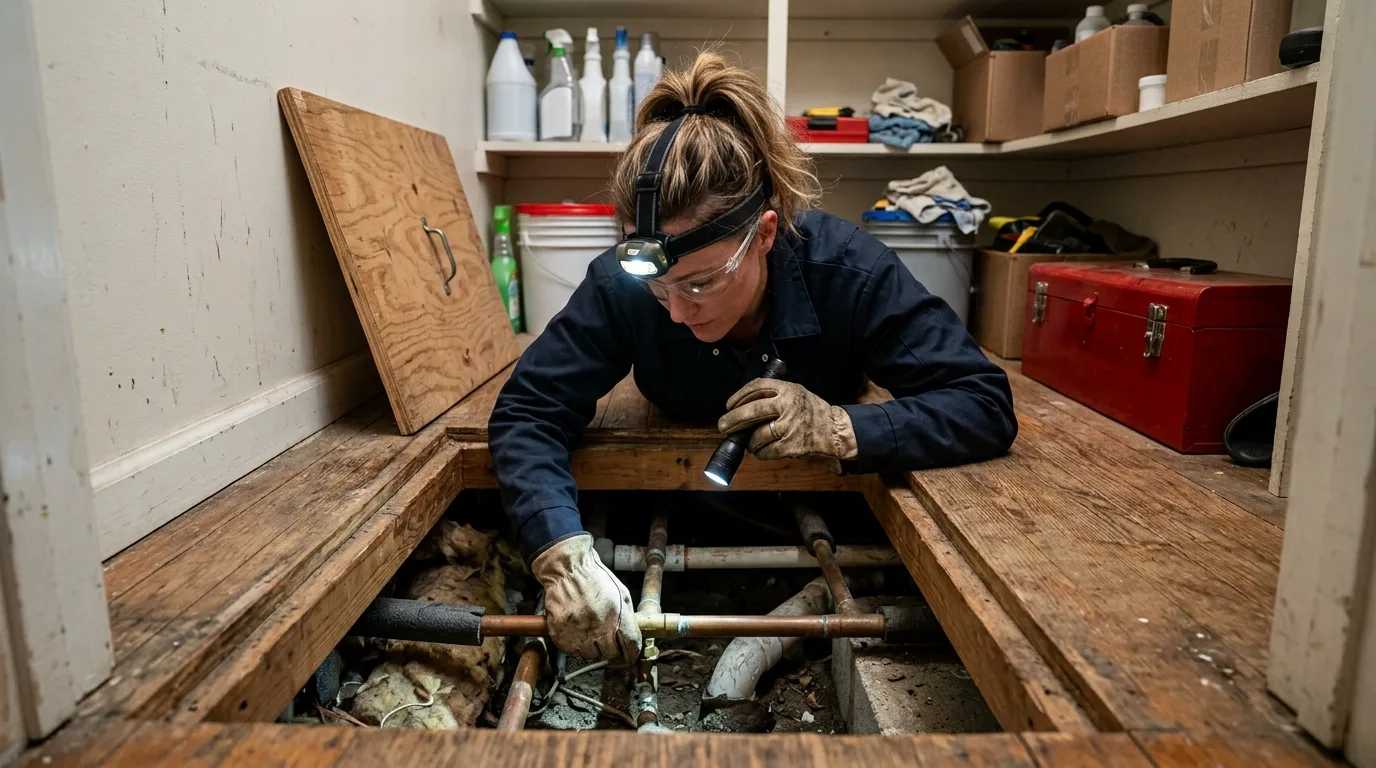
Do the meter test before you call
Turn off every tap, appliance and irrigation zone. Find the water meter at the front of the property and look at the small leak-indicator dial or the last digit. Note it, wait fifteen minutes, look again. If it has moved, water is escaping somewhere on your side of the meter. It takes a quarter of an hour and it turns a vague worry into a fact the plumber can work from.
Under the floor, out of sight
A slab leak does not stop on its own, and the concrete hides how bad it is getting.
Get it located properly before anyone talks about breaking floor. We will connect you with a pro who does this work routinely.
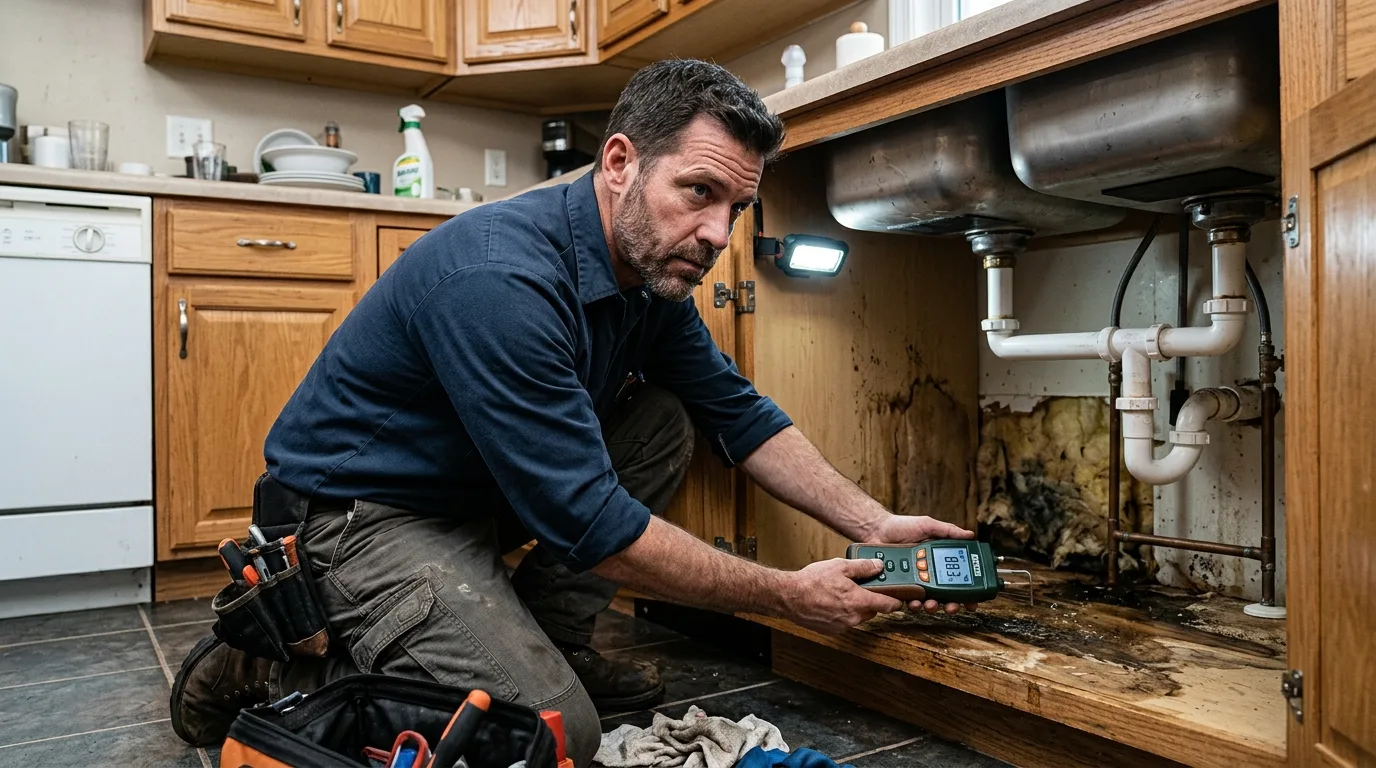
Step one, always
Locating it, before anyone touches concrete
Opening a slab in the wrong place is the most expensive mistake available on this job, so the first visit is diagnosis, not demolition. It usually runs in this order.
Confirm the loss. Isolate the house at the main, watch a pressure gauge, then isolate hot from cold. If the gauge drops with the cold side isolated, the leak is on the hot line, which is where under-slab failures usually are.
Listen for it. Acoustic equipment picks up the sound of pressurised water escaping through concrete. Quiet house, no traffic, no air conditioning running. This is why a good technician asks you to turn things off and stop walking around.
Read the heat. Thermal imaging maps warm water spreading under a floor and often narrows the location to a couple of feet. It is also how a radiant loop is traced, because the whole grid shows up.
Trace gas, if needed. For a stubborn find, the line is drained and charged with a safe tracer gas, which escapes at the break and is picked up at the surface.
Camera the drains, if the water is not pressurised. Not every wet slab is a supply leak. A broken cast-iron or clay drain line under the concrete produces damp with no meter movement at all, and that is found with a camera instead.
You should leave the diagnosis knowing where the leak is, what line it is on, and what your options are, before anyone quotes a repair.
The real decision
Three ways to fix it, and they are genuinely different
Open the slab and repair in place
The concrete is cut over the leak, the failed section is replaced, and the slab is patched. It keeps the original pipe route and it is the right answer when the leak is in an accessible spot, the rest of the line is sound, and the flooring above can be lifted and put back. Against it: dust, noise, a saw cut through your floor covering, and a patch that will always be a patch. Under original 1920s tile or a poured terrazzo floor, that finish cannot be restored.
Abandon the run and reroute
The under-slab section is capped and a new line runs through walls, an attic or a soffit to reach the same fixtures. Frequently the least destructive and least expensive option, because nobody is cutting concrete. It costs you some drywall and a slightly less tidy pipe route, and in a single-storey house with a flat roof, the plumber has to find a path that works. For a house with several under-slab failures already, rerouting retires the problem instead of chasing it.
Repipe the affected system
When the leak is the third one, or the house is on original galvanized with copper patched in, replacing the supply system in copper or PEX is the answer that stops the cycle. It is the largest of the three jobs and the only one that ends the conversation.
And for a radiant slab specifically
Repair the loop where it failed, abandon the loop and reroute heating overhead, or convert the house to forced air. Each changes cost, disruption and the character of a midcentury house. Anyone who quotes you one of those over the phone without seeing the house is guessing.
What drives the cost
- Where under the slab it is
- Depth and thickness of concrete
- Flooring above the leak
- Repair, reroute or repipe
- Hot line or cold line
- Supply leak or radiant loop
- Detection method required
- Damage already done to the floor
- Permit and inspection, if required
Ask for the options priced side by side. A quote for opening the slab, on its own, is not enough information to make this decision with, and the reroute is very often the cheaper number.
Get all three options on the table before you agree to any of them. That is a reasonable thing to insist on.
Straight answers
Slab leak questions worth asking before anyone starts cutting
How do I know it is a slab leak and not something simpler?
Do the meter test: shut off every fixture and irrigation zone, note the leak-indicator dial on the meter, wait fifteen minutes and look again. Movement means water is escaping on your side of the meter.
Combine that with a warm patch on the floor, a rising bill, or the sound of water in a silent house, and a slab leak becomes the most likely explanation. Confirming it properly still needs equipment.
Does the concrete always have to be broken?
No, and often it should not be. Rerouting the affected line through walls or overhead avoids cutting concrete entirely and is frequently the cheaper, less disruptive option.
Opening the slab makes sense when the leak is in a reachable spot, the rest of the line is sound, and the flooring above can be lifted and replaced. Ask for both prices.
My floor is warm and I own an Eichler. Is that a slab leak?
It may well be a failing hydronic radiant heating loop rather than a supply line. Fairhaven, Fairhills and Fairmeadow were all built with radiant heating pipe cast into the concrete, and those systems are decades past their design life.
The two problems look alike from the living room and are not alike at all to fix. Say "Eichler" and "radiant" when you call so the right person is sent.
How long does a slab leak repair take?
Locating it is usually a single visit. A straightforward reroute is commonly a one- to two-day job. Opening and patching concrete adds cure time before flooring can go back.
A radiant heating decision is not a same-week job at all; it is a project, and it should be planned rather than rushed.
Will my homeowners insurance cover it?
That depends entirely on your policy, and it commonly treats the resulting damage differently from the failed pipe. Document everything and keep the plumber’s written description of what was found.
We cannot advise on coverage or manage a claim.
Can I just leave it if it is only a small leak?
Not sensibly. Water under a slab does not evaporate; it saturates the sub-base, migrates under the foundation and eventually shows up as movement: cracks widening, doors that stop latching, flooring lifting.
It is also running on your meter every hour. A small slab leak is the cheapest version of the problem you will ever be offered.
What does hard water have to do with it?
Imported water in this part of Orange County is hard, and scale plus decades of hot water thin copper from the inside. That is one reason hot-water lines under slabs fail far more often than cold ones.
It is also why a whole-house softener comes up in conversation after a second failure; it does not fix existing pipe, but it slows what is happening to the rest.
Is it a slab leak if the water is not on the meter?
Then it is probably not a pressurised supply line. A broken cast-iron or clay drain under the slab produces damp concrete and no meter movement, because that water is not pressurised.
That is found with a drain camera rather than acoustic gear, and the repair is a different job. Both start with the same diagnostic visit.
Do you break up the floor and put my tile back?
Plumbing and floor restoration are different trades. The plumber will cut and patch the concrete and tell you exactly what is being left for a flooring contractor.
On original or irreplaceable flooring, a 1920s bathroom, terrazzo, period hardwood, plan the access route before work begins, or reroute instead. Some finishes cannot be put back.
Who actually does the work?
An independent local plumbing professional. Orange CA Plumbing Line is a referral service, not a plumbing contractor; we connect you with a pro who covers your area and does slab work routinely.
They diagnose, quote, perform the work and stand behind their own workmanship. Nothing is billed through us.
Describe the floor, the meter and the bill. That is usually enough to say what kind of visit you need.
Often part of the same job
Related services and neighbourhoods
One number, any hour
Find out what is under your floor.
Tell us what you are feeling underfoot and what the meter is doing. We will connect you with a local pro who has opened these floors before.