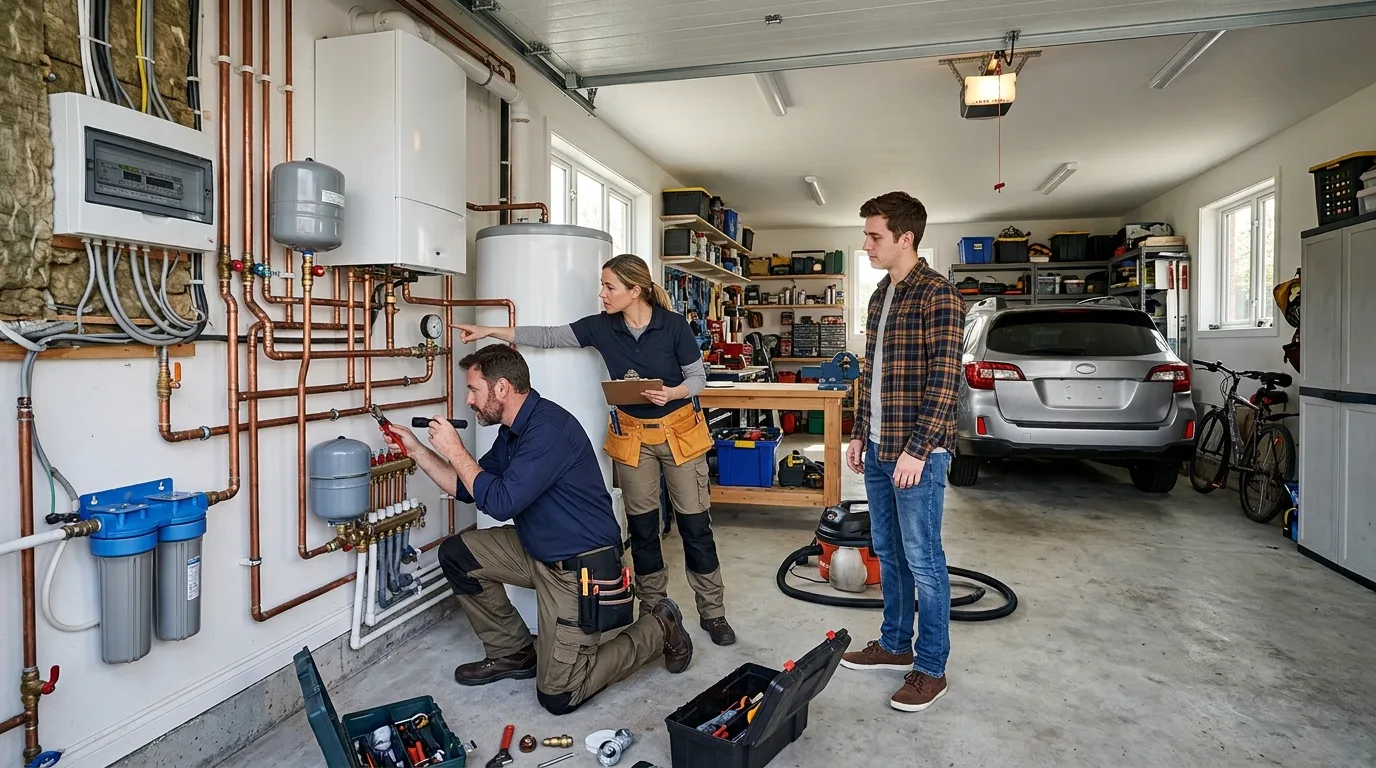
Water softener and filtration in Orange, CA. For water that is genuinely hard
Scale in the heater, stiff cartridges, spotting on every glass, and fixtures that fail sooner than they should. Softening, conditioning and filtration are three different answers; we will tell you which one fits.
Just replaced a heater or repiped? This is the moment treatment is cheapest to add.
What to expect
Answered 24/7
Every hour, every day, including holidays.
Same-day & emergency
Urgent calls get moved to the front of the queue.
Upfront pricing
A number you approve before work begins.
No hidden fees
The price you agreed to is the price you pay.
Workmanship terms upfront
Ask the plumber what their own workmanship terms are before work starts.
The problem
What hard water is actually doing
Water in this part of Orange County is hard, and much of it is imported. Dissolved calcium and magnesium are harmless to drink and steadily expensive to live with, because they come out of solution wherever water is heated or evaporates.
Inside the water heater. Minerals settle on the tank floor, insulate the burner from the water, and make the unit work harder for less. It is the main reason tanks here fail earlier than expected. In a tankless unit the same process narrows the heat exchanger, which is why manufacturers require descaling.
In the fixtures. Scale in aerators and shower heads, weak and uneven spray, stiff cartridges, faucets that drip because the seat is no longer smooth. The reason a fixture in this area fails sooner than the same fixture elsewhere.
In the pipe. Gradual narrowing, particularly on hot runs, and an internal surface that gives corrosion somewhere to start.
On every surface you clean. Spotting on glass and dishes, a film on tile and shower doors, and the constant chalky residue around taps.
In appliances. Dishwashers and washing machines work harder and last less long, and detergent efficiency drops, which is why softened water usually means using noticeably less of it.
And on skin and hair. Subjective, but the most common thing homeowners mention afterwards.
Just replaced a water heater or repiped? This is the moment softening is worth considering; it protects what you just paid for.
Options
Softening, conditioning and filtration are three different things
These get sold interchangeably and they are not interchangeable. Knowing which problem you are solving prevents buying the wrong equipment.
Ion-exchange softener
The traditional approach and the only one that genuinely removes hardness minerals, exchanging them for sodium or potassium. It gives you the classic softened-water result: no scale, less detergent, longer-lived appliances. It needs a drain connection for regeneration, salt topped up periodically, and space. Note that California has restrictions on salt-based softener discharge in some jurisdictions, so a local pro should confirm what applies to your address.
Salt-free conditioner
Does not remove hardness; it alters how the minerals crystallise so they are less inclined to stick as scale. No salt, no regeneration drain, minimal maintenance, smaller footprint. It reduces scale build-up but will not give you the slippery softened feel or the detergent savings. Honest and useful, provided nobody sells it to you as a softener.
Whole-house filtration
A separate problem: sediment, chlorine or chloramine taste and odour, and general water quality. Carbon and sediment stages address taste, smell and particulate. It does nothing for hardness, and a softener does nothing for taste, which is why the two are frequently installed together.
Point-of-use drinking water
An under-sink reverse osmosis or carbon system for drinking and cooking water only. Far cheaper than treating the whole house if the goal is a better glass of water, and often the right answer for a household that mainly wants that.
The right combination depends on what actually bothers you. Scale on fixtures and short-lived heaters points to softening or conditioning. Taste and smell points to filtration. Wanting both is the common case.
Be specific about the goal
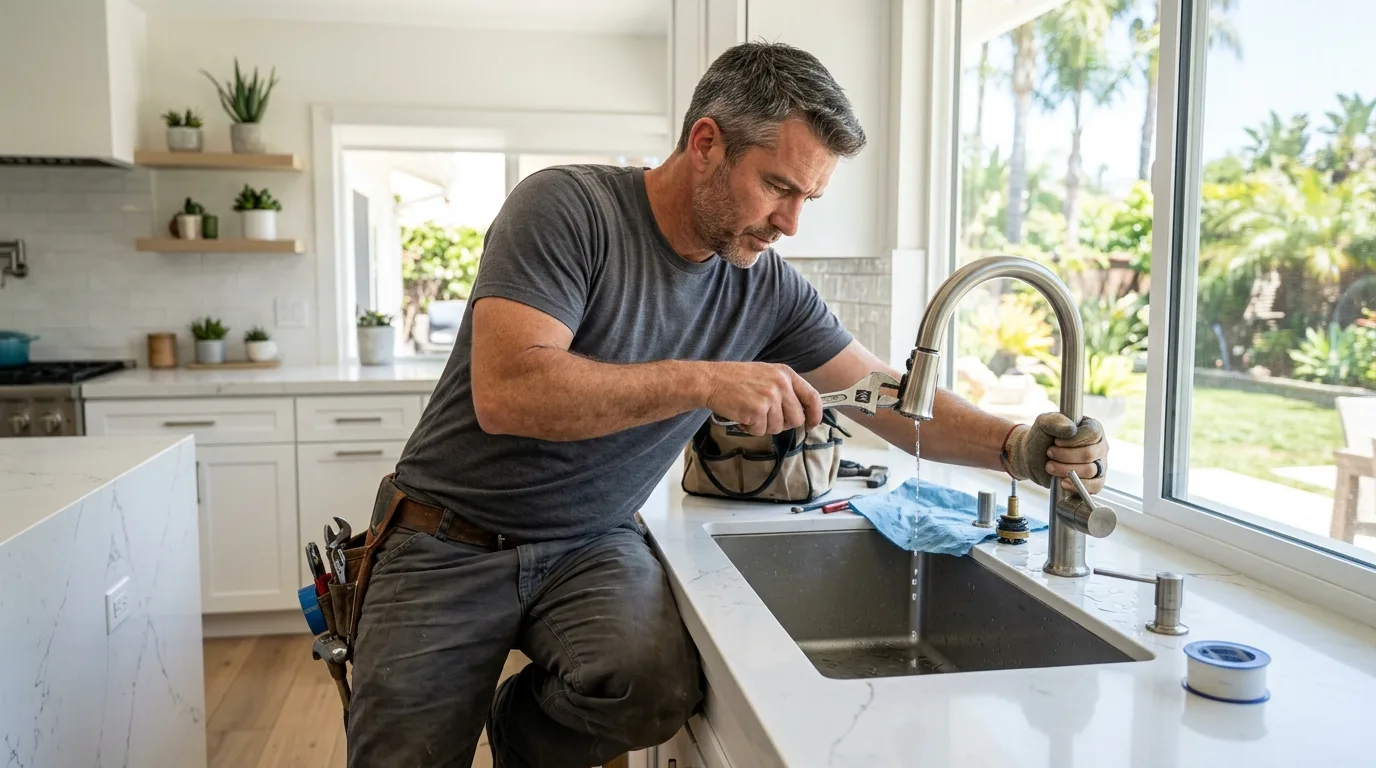
Ask yourself which of these you want: no more scale on the shower door, a water heater that lasts, water that tastes better, or less detergent. Each points at different equipment. A pro who asks that question before quoting is worth more than one who arrives with a single product.
Treat the cause, not the symptom
Hard water is why fixtures and heaters here fail early.
Get an honest read on whether softening, conditioning or filtration is what you actually need.
Installation
Where it goes, and what it costs
Location. Equipment goes on the main line where it enters the house, so everything downstream is treated. In the postwar and later tracts across El Modena, Olive, McPherson and Marlboro that usually means the garage, easy access, room to work, and a drain nearby. In an older house with no garage, or a midcentury house with a slab and no attic, finding a location with a drain and enough space is genuinely part of the job.
Bypassing the outside taps. Softened water on the garden and the irrigation is a waste of salt and money. A proper install treats the house and leaves exterior hose bibs and irrigation on untreated supply. Worth confirming it is in the plan.
Drain for regeneration. A salt-based softener needs somewhere to discharge. Where that is not straightforward, it shapes the location and sometimes the choice of system.
Loop plumbing. Some houses were built with a softener loop already in place, which makes this simple. Many older ones were not, and the supply line has to be intercepted and rerouted.
Maintenance, honestly stated. Salt for a softener, cartridge changes for filtration, and periodic descaling for a tankless heater regardless. Ask what the annual upkeep looks like before choosing, because a system nobody maintains stops working.
Cost factors
- Softener, conditioner or filtration
- Capacity for household size
- Existing softener loop or not
- Drain access for regeneration
- Location and space available
- Bypassing irrigation and hose bibs
- Point-of-use system added
- Ongoing salt and cartridges
- Local discharge rules
The best time to install any of this is alongside other work, a repipe, a water heater replacement, or a service line renewal. The pipe is already open and the water is already off, so the incremental labour is small.
Ask for the annual running cost, not just the install price. That is what you actually live with.
Straight answers
Hard water questions, answered without a product pitch
Is water in Orange, CA hard?
Yes; water in this part of Orange County is hard, and much of the supply is imported. That is why scale on fixtures, short-lived water heaters and spotting on glass are such common complaints locally.
It is harmless to drink. It is simply expensive to live with over time.
What is the difference between a softener and a salt-free conditioner?
An ion-exchange softener actually removes hardness minerals, which is what gives you no scale, less detergent and longer appliance life.
A salt-free conditioner does not remove them; it changes how they crystallise so they stick less. It reduces scale with almost no maintenance, but it will not give you softened water.
Will a softener make my water taste better?
Not really. Softening addresses hardness; taste and odour are usually chlorine or chloramine, which is a filtration issue.
That is why the two are often installed together, or why a point-of-use drinking water system is added at one sink.
Will it protect my water heater?
It slows the process that shortens tank life here, which is mineral sediment settling and insulating the burner. For a tankless unit it protects the heat exchanger, where scale does the most harm.
It will not undo existing scale in an old tank, so the best time to install is alongside a new heater.
Where does the equipment go?
On the main line where water enters the house, so everything downstream is treated. In most postwar and later tracts that means the garage.
In an older house without a garage, or a midcentury house on a slab, finding a spot with space and a drain is a real part of the job.
Should the garden and irrigation be softened too?
No; that wastes salt and money. A proper installation treats the house and leaves exterior hose bibs and irrigation on untreated supply.
Confirm that is in the plan before work starts.
Are there rules about salt-based softeners in California?
Some jurisdictions restrict salt-based softener discharge. It varies by location, so a local pro should confirm what applies at your address before you buy equipment.
Where restrictions apply, a salt-free conditioner or a point-of-use system may be the practical route.
What is the ongoing maintenance?
Salt top-ups and occasional servicing for a softener. Cartridge changes for filtration, on a schedule that depends on the system.
Ask for the annual running cost up front. A system nobody maintains quietly stops working.
When is the cheapest time to install it?
Alongside other plumbing work, a repipe, a water heater replacement, or a service line renewal. The pipe is already open and the water is already off.
It also means the new pipe and the new heater start their life in treated water.
Tell us what bothers you most, scale, taste, or short-lived equipment. That points at the answer.
Often part of the same job
Related services and neighbourhoods
One number, any hour
Stop hard water costing you equipment.
We will connect you with a local plumbing pro who asks what bothers you before recommending a box.