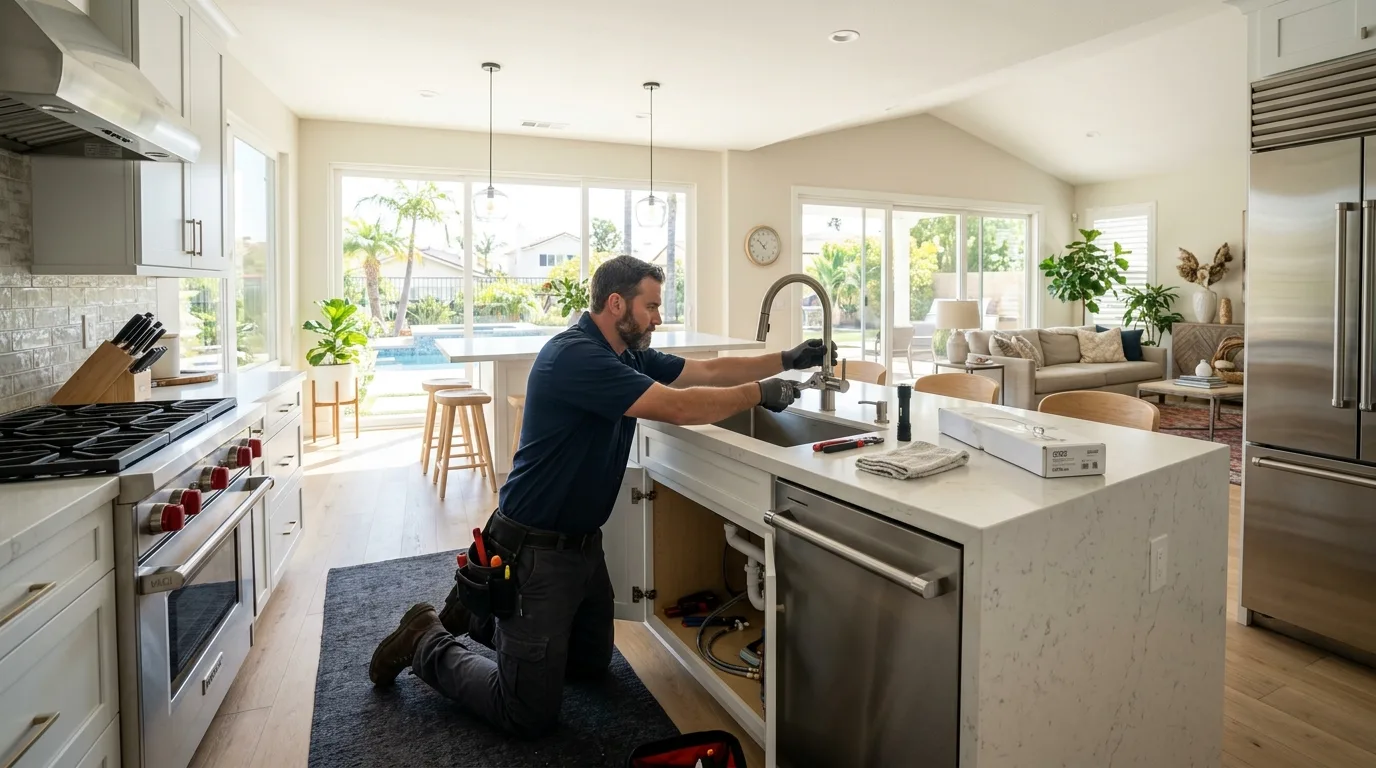
Faucet and fixture installation in Orange, CA. Including the rooms you cannot replace
Dripping cartridges, aerators full of scale, shutoffs that will not close, and hole spacing that predates modern fittings. Kitchen, bath, laundry, utility and outdoor, batched into one visit if you have a list.
Third cartridge in two years? Ask for a pressure reading before buying another one.
What to expect
Answered 24/7
Every hour, every day, including holidays.
Same-day & emergency
Urgent calls get moved to the front of the queue.
Upfront pricing
A number you approve before work begins.
No hidden fees
The price you agreed to is the price you pay.
Workmanship terms upfront
Ask the plumber what their own workmanship terms are before work starts.
Diagnosis
Dripping, stiff, weak or noisy
A faucet that misbehaves is usually telling you about the water rather than the faucet. In this area that means hard water and, often, pressure that was never brought down.
Dripping from the spout. A worn cartridge, seat or seal. On most modern faucets a cartridge is a straightforward replacement, provided the model is identifiable. On a discontinued or unbranded fixture, parts may simply not exist.
Leaking at the base or underneath. Different problem, more urgent. Water running under a sink rots the cabinet base and the floor, and it is often the supply connection or the shutoff rather than the faucet body.
Weak flow at one tap only. Nearly always a scaled aerator, and often a five-minute fix. If cleaning the aerator does nothing, suspect the cartridge or the supply stop.
Weak flow everywhere. Not a faucet problem. That points at the service line, a failed pressure regulator, or corroded supply pipe, a different page.
Stiff or gritty handles. Scale in the cartridge. Common here, and it usually gets worse until the cartridge is replaced.
Banging when you close a tap. Water hammer, which points at high pressure or a failed regulator. Worth fixing, because it stresses every joint in the house.
Third cartridge in two years. Stop replacing cartridges and get the pressure measured. Repeated cartridge failure is a symptom, not a coincidence.
Replacing the same part repeatedly? Ask for a pressure reading. It takes minutes and it usually explains everything.
Period work
Fixtures in houses that predate the fixtures
Orange kept its historic core, which means a real share of the bathrooms and kitchens here were laid out before modern fixture standards existed. That produces a specific set of problems, none of them exotic, all of them slower than a modern install.
Hole spacing that does not match
Widespread, centreset, single-hole, old sinks and countertops have their own spacing, and a new faucet may not land on it. Sometimes a deck plate solves it. Sometimes the answer is a fixture chosen to fit rather than the one in the catalogue.
Basins and tubs that cannot be replaced
Original pedestal basins, cast-iron tubs, wall-hung sinks and period tile are frequently irreplaceable, or replaceable only at a cost nobody wants. Work in those rooms is planned around not damaging them, which is why a careful plumber moves slowly in a 1915 bathroom.
Seized angle stops and galvanized supply
The shutoff under an old sink often will not turn, and behind it there is sometimes corroded galvanized pipe that crumbles when disturbed. A simple faucet swap can legitimately expand into replacing the stop and a length of supply, which is exactly why a good plumber checks the shutoff before quoting.
Period-appropriate choices
Reproduction cross-handle and bridge fittings exist and are worth using where the room deserves them. They also come with their own valve types and parts availability, which is worth understanding before choosing one.
Midcentury bathrooms
In the Eichler tracts and other midcentury houses, wall-mounted fittings, compact vanities and original tile mean the layout constrains the fixture more than taste does. Matching the era rather than fighting it usually produces the better result.
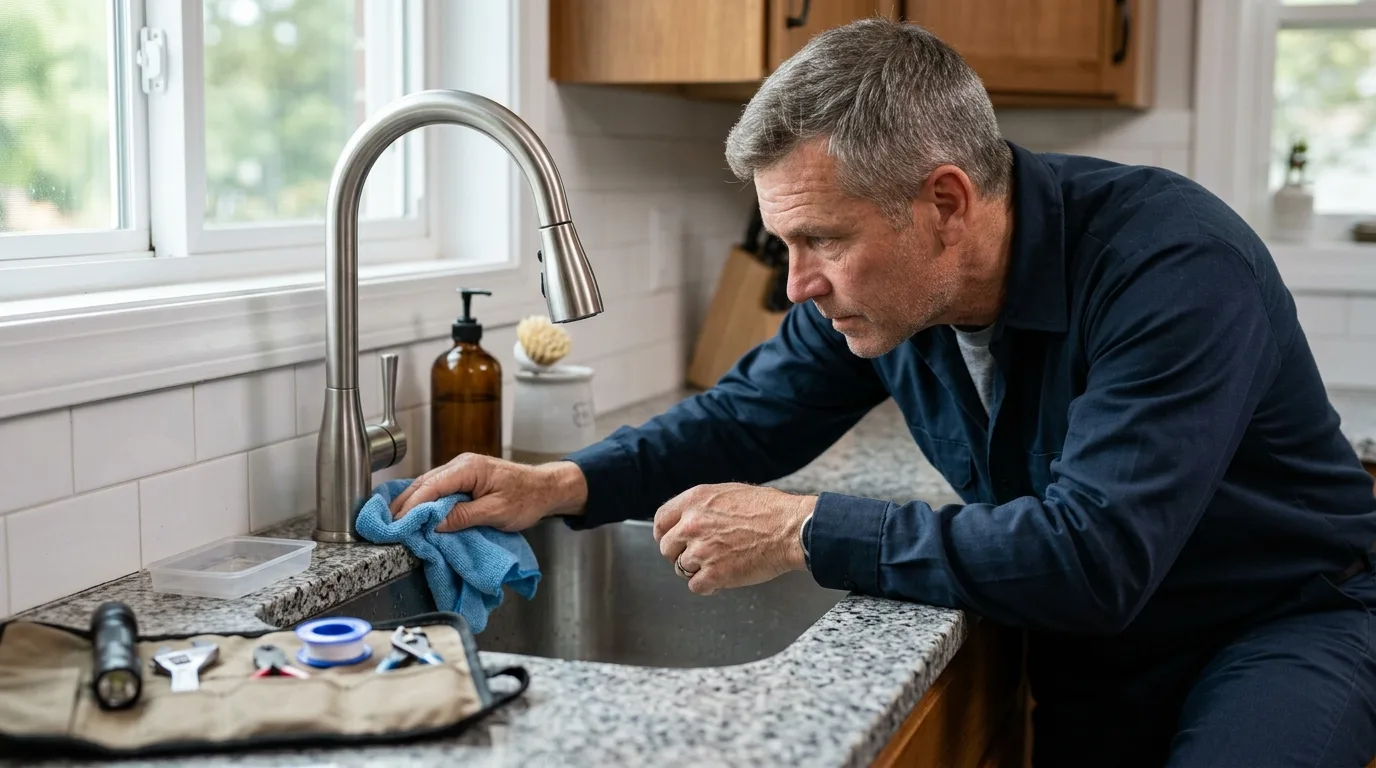
Check the shutoff before shopping
Before you buy a faucet, try the angle stop under the sink. If it will not close, that gets replaced as part of the job, and if the pipe behind it is galvanized, the scope grows. Knowing that in advance turns a surprise into a line item.
The small jobs, done well
A faucet swap is easy. A faucet swap in a 1915 bathroom is craft.
Get someone who checks the shutoff and the pressure before touching the fixture.
Scope
What comes under this heading
Kitchen faucets, including pull-down and pot-filler installations. Bathroom basin faucets, widespread and single-hole. Tub fillers and shower trim. Bar and prep sinks. Laundry faucets and washer boxes. Utility sinks in garages and workshops.
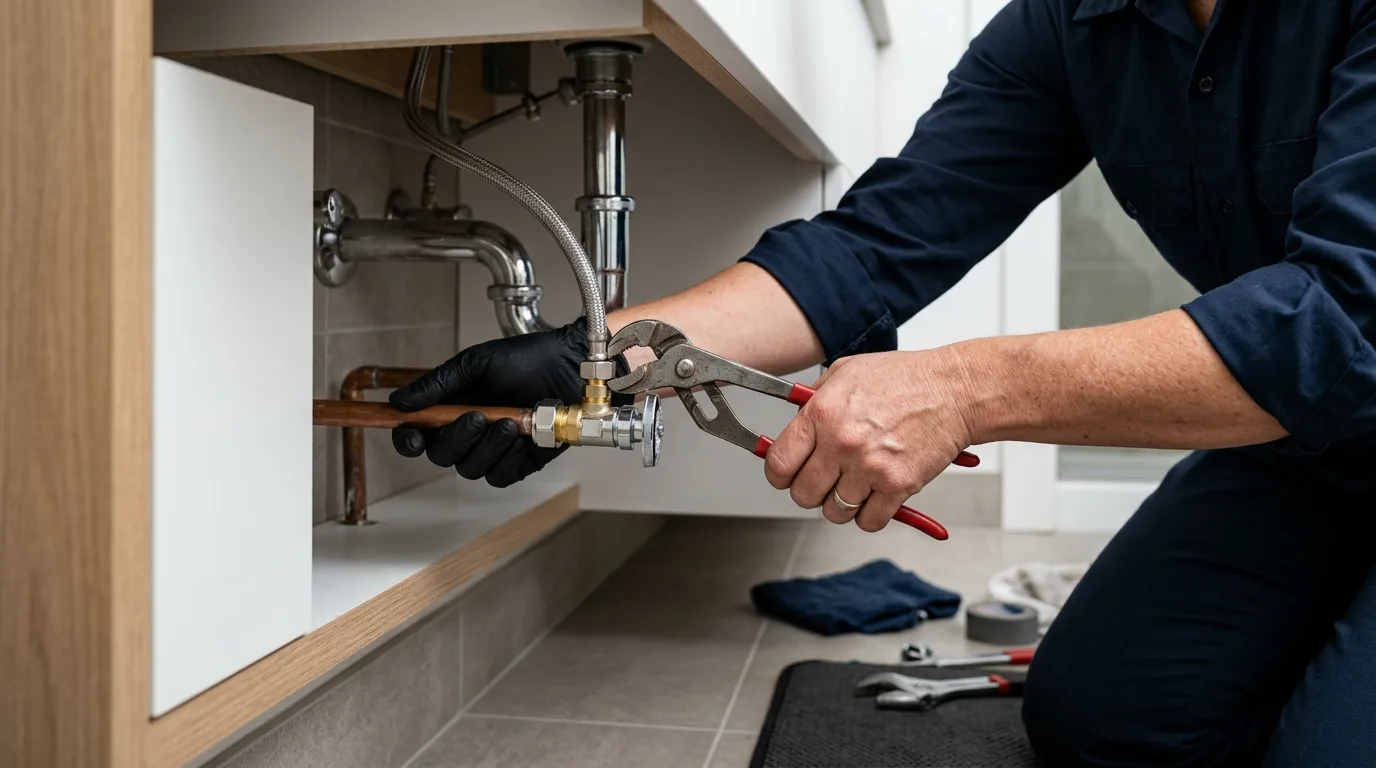
Also: angle stops and supply lines, which are replaced as a matter of course on any fixture job worth doing. Sink strainers and pop-up drain assemblies. Water filter faucets and instant-hot units, which need an outlet nearby. Frost-free hose bibs and outdoor spigots, worth mentioning on the large-lot and equestrian properties, where a failed hose bib or an irrigation tie-in can waste a great deal of water quietly.
And refrigerator and ice-maker lines. Those deserve a specific note: the small saddle valves used on older installations are a known failure point, and replacing one with a proper quarter-turn stop is a small job that prevents a very common kind of kitchen flood.
What is not on this list: appliance repair. A dishwasher connection or a washing machine valve is plumbing; the machine itself is not.
Money
What changes the price
- Repair or replacement
- Fixture type and complexity
- Hole spacing and deck fit
- Condition of the angle stops
- Galvanized supply behind the stop
- Access under the sink
- Fixture supplied by you or the pro
- Period or reproduction fittings
- Several fixtures in one visit
One practical tip: batch them. If two faucets drip, a shutoff is seized and a hose bib weeps, doing all of it in one visit costs considerably less than four separate call-outs. Make the list before you call.
Make a list of every small plumbing annoyance in the house first. One visit, one price.
Straight answers
Fixture questions worth asking before you buy anything
Can a dripping faucet be repaired, or does it need replacing?
If the model is identifiable and parts are available, a cartridge or seat repair is usually straightforward and much cheaper than replacement.
On discontinued or unbranded fixtures, parts often do not exist. Then replacement is the only real option.
Why do my cartridges keep failing?
Two usual causes here: hard water depositing scale inside the valve, and pressure that is too high stressing the seals.
If you are on your third cartridge in a couple of years, get the incoming pressure measured before buying a fourth.
Only one tap has weak flow. What is that?
Almost always a scaled aerator. Unscrew it, clean or replace it, and flow usually returns immediately.
If it does not, the cartridge or the angle stop is restricting. Weak flow at every tap is a different problem entirely.
I bought a faucet online. Will you fit it?
Yes, and it is common. Check the hole spacing against your sink or countertop first, because a mismatch is the usual cause of a wasted visit.
A fixture you supply is warranted by the retailer rather than the plumber.
The shutoff under my sink will not turn. Is that a problem?
It is very common in older houses, and it means the stop gets replaced as part of the job. That is a good thing; you want a valve that closes.
If the pipe behind it is corroded galvanized, the scope grows a little. Better to know that at quote time.
Can you match fixtures in a historic bathroom?
Reproduction cross-handle and bridge fittings are available and often the right choice in a period room. They have their own valve types and parts considerations.
Where the basin or tub is original and irreplaceable, the work is planned around protecting it.
Do you install outdoor spigots and hose bibs?
Yes, including frost-free replacements and repairs to leaking bibs. On larger properties these are worth attending to, a weeping hose bib or a failed irrigation tie-in can waste a lot of water unnoticed.
Can you replace the little valve on my refrigerator water line?
Yes, and it is worth doing. The small saddle valves used on older installations are a known failure point, and a proper quarter-turn stop is a cheap upgrade.
It is one of the most common causes of a kitchen flood we hear about.
Is it cheaper to do several small jobs at once?
Considerably. One visit covering four small items costs much less than four separate call-outs.
Walk the house and make a list before you call.
Walk the house, make the list, then call once. It is the cheapest way to do small plumbing.
Often part of the same job
Related services and neighbourhoods
One number, any hour
Get the small stuff sorted in one visit.
We will connect you with a local plumbing pro who checks the shutoff and the pressure, not just the fixture.