Water pressure regulator in Orange, CA. The cheapest preventative job you own
Pipes that bang when a valve closes, cartridges failing in rotation, a relief valve that drips, or flow that has quietly fallen away everywhere. Measured first, then adjusted or replaced.
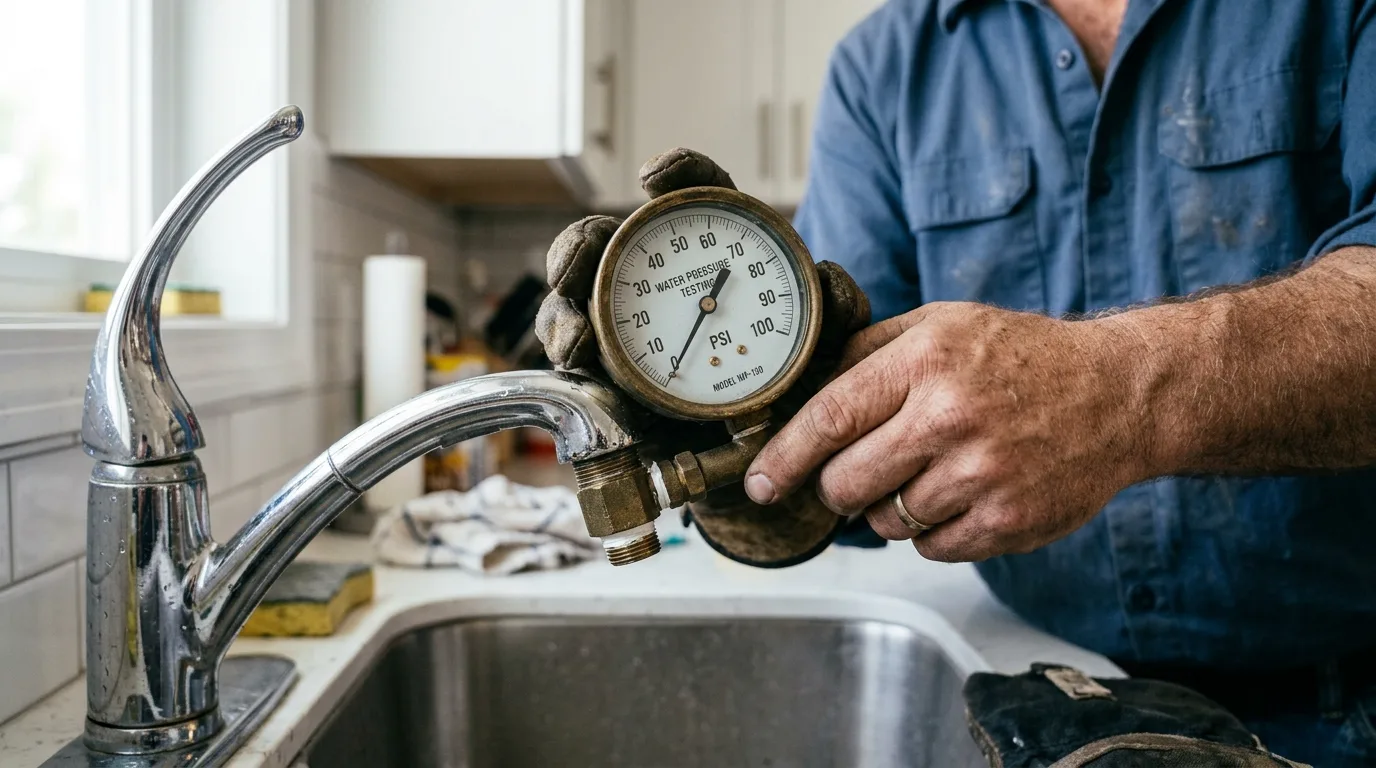
A gauge on a hose bib answers this in minutes. Ask for a reading before replacing another fixture.
What to expect
Answered 24/7
Every hour, every day, including holidays.
Same-day & emergency
Urgent calls get moved to the front of the queue.
Upfront pricing
A number you approve before work begins.
No hidden fees
The price you agreed to is the price you pay.
Workmanship terms upfront
Ask the plumber what their own workmanship terms are before work starts.
Symptoms
The house is telling you the pressure is wrong
A pressure regulator, a pressure-reducing valve, sits near where the water enters the property and brings incoming street pressure down to something a house can live with. When it fails, it usually fails in one of two directions, and both have a signature.
Banging pipes when a tap or an appliance valve closes. Water hammer. The single most recognisable sign of pressure that is too high. It is also the sound of every joint in the house being stressed.
Fixtures that fail early and repeatedly. Third cartridge in two years, toilet fill valves that keep going, flexible supply hoses that weep, a relief valve on the water heater that keeps discharging. High pressure destroys seals and diaphragms faster than anything else.
Taps that blast, and a spray you cannot control. Uncomfortable flow and splashing, particularly noticeable at a basin.
Running toilets, and irrigation heads misting. Both are pressure symptoms people attribute to the fixture.
Or the reverse: pressure that has fallen away everywhere. A regulator can also fail closed or clog, starving the whole house. That gets confused with a corroded service line, which is why a pressure reading matters before anyone quotes pipe replacement.
Pressure that varies through the day. Strong at night, weak in the evening. Sometimes street supply, sometimes a regulator no longer holding a set point.
A pressure reading at a hose bib takes minutes and settles all of this. Ask for it before replacing another fixture.
Why it matters here
The cheapest preventative job in the house
This is a small, unglamorous piece of work that quietly protects everything else, and it is routinely neglected because nothing dramatic happens on the day it fails.
Hillside pressure
Elevation and the way water systems are zoned mean incoming pressure varies considerably across the city. The hillside streets of Cerro Villa Heights and Santiago Hills, and properties in and around Villa Park, can see pressure at the high end of what a domestic system should carry. Those are exactly the houses where a failed or absent regulator does the most damage.
Old houses were not built for it
A great many houses in Orange predate the routine installation of pressure regulators. Some never had one. Others have one that was fitted decades ago, has never been adjusted or replaced, and is no longer doing anything. A regulator is a wear part, not permanent equipment.
What high pressure costs you
Not one big failure, a stream of small ones. Cartridges, fill valves, supply hoses, angle stops, washing machine and dishwasher inlet valves, the water heater and its relief valve. Homeowners often spend several times the price of a regulator on repeat fixture repairs before anyone measures the pressure.
The related piece: thermal expansion
Once a regulator is fitted, the plumbing becomes a closed system, and heated water has nowhere to expand back to. That is what an expansion tank is for. Fitting a regulator without addressing expansion is how you end up with a relief valve that drips and a water heater that ages early, so the two get considered together.
You can check it yourself
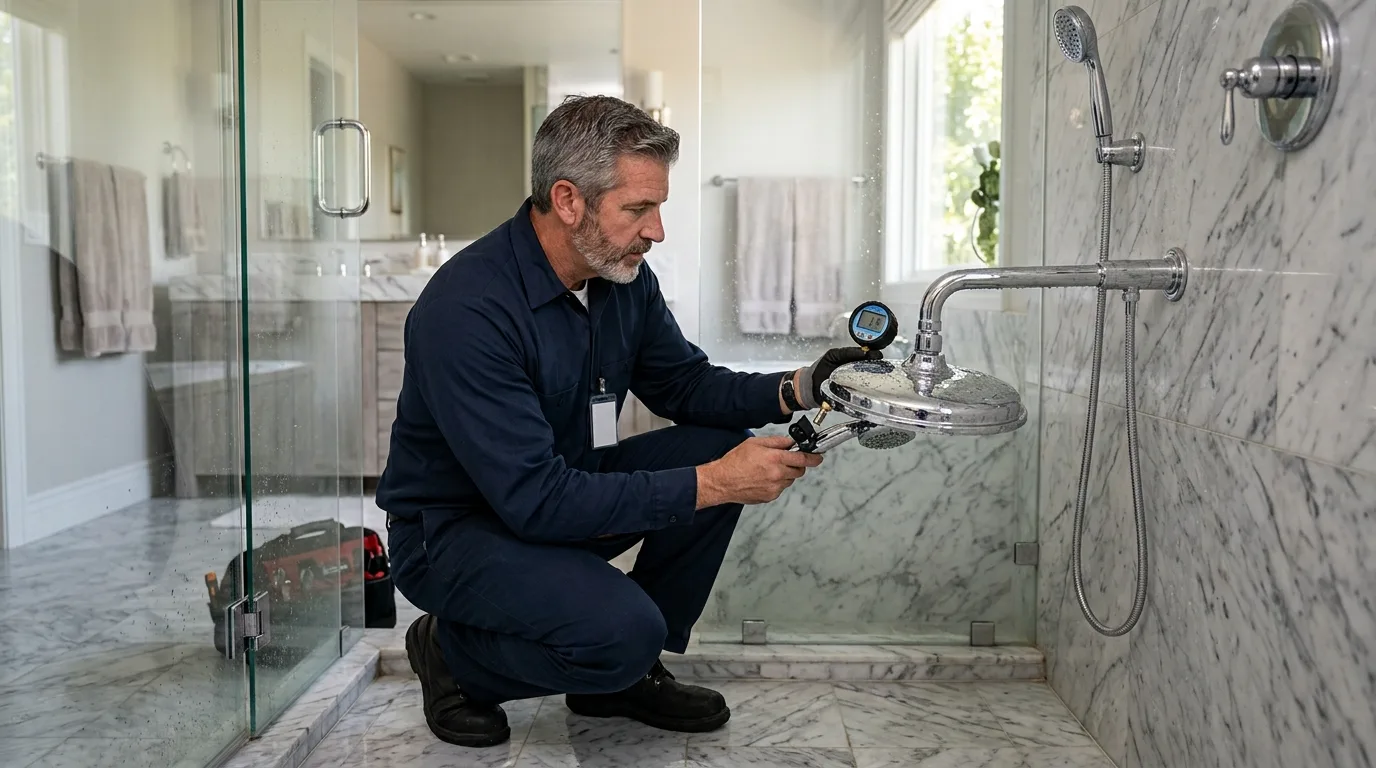
A screw-on pressure gauge for a hose bib costs very little at any hardware store. Fit it, turn the bib on with nothing else running, and read it. Then check again late at night, when street pressure is typically highest. If the number is high, or if it climbs with no water being used, you have found the explanation for a lot of small annoyances.
Small part, large consequences
Banging pipes are not a quirk of the house.
Get the pressure measured and the regulator dealt with before it costs you another fixture.
The work
What the visit involves, and what it costs
Measure static and running pressure. At a hose bib, with nothing running, and again with fixtures open. That distinguishes a pressure problem from a flow problem, which matters, because they have completely different fixes.
Locate and assess the regulator. Usually near the main shutoff at the front of the property, sometimes in a box with the meter, occasionally absent entirely. Age, condition and whether it still responds to adjustment.
Adjust, or replace. Some regulators can simply be reset to a sensible pressure. A regulator that will not hold a set point, or is heavily scaled, gets replaced, and hard local water is why they scale.
Check thermal expansion. Whether the system is closed and whether an expansion tank exists and is functioning. Adding one where it is needed protects the water heater.
Check the shutoff while there. The main shutoff valve is usually right beside the regulator, and if it is seized this is the moment to deal with it. Discovering a seized main shutoff during an emergency is the worst possible time.
Cost factors
- Adjustment or replacement
- Where the regulator sits
- Whether one exists at all
- Pipe material at the connection
- Corroded galvanized either side
- Expansion tank added
- Main shutoff replaced at the same time
- Excavation if it is buried
It is worth grouping this with other work. If the main shutoff is stiff, or a hose bib weeps, or the water heater relief valve has been dripping, doing all of it on one visit is much cheaper than three call-outs, and they are frequently all the same underlying problem anyway.
Ask for the main shutoff to be checked while the plumber is there. It is the valve you will want to work someday.
Straight answers
Pressure questions, answered with a gauge
How do I know if my water pressure is too high?
Banging pipes when a tap or appliance valve closes is the classic sign, along with fixtures that fail repeatedly and a water heater relief valve that drips.
A screw-on gauge at a hose bib costs very little and gives you the answer in minutes. Check late at night too, when street pressure is usually highest.
What does a pressure regulator actually do?
It reduces incoming street pressure to a level a domestic system can live with, and holds it there.
It is a wear part rather than permanent equipment, and many houses here either never had one or have one that stopped working years ago.
Can a regulator make my pressure too low?
Yes. They can fail closed or clog with scale, which starves the whole house and looks exactly like a corroded service line.
That is why a pressure reading should come before anyone quotes you pipe replacement.
Do I need an expansion tank as well?
Once a regulator is fitted the system is closed, so heated water has nowhere to expand. An expansion tank is how that is handled.
Skipping it is why some houses get a dripping relief valve and a water heater that ages early. The two are considered together.
Why do my faucet cartridges keep failing?
High pressure destroys seals and diaphragms, and hard water adds scale. Between them they account for most repeat cartridge failures in this area.
If you are on your third in two years, measure the pressure before buying a fourth.
Is pressure higher in some parts of Orange than others?
Yes. Elevation and system zoning mean incoming pressure varies across the city, and the hillside areas can sit at the high end of the domestic range.
Those are the houses where a failed or missing regulator does the most damage.
Can the regulator just be adjusted instead of replaced?
Sometimes. If it still holds a set point, resetting it to a sensible pressure may be all that is needed.
One that will not hold, or is heavily scaled, gets replaced. The plumber can tell which after measuring.
How long does the work take?
An adjustment is minutes. A straightforward replacement at an accessible location is usually a short visit.
It takes longer where the regulator is buried, or where the pipe either side is corroded galvanized and has to be renewed.
Should the main shutoff be replaced at the same time?
If it is stiff or will not close, yes. It is right beside the regulator, the water is already off, and a seized main shutoff is a genuine liability in an emergency.
Ask for it as a line item so you can see what it adds.
Tell us what is banging, dripping or failing repeatedly. It is usually one cause.
Often part of the same job
Related services and neighbourhoods
One number, any hour
Stop paying for the same fixture failure.
We will connect you with a local plumbing pro who measures the pressure before recommending anything.