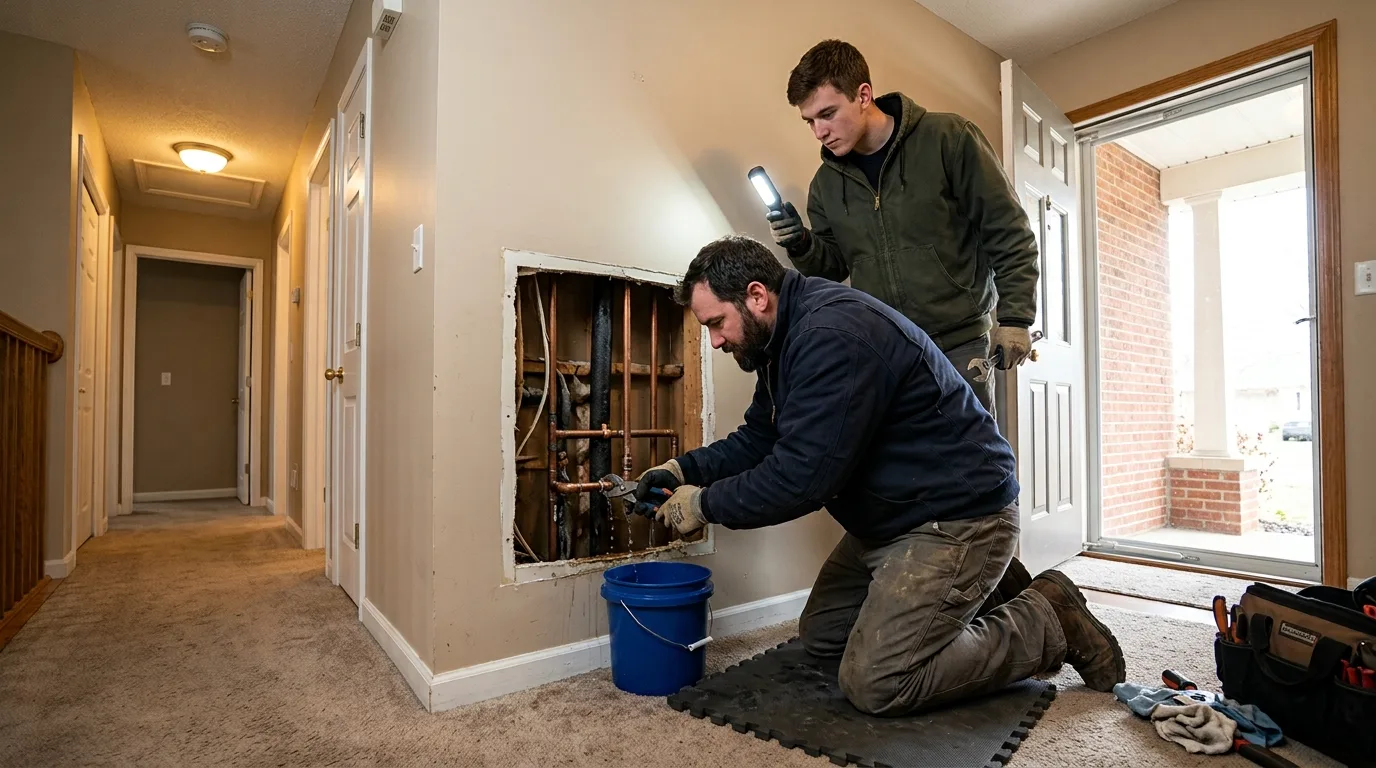
Burst pipe repair in Orange, CA. Cut out properly, not just capped
Corroded galvanized steel, copper pinholes, failed pressure regulators, breaks at a slab penetration. We connect you with local plumbing pros who cut back to sound pipe and tell you honestly what the rest of the run looks like.
Water still moving? Close the main shutoff and open the lowest faucet in the house. Then call.
What to expect
Answered 24/7
Every hour, every day, including holidays.
Same-day & emergency
Urgent calls get moved to the front of the queue.
Upfront pricing
A number you approve before work begins.
No hidden fees
The price you agreed to is the price you pay.
Workmanship terms upfront
Ask the plumber what their own workmanship terms are before work starts.
Right now
Stop the water before you do anything else
A burst supply line moves several gallons a minute. The repair is a known quantity; the damage is what runs up the bill. Three steps, in this order.
Close the main
Front of the house near the hose bib, or in the meter box by the sidewalk. Clockwise. If the valve is seized, common on the older streets around the Plaza, go to the meter and close it there, and tell us on the phone.
Drain the lines downward
Open the lowest tub spout or laundry faucet in the house. Water still in the pipes will follow gravity out of a low fixture instead of continuing to feed the break.
Get power away from water
Switch off any circuit feeding an area that is now wet, and move what you can out of the path. Photograph the damage before anything is cleaned up, your insurer will want it, and the plumber does not need the scene preserved.
If the break is behind a wall or under a slab, do not start opening it up. Locating it properly is faster and cheaper than searching.
Cause, not bad luck
Why pipes burst in Orange, and it is rarely the cold
Freezing barely registers here. When a supply line opens up in the City of Orange it is almost always because something has been quietly working on it for years, which is also why the same house often produces a second failure a few months after the first.
Galvanized steel reaching the end
A large share of the housing in and around Old Towne dates from the 1890s to the 1920s, when galvanized steel supply pipe was standard. Zinc-coated steel corrodes from the inside out: the interior narrows with rust and scale, the wall thins, and eventually a section lets go, often at a threaded joint, where the wall was always thinnest. Weak flow upstairs and discoloured water on the first draw are the warnings that come before the burst.
Pressure that was never brought down
High incoming pressure is a slow demolition project. It stresses joints, hammers valves shut, and shortens the life of every flexible connector in the house. Plenty of homes here either never had a pressure regulator or have one that failed years ago and was never noticed. If your pipes bang when a faucet closes, that is the sound of the problem.
Hard water and scale
Imported water in this part of Orange County is hard. Scale narrows pipe, seizes shutoff valves so they will not close when you need them, and turns a simple repair into a wider one because the fittings either side crumble when disturbed.
Copper pinholes and old repairs
Mid-century and later copper develops pinholes, particularly on hot-water runs and in pipe that was over-fluxed or poorly supported when installed. Also common: a previous repair done with the wrong material or an unsupported transition between dissimilar metals, which corrodes at the junction and fails there first.
Movement
Ground movement, settlement and seismic events all shift pipe that is buried in or under concrete. In slab-on-grade tracts across El Modena, Olive, McPherson and Marlboro, that shows up as a failure at a slab penetration, exactly the spot that is hardest to reach.
The second failure
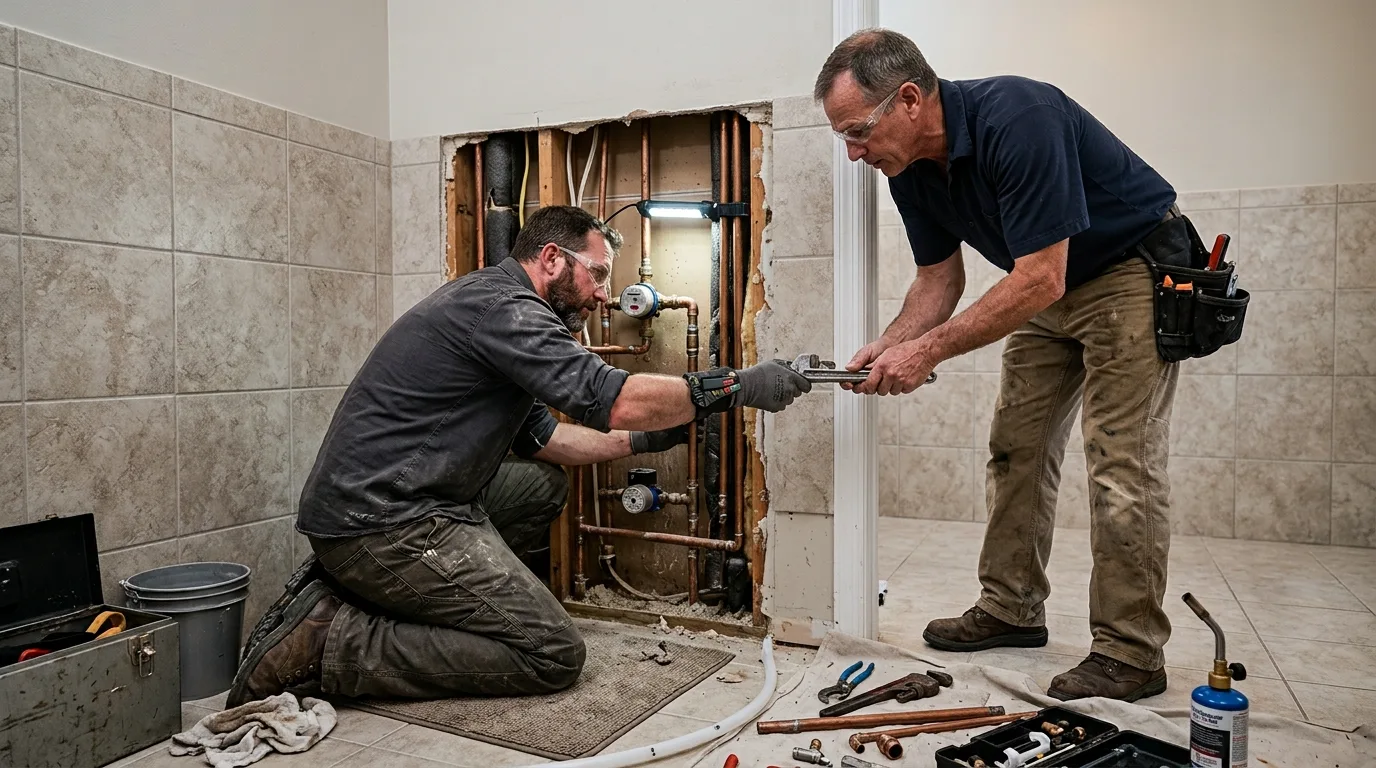
When a burst is caused by the age and condition of the pipe rather than a one-off accident, the rest of the run is the same age and in the same condition. A good plumber will fix the break and then tell you plainly whether you are looking at a repair or the first instalment of a repipe. Both are legitimate answers. Being told only the first one is not.
Do not wait for the second one
A pipe that has burst once has told you something about the rest of the house.
Get it repaired, then get a straight opinion on what is left. Both start with the same call.
The repair itself
What actually gets done
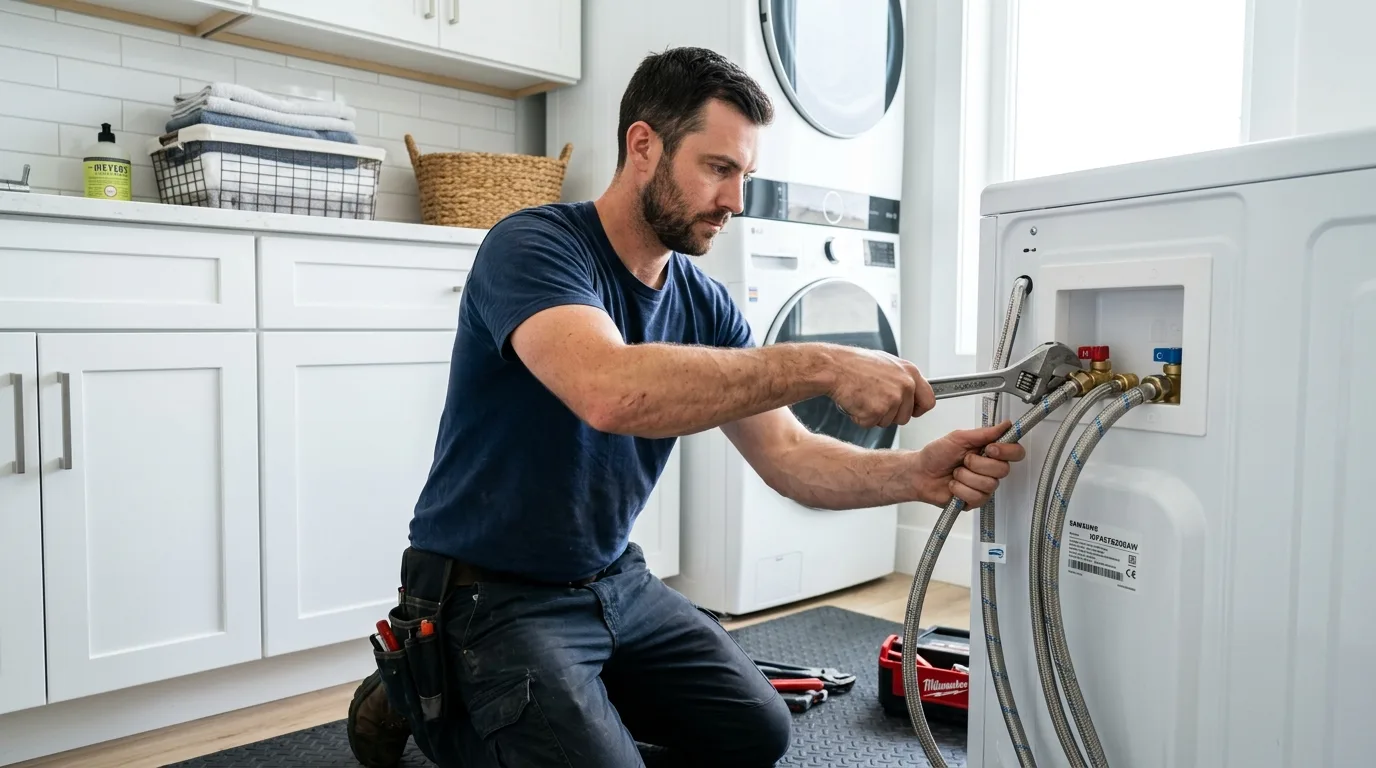
Once the water is off and the break is exposed, the work is methodical. The failed section is cut out well past the damage, the pipe ends are cleaned back to sound material, and a new section goes in, copper, PEX or a code-appropriate transition fitting depending on what the house is on and what the location allows.
Two details separate a repair that lasts from one that fails again in the same spot. The first is how far past the damage the cut is made: on corroded galvanized, the pipe either side of a burst is usually just as thin, and stopping the cut too close means the next failure is inches away. The second is support, pipe that was never strapped properly will work itself loose again.
Access decides the rest. A break in an open garage wall or a crawl space is straightforward. The same failure under a tiled 1920s bathroom floor, inside a plaster-and-lath wall, or under a slab is a different job, and the plumber will often present two options: repair in place, or abandon that run and reroute it through an accessible path. Rerouting sounds drastic and is frequently the cheaper, less destructive answer.
Drywall, plaster and tile are usually left for you or a finishing trade to close up. Ask before work starts who is putting the wall back; it is a common misunderstanding and an easy one to clear up in advance.
Money
What moves the number up or down
No prices on this page, because the same burst costs very different amounts in two houses on the same street. Here is what the plumber is weighing when they quote it.
- Where the break is
- Accessible, in-wall, or under slab
- Pipe material and condition
- How much has to be cut back
- Repair versus reroute
- After-hours or scheduled
- Water damage already done
- Permit and inspection, if required
- Historic district exterior work
One thing worth knowing before you decide: if the burst pipe is galvanized and the house still has its original supply lines, money spent on a series of section repairs is money that does not count toward a repipe. Homeowners in Old Towne often end up doing three or four emergency repairs across a couple of years and then repiping anyway. Ask for the comparison out loud, early.
Ask for both numbers, the repair, and the honest scope of the underlying problem. You are entitled to both.
Straight answers
Burst pipe questions, answered plainly
The pipe burst inside a wall. Do I have to open the wall to know where it is?
No, and you should not start. Locating a break behind plaster or drywall is done by isolating and pressure-testing sections, then narrowing it down acoustically or thermally. Cutting to search damages finish you then have to pay to replace.
Once the location is confirmed, one clean opening is usually all the access the repair needs.
Can a burst pipe be patched, or does the whole line need replacing?
A properly cut-and-coupled section repair is a real repair, not a patch, and it is the right answer when the rest of the run is sound.
When the pipe is original galvanized steel and the failure was caused by internal corrosion, the rest of the run is on the same timeline. That is when the repipe conversation is worth having rather than repeating the repair.
Why did my pipes bang before this happened?
That is usually water hammer, and it often means incoming pressure is too high or a pressure regulator has failed. High pressure stresses every joint, valve and flexible connector in the house.
A pressure reading takes minutes. If it comes back high, replacing or adjusting the regulator is a small job that prevents a much larger pattern of failures.
Is a burst pipe covered by homeowners insurance?
That is between you and your insurer, and it varies by policy, commonly the resulting water damage is treated differently from the failed pipe itself. Photograph everything before cleanup and keep the invoice.
We cannot advise on coverage or handle a claim. What your plumber can give you is a clear written description of what failed and what was done.
My burst pipe is under the concrete slab. Now what?
Under-slab supply failures are a distinct job with their own decision tree: open the concrete and repair in place, or abandon the run and reroute it through walls or overhead.
Rerouting is often less disruptive and less expensive than jackhammering a finished floor, especially in the postwar and 1970s to 90s tracts where the slab is under tile or hardwood. The slab leak page walks through both options.
How long does the repair take?
An accessible section repair is often a same-visit job. Anything that needs location work, slab access, or a reroute through finished space takes longer and may be staged deliberately.
Staging is not a stalling tactic. Making the house watertight tonight and doing the permanent work in daylight with the right parts usually produces a better repair.
Do you put the drywall or tile back?
Usually not, plumbing repair and finish restoration are different trades, and the plumber will tell you exactly what is being left open.
Ask about this before work begins so there is no surprise. In a historic Old Towne bathroom with original tile, it is worth planning the access opening around what can realistically be restored.
Does an emergency repair still get a price up front?
Yes. The plumber diagnoses, explains what failed, and gives you a number before starting. If a location or detection step has to come first, that is priced and approved separately.
No hidden fees, and no figures that move once the work is underway.
My house is in a historic district. Does that affect a burst pipe repair?
Interior repair work proceeds normally. Old Towne is a National Register historic district and the City of Orange maintains Historic Preservation Design Standards that apply to exterior changes, so anything visible from the street can involve extra review.
Your plumber can explain what the city typically expects and plan the approach around it. We do not secure historic approvals for you.
Not sure whether you are looking at a repair or the start of a repipe? Describe the house and the symptom.
Often part of the same job
Related services and neighbourhoods
One number, any hour
Get the break fixed and the cause named.
Tell us the street, the pipe material if you know it, and what you are seeing. We will connect you with a local pro.