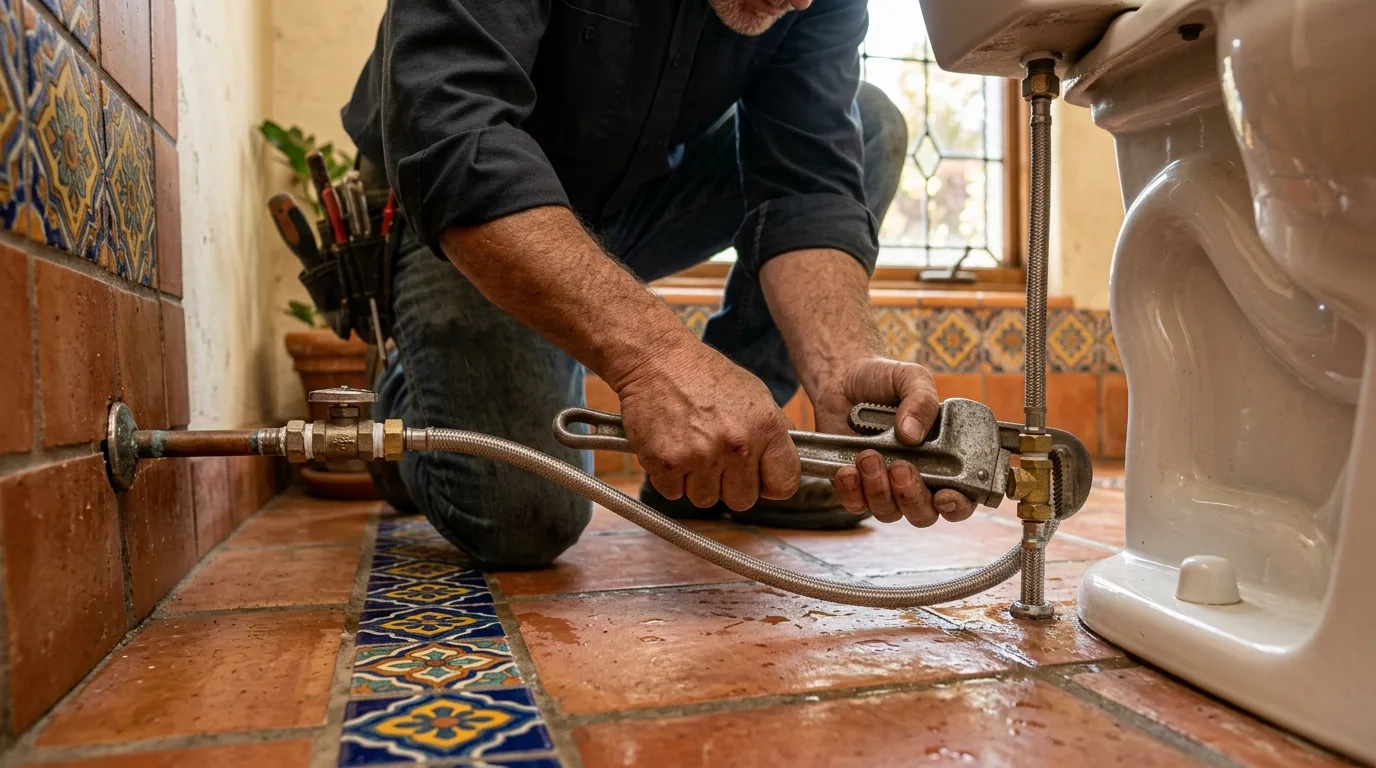
A warm patch on the floor
On slab-on-grade, a failed hot-water supply line under the concrete. Located acoustically and thermally before anything gets cut.
Neighbourhood · 92869
One of the oldest communities in the area, with decades of tract building layered around it. That mix means the house next door can be forty years newer than yours and have an entirely different set of problems.
Warm patch on the floor? Do the meter test before you call; it takes fifteen minutes and settles a lot.
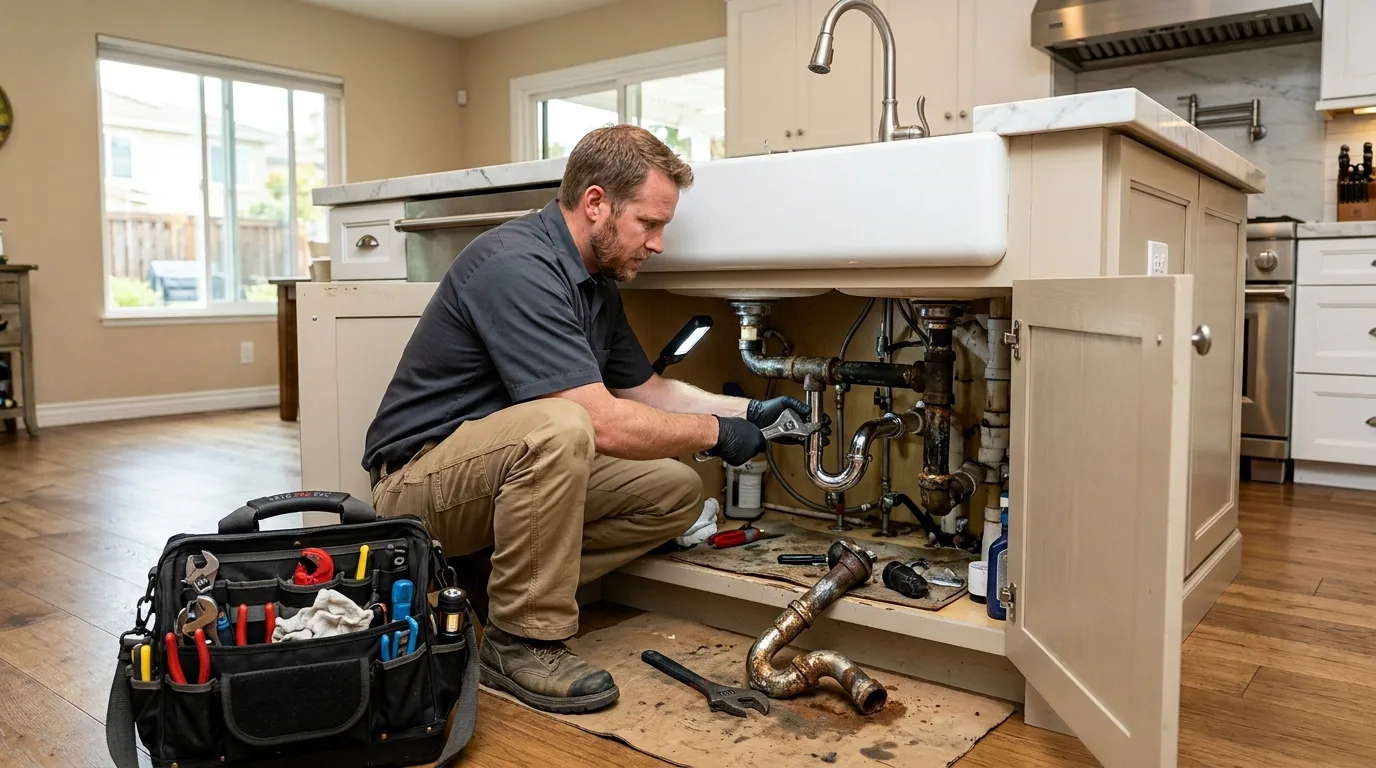
Answered 24/7
Every hour, every day, including holidays.
Same-day & emergency
Urgent calls get moved to the front of the queue.
Upfront pricing
A number you approve before work begins.
No hidden fees
The price you agreed to is the price you pay.
Workmanship terms upfront
Ask the plumber what their own workmanship terms are before work starts.
What we get called for
Because the housing spans so many decades here, the same symptom can mean quite different things two streets apart. What is consistent is slab-on-grade construction across most of the tract housing, and mature trees over a lot of the older laterals.
On slab-on-grade, a failed hot-water supply line under the concrete. Located acoustically and thermally before anything gets cut.
Under-slab leaks are silent. The meter test with everything off is the cheapest diagnostic there is.
Older streets with mature trees and clay pipe jointed every few feet. Repeat blockages are structural, not bad luck.
Hard water builds sediment on the tank floor. Rumbling, reduced capacity, and eventually a wet garage.
Cartridges and fill valves going one after another usually means pressure, not bad fixtures. A gauge answers it in minutes.
The slab question
Most of the tract housing here sits on slab-on-grade concrete, with copper hot and cold lines running in or beneath it. Those lines fail at bends, at slab penetrations, and simply where decades of hot water and hard local water have thinned the wall. Hot lines fail far more often than cold.
The critical thing to understand is that there are three legitimate answers, not one. Open the slab and repair in place. Abandon the run and reroute through walls or overhead. Or repipe the affected system if this is the second or third failure.
Rerouting sounds drastic and is frequently the cheapest and least destructive of the three, because nobody is cutting concrete or replacing flooring. A quote to open the slab, presented on its own, is not enough information to decide with.
Turn off every fixture and irrigation zone, note the leak indicator on the water meter, wait fifteen minutes, and look again. Movement means water is escaping on your side of the meter. It costs nothing and it turns a vague worry into a fact the plumber can work from.
One number, any hour
Get it located properly before anyone talks about breaking concrete. We will connect you with a pro who does this weekly.
Hard water
Water in this part of Orange County is hard, and much of it is imported. Dissolved minerals drop out of solution wherever water is heated, settling on the floor of a tank heater where they insulate the burner from the water and make the unit work harder for less.
That is the main reason tanks here fail earlier than the brochure suggests, and it is also why an annual flush is genuinely worth doing rather than a manufacturer’s formality. The same minerals scale aerators and shower heads, stiffen cartridges, and roughen valve seats so faucets start to drip.
If you are replacing a heater or repiping anyway, that is the cheapest moment to decide whether softening or filtration is worth adding, the new equipment will live in the same water the old equipment did.
A screw-on gauge at a hose bib costs very little. High pressure destroys seals and diaphragms faster than anything else, and it explains most cases of fixtures failing one after another. Check late at night, when street pressure is typically highest.
Most asked for here
Located first, then repair or reroute.
Slab Leak RepairAcoustic and thermal, before anything is cut.
Leak DetectionGarage units, hard water, early sediment.
Water Heater RepairSlow drains and main-line backups.
Drain CleaningRoots in laterals under mature trees.
Sewer Line RepairAnswered 24/7, holidays included.
Emergency PlumbingTwo symptoms at once usually share a cause. Mention both on the phone.
Straight answers
On slab-on-grade construction that usually means a hot-water supply line under the concrete has failed. Hot lines fail far more often than cold ones.
Do the meter test; everything off, watch the leak indicator for fifteen minutes. Movement confirms a pressurised loss and turns a suspicion into a fact.
Often not. Rerouting the affected line through walls or overhead avoids cutting concrete entirely and is frequently cheaper and less disruptive.
Opening the slab makes sense when the leak is reachable, the rest of the line is sound, and the flooring above can be lifted and replaced. Ask for both priced.
Hard water scaling the valve and pressure that is too high stressing the seals. Between them they account for most repeat failures in this area.
Get a pressure reading before buying another cartridge.
On the older streets, roots entering a clay lateral at the joints under mature trees. Sometimes a bellied section holding solids.
A camera survey identifies which, and that decides whether jetting, a spot repair or a lining is the honest answer.
Less than the brochure suggests, because hard water accelerates sediment. Regular flushing and a replaced anode rod genuinely extend it.
Rumbling, reduced hot water and rusty first-draw water are the warnings. Water at the base of the tank means it is finished.
Generally yes, along with an inspection. It is also documentation that the work was done correctly, which matters at resale.
Ask whether the permit is included in the quote; it is a common difference between bids.
Locating it, yes. Acoustic listening, thermal imaging, pressure isolation and tracer gas all work from the surface.
Repair needs access eventually, but detection means one considered opening rather than a search.
El Modena sits close to the 55 and the 22, so same-day response is normal and emergencies go to the front of the queue.
We will give you a realistic window rather than a comforting one.
Yes, 24 hours a day, every day of the year, holidays included. Emergency calls are moved to the front of the queue whatever the hour.
An independent local plumbing professional. Orange CA Plumbing Line is a referral service, not a plumbing contractor; we connect you with a pro who covers your area and does that kind of work routinely.
They diagnose, quote, perform the work and stand behind their own workmanship. Nothing is billed through us.
Tell us the street and the symptom. That is usually enough to name the job.
Nearby, and related
One number, any hour
We will connect you with a local plumbing pro who locates before cutting and prices the reroute alongside the repair.