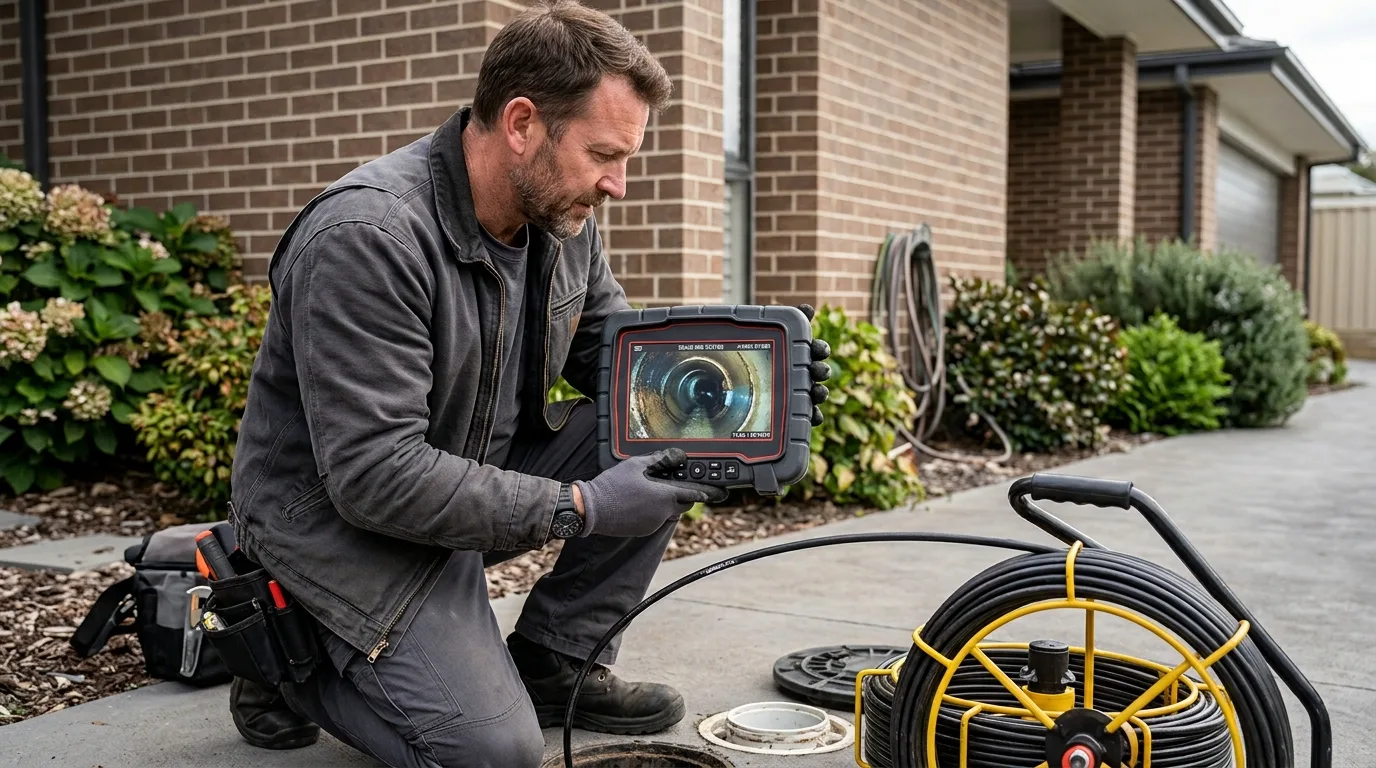
Main water line repair in Orange, CA. The pipe that feeds everything
Pressure down at every fixture, a wet strip across the front yard, a meter that keeps turning with the house shut off. Galvanized service lines closing up, copper pinholes, and long uphill runs on the large-lot properties.
Close the house-side valve and read the meter first. If it still moves, the line outside is the problem.
What to expect
Answered 24/7
Every hour, every day, including holidays.
Same-day & emergency
Urgent calls get moved to the front of the queue.
Upfront pricing
A number you approve before work begins.
No hidden fees
The price you agreed to is the price you pay.
Workmanship terms upfront
Ask the plumber what their own workmanship terms are before work starts.
The signs
How a failing service line gives itself away
The main water line is the single pipe carrying everything from the meter to your house. When it starts to fail, the symptoms are whole-house rather than one fixture, which is the tell.
Pressure down everywhere at once. Not the upstairs shower. Every tap, every time. A gradual decline over months usually means the line is closing up internally; a sudden drop means something let go.
The meter moves with the house shut off. Close the house-side valve and watch the meter. If it keeps turning, water is escaping between the meter and that valve, the service line itself.
A wet patch, a soft spot, or unusually green grass in a line. Follow the imaginary straight line from the meter to the house. A leaking main waters that strip, and on a hillside it can surface well downhill of the actual break.
Discoloured water on the first draw. Rusty or brown water when the house has been quiet points at corroding galvanized steel, often in the service line before anywhere else, because it is the oldest and hardest-working pipe on the property.
A bill that has stepped up and stayed up. A buried leak runs constantly. Unlike a slab leak there is no warm floor to warn you.
Sediment, air, or spitting from taps after work in the street. Sometimes benign, sometimes the first sign that an old line has been disturbed.
Close the house valve, read the meter, and bring that answer to the call. It settles which side of the meter the problem is on.
What is in the ground
Your service line is whatever was standard the year it was laid
The material tells you most of what you need to know about how it will fail, and in the City of Orange the year the house was built is a reliable guide.
Galvanized steel
Standard for the housing that went up between the 1890s and the 1920s, and still in the ground under plenty of properties in and around Old Towne. Zinc-coated steel corrodes internally: the bore narrows with rust and scale until the whole house feels starved, and eventually a section perforates. Weak flow plus discoloured water plus an old house is close to a diagnosis on its own.
Copper
Common from the postwar era onward and generally the best of the older options, but it develops pinholes with age, particularly where it was laid against aggressive soil, poorly bedded, or run in contact with dissimilar metal at a fitting. Hard local water works on it from the inside.
Plastics
Later tracts and re-runs use PVC, and modern replacements are usually PEX or HDPE pulled in as a single continuous length. Continuous pipe with no buried joints is the whole point: joints are where service lines fail.
Long runs and hillside pressure
On the equestrian parcels of Orange Park Acres and up the hillside streets of Cerro Villa Heights and Santiago Hills, a service line can run hundreds of feet from the meter, often uphill, sometimes with a booster pump and almost always with irrigation teed off it somewhere. Pressure regulation matters more on these properties, and so does knowing exactly where the line runs before anyone digs.
Where your responsibility begins
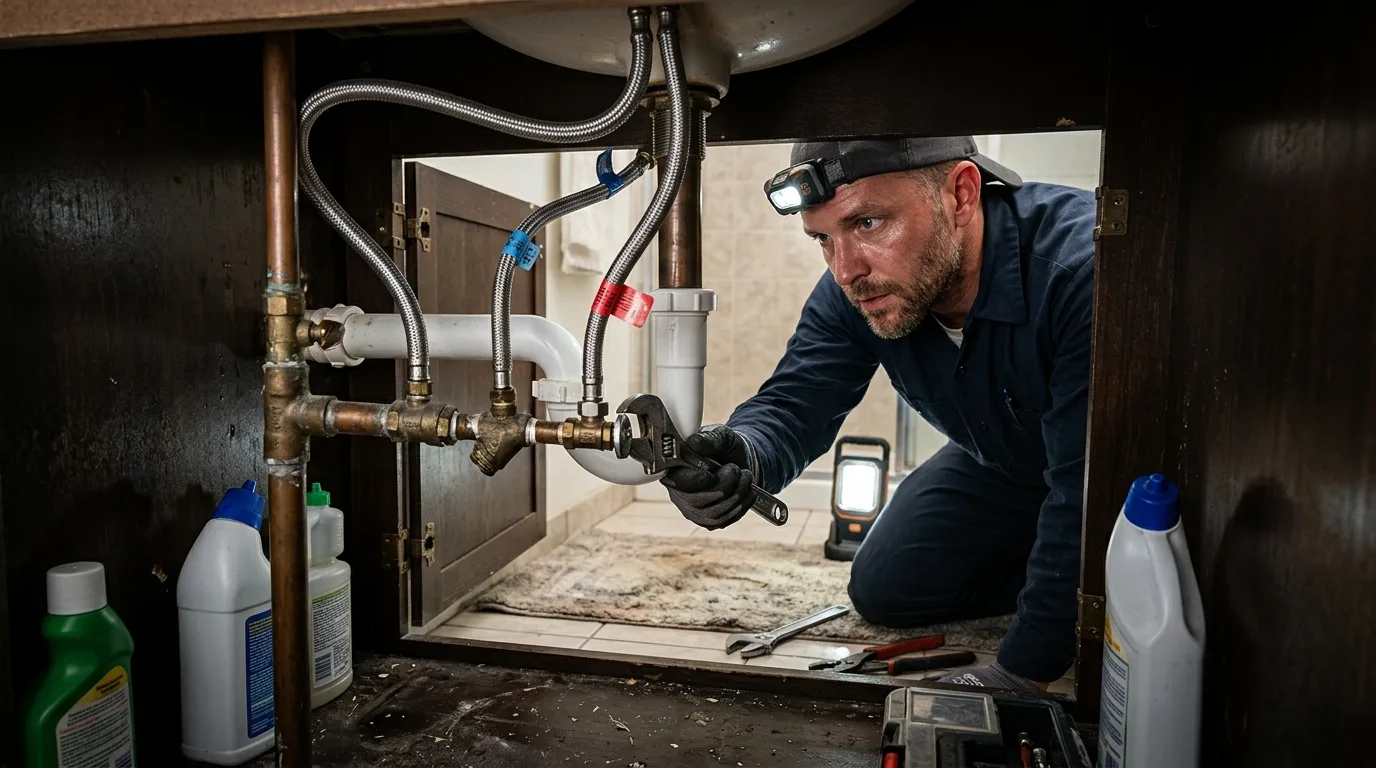
Broadly, the utility owns the main in the street and the meter; the service line from the meter to the house is normally the property owner’s. That boundary decides who pays, so it gets confirmed before work is planned rather than after. If the meter is turning with your house valve closed, the leak is on the private side, which is the most common finding and the reason this page exists.
Low pressure everywhere
If the whole house has gone weak, stop replacing fixtures.
A pressure test and a meter reading will tell you in one visit whether the service line is the problem.
The options
Repair the spot, or replace the run
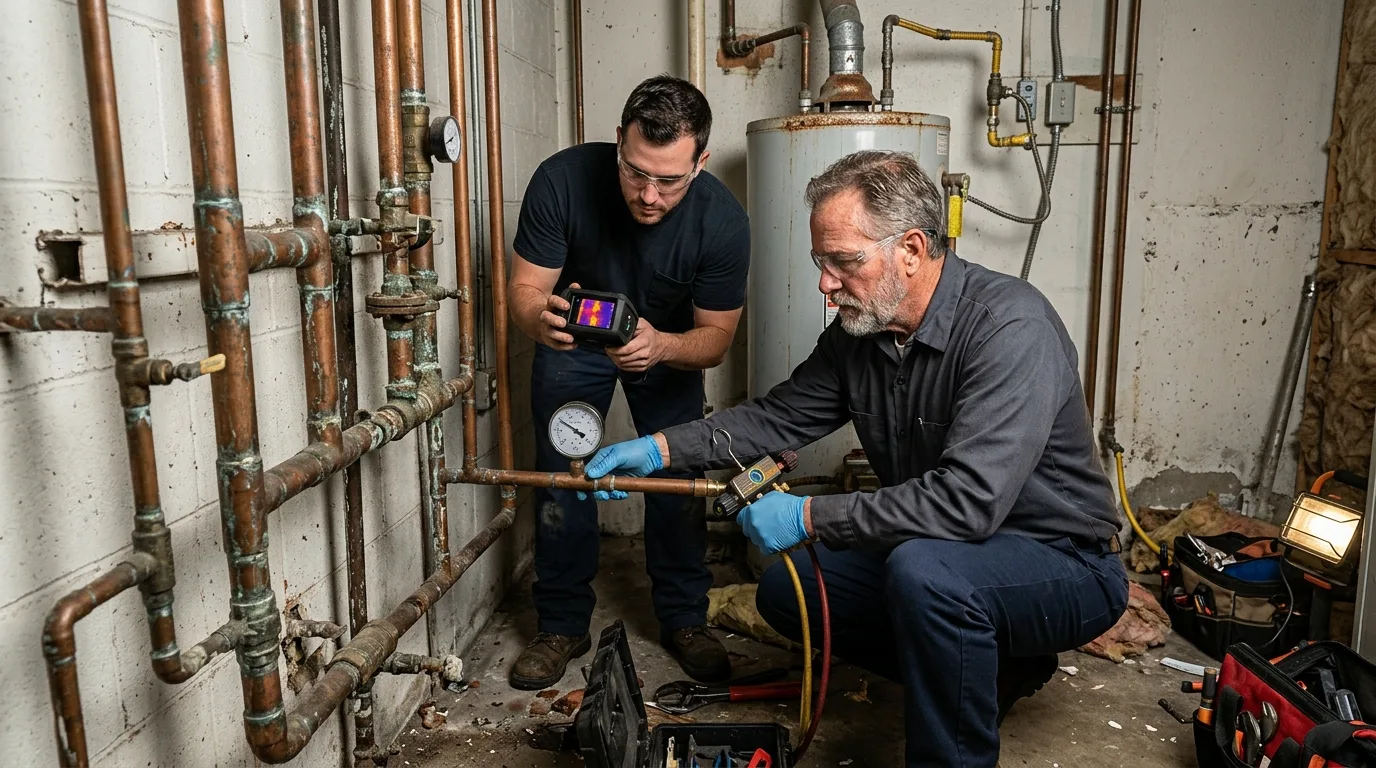
Spot repair. One failure point is excavated and the damaged section replaced. It is the cheapest fix and the right one when the line is otherwise sound, a copper main damaged by a landscaping shovel, say, or a single fitting that has failed.
Full replacement, open trench. The line is dug out and replaced end to end. Definitive, and the most disruptive: a trench from the meter to the house through whatever is on top, which on many Orange properties means lawn, mature planting, a driveway, a walk and the parkway strip.
Trenchless pull-through. A new continuous line is pulled along the existing path or a new bore from pits at each end, leaving the surface between them intact. This is usually the answer worth asking about first when there is hardscape, mature trees or a period frontage in the way.
Reroute. Sometimes the shortest sound path is not the old path at all. Running a new line along a different route can avoid a driveway entirely.
On a galvanized main in an older house, spot repairs have a short shelf life: the rest of the pipe is the same age and in the same condition. It is worth asking directly whether you are buying a fix or an instalment, and whether it makes sense to do the service line at the same time as a repipe, since the trench and the shutdown are already happening.
Money
What determines the number
Service line work has an enormous cost range, and almost none of it is the pipe. It is the length, the depth and what has to be put back.
- Length from meter to house
- Depth and soil conditions
- Spot repair or full replacement
- Trenchless or open trench
- Driveway, walkway or lawn above it
- Mature trees in the route
- Permits and inspection
- Sidewalk or parkway restoration
- Pressure regulator replacement
- Irrigation tie-ins to reconnect
Two things to settle in writing before work starts: what surface restoration is included, and whether a new pressure regulator and a new house shutoff are part of the job. Replacing a service line and leaving a forty-year-old regulator and a seized shutoff valve in place is a false economy that shows up within a year.
Ask what is included in putting the surface back. That is where quotes differ most.
Straight answers
Service line questions, answered plainly
Is the water line my responsibility or the city’s?
Generally the utility owns the main in the street and the meter, and the service line from the meter to the house is the property owner’s. Your plumber will confirm the boundary for your property before work is planned.
The practical test: if the meter keeps moving with your house valve closed, the leak is on the private side.
How do I know it is the main line and not something inside?
Whole-house symptoms. Pressure that has dropped at every fixture, or a meter that turns with the house isolated, both point outside.
One weak shower or one slow tap is a fixture, a cartridge or a branch line problem instead.
Can it be replaced without digging up the driveway?
Often, yes. A trenchless pull-through or a new bore works from pits at each end and leaves the surface between them intact.
It depends on the route, the depth and where there is room to set up. Ask for it to be priced alongside open trenching.
How long will my water be off?
For a spot repair, usually a matter of hours. For a full replacement, expect the supply off for a substantial part of a working day, sometimes longer where the tie-in at the meter is awkward.
Ask for the specific window when the job is scheduled so you can plan around it.
My water pressure is low but there is no leak. What then?
On an older house that is often the service line itself closing up internally with corrosion, in which case replacing it restores flow.
It can also be a failed pressure regulator, a partly closed valve, or scale in the house piping. A pressure test at the hose bib is the first thing a plumber checks, and it takes minutes.
Do I need a permit?
Water service replacement generally requires a permit and inspection, and any work in the sidewalk or parkway typically requires additional approval and traffic control.
Your plumber pulls plumbing permits. In Old Towne, exterior work separately falls under the city’s Historic Preservation Design Standards; we do not obtain historic approvals for you.
Should I replace the regulator at the same time?
Usually yes, if it is old. The trench is open, the water is off and the labour overlap is small. High or unregulated pressure is also what shortens the life of everything downstream.
Ask for it to be quoted as a line item so you can see the real cost of adding it.
I have a long run out to the meter on acreage. Does that change things?
Considerably. Length adds cost, and it also adds pressure loss, more irrigation tie-ins and more ground to locate before digging.
On the equestrian and hillside properties a proper locate and a route plan are worth doing carefully, a surprise mid-trench is expensive out there.
Who performs the work?
An independent local plumbing professional. Orange CA Plumbing Line is a referral service, not a plumbing contractor; we connect you with a pro who does service line work routinely.
They test, quote, perform the work and stand behind their own workmanship. Nothing is billed through us.
Tell us the pressure, the meter reading and the age of the house. That is most of the diagnosis.
Often part of the same job
Related services and neighbourhoods
One number, any hour
Get the whole-house pressure problem named.
We will connect you with a local plumbing pro who tests before quoting and can price trenchless against a trench.