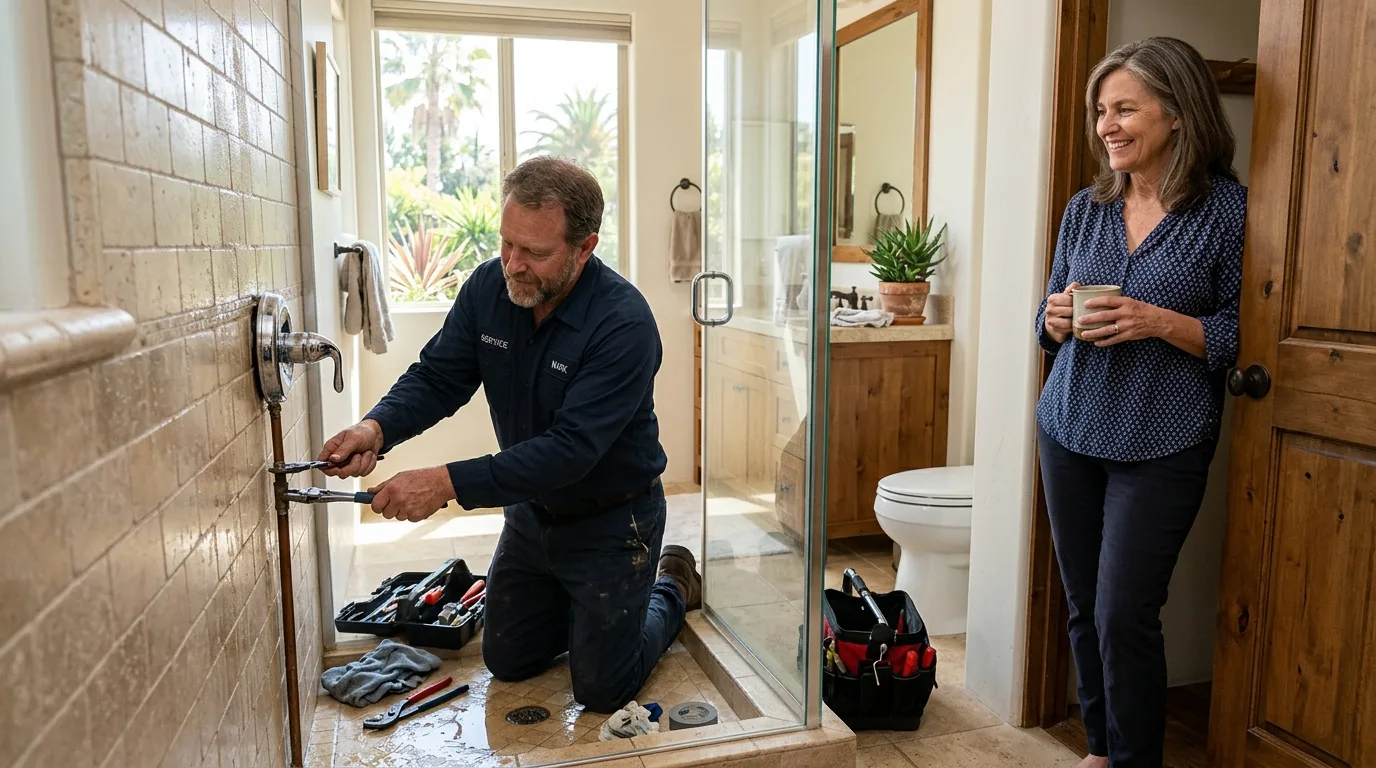
Shower and bathtub plumbing in Orange, CA. Planned before anything is cut
Valves that swing hot and cold, diverters that will not hold, scale in everything, and leaks behind tile that show up on the ceiling below. Rear access when it exists, careful openings when it does not.
Ask one question first: can the valve be reached from behind? It changes the whole job.
What to expect
Answered 24/7
Every hour, every day, including holidays.
Same-day & emergency
Urgent calls get moved to the front of the queue.
Upfront pricing
A number you approve before work begins.
No hidden fees
The price you agreed to is the price you pay.
Workmanship terms upfront
Ask the plumber what their own workmanship terms are before work starts.
Symptoms
What the shower is telling you
Bathrooms are where hard water and a century of remodelling meet. Most of these symptoms have an ordinary cause and a couple of them mean water is going somewhere it should not.
Temperature that swings when another tap runs. An old non-pressure-balancing valve. Modern valves compensate; the ones fitted decades ago do not, and replacing the valve is the fix.
Water will not get hot enough, or will not turn off fully. Cartridge or valve seat wear, and often a scale problem. On a mixing valve the rotational limit stop may also need setting.
Weak or uneven spray. Nearly always scale in the shower head, and often a five-minute fix. If a new head does not help, the valve or the supply is restricting.
Diverter that will not hold. Water running from the tub spout while the shower is on, or dribbling out of both. A worn diverter, either in the spout or in the valve body.
Slow-draining tub or shower. Hair and soap in the trap or the branch. Straightforward, unless other fixtures are slow too, in which case it is the main line.
Staining on a ceiling below, or a soft spot outside the shower. This is the serious one. A failed pan, a bad drain connection or a leaking valve behind tile puts water into the structure. Stop using the shower and call.
Smell, or a trap that dries out. Common on a guest bathroom that goes unused. Usually harmless, occasionally a venting problem.
Staining on a ceiling below a bathroom? Stop using that shower today and get it looked at.
Access
The tile is the whole problem
Shower and tub plumbing lives behind a finished surface, which means the honest conversation is never only about the valve. It is about how to reach the valve and what happens to the wall afterwards.
Access from behind, where it exists
The best outcome: a closet, a hallway or an adjacent room lets the plumber open drywall on the back side of the valve wall, leaving the tile untouched. Worth checking for before assuming anything, and it is the first thing a good plumber looks for.
Through the tile, when there is no choice
Sometimes the valve can only be reached from the front. In a modern bathroom with stocked tile that is an inconvenience. In a 1920s bathroom with original hex tile, or a midcentury bathroom with period colour, that tile cannot be bought again, so the opening is planned to the millimetre, cut tiles are salvaged where possible, and the work goes slowly on purpose.
Old valve bodies and dead brands
Houses in the historic core often have valve bodies whose manufacturers no longer exist. Sometimes a rebuild kit still exists; sometimes the only route is replacing the valve, which enlarges the opening. This is a genuine fork in the road and you should be told which one you are on before work starts.
Galvanized behind the wall
Open a shower wall in a pre-1930 house and there is a real chance of corroded galvanized supply pipe behind it. That changes the scope, and it is also the cheapest moment you will ever have to deal with it, the wall is already open.
Pan and drain work
A leaking shower pan is not a plumbing repair in isolation; it is a rebuild involving tile and waterproofing. A plumber can identify it, handle the drain and valve side, and tell you plainly what belongs to a tile trade.
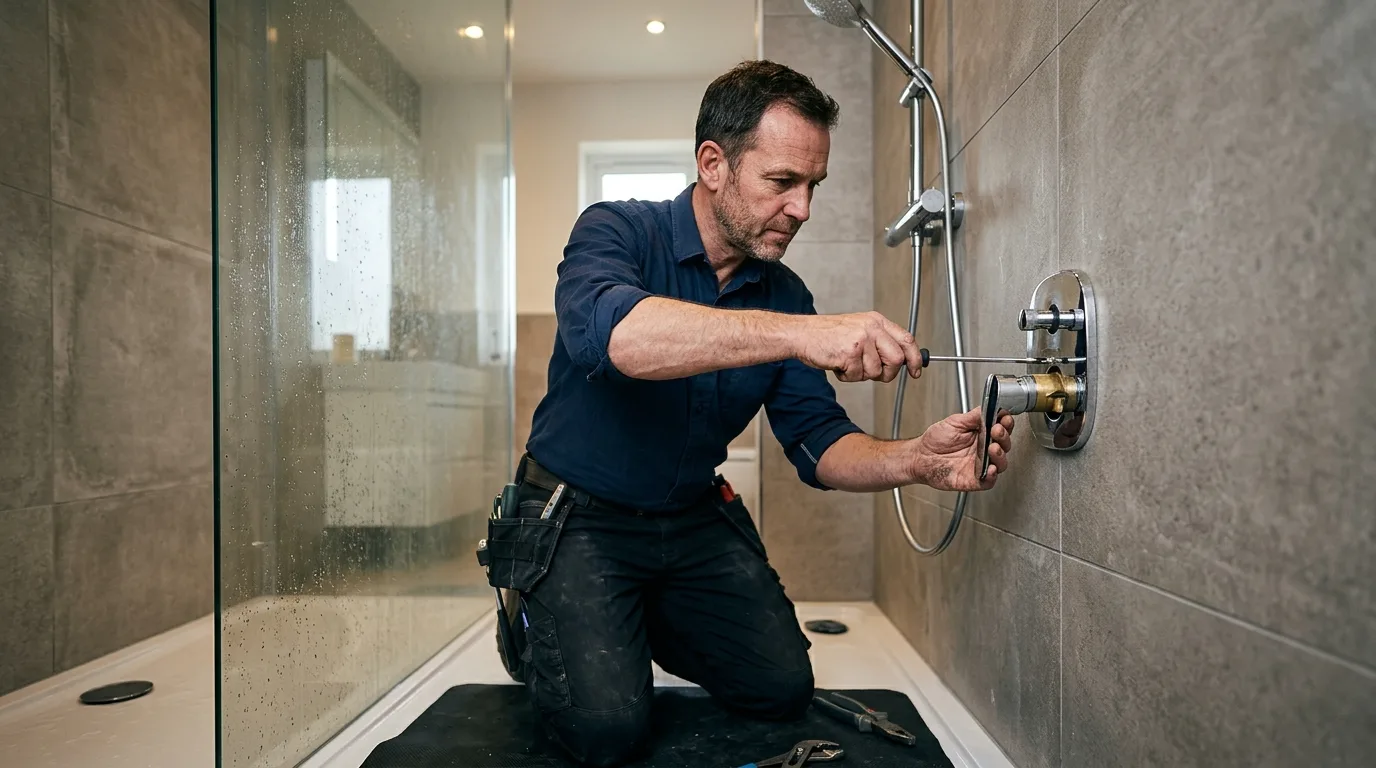
Ask where the access will be
Before any shower valve job, ask one question: can this be reached from behind? If yes, the job is far less disruptive and much cheaper to make good. If no, you want the opening planned before the first cut, especially in a bathroom whose tile is part of why you bought the house.
Behind the tile
A shower leak you can see on a ceiling has been running for a while.
Get it traced and the access planned before anything is cut. We will connect you with a pro who works carefully in old bathrooms.
Scope
What this covers
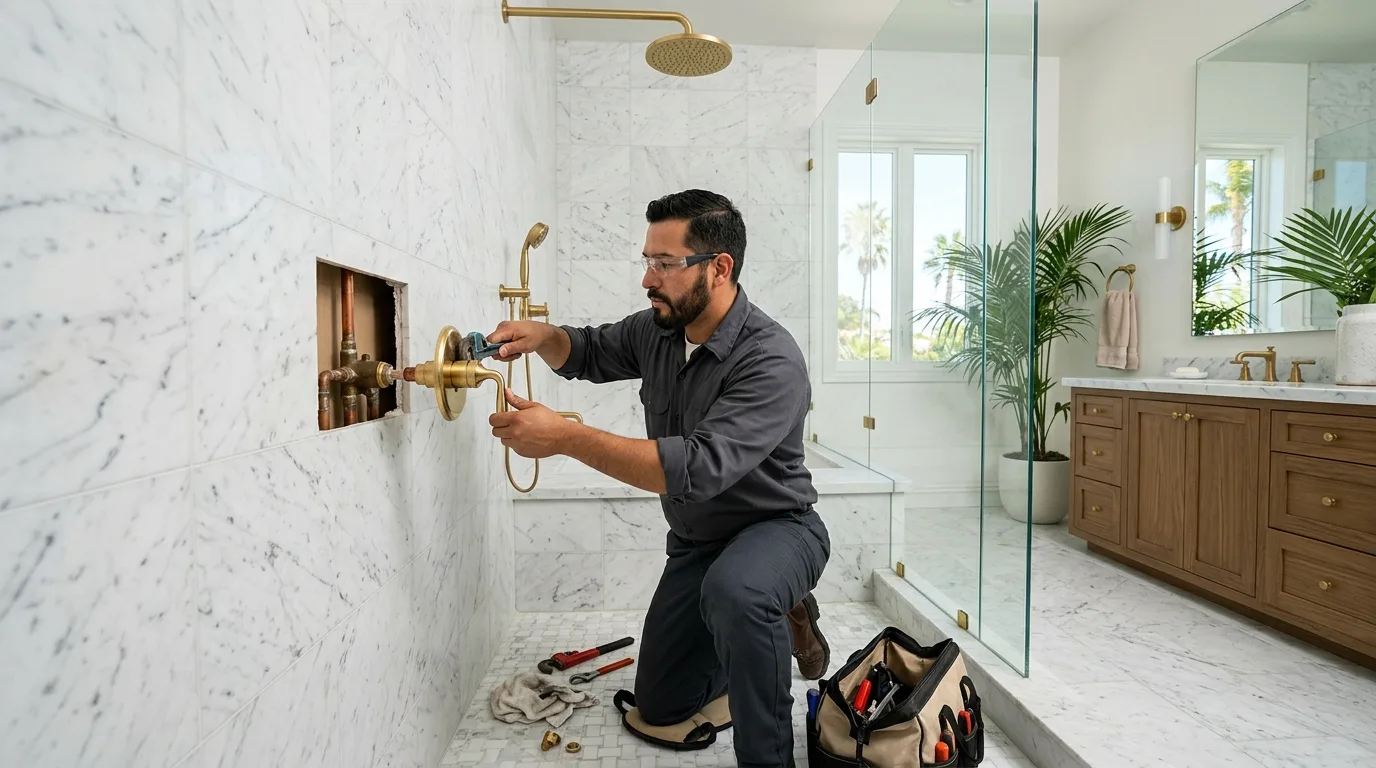
Valves and trim. Cartridge replacement, valve rebuilds, and full valve replacement including upgrading to a pressure-balancing or thermostatic valve. Trim changes where the existing valve can stay.
Diverters and spouts. Tub spout diverters, three-way diverters, hand-shower additions.
Heads and arms. Shower arms, rain heads that need a relocated arm, hand showers and slide bars.
Drains. Tub waste and overflow assemblies, shower drain replacement, trap access and clearing, and drain repairs where a tub has been leaking into the floor.
Tub and shower replacement plumbing. The plumbing side of a tub-to-shower conversion or a new enclosure: valve, drain, and rough-in positions. Tile, waterproofing and glass are other trades, and a good plumber tells you where their part ends.
Cast-iron tubs. Common in the older tracts, extremely heavy, and often best left in place and refinished by a specialist rather than removed. The plumbing around them can usually be renewed without moving the tub at all.
Accessibility work. Grab-bar-friendly layouts, curbless conversions and hand-shower installations, the plumbing side of ageing in place, which comes up often in the postwar tracts where original owners are still in the house.
Money
What changes the price
- Cartridge, rebuild or full valve
- Access from behind or through tile
- Whether the tile can be replaced
- Parts availability for the valve
- Galvanized pipe found behind the wall
- Pan or waterproofing involvement
- Upstairs or ground floor
- Who makes good the wall
Settle the wall question in writing. Plumbing and tile are different trades, and the most common source of unhappiness on a shower job is a homeowner who assumed the opening would be closed up and finished as part of the price.
Ask who closes the wall, and whether the valve can be reached from behind. Two questions, big consequences.
Straight answers
Shower and tub questions worth asking first
Why does my shower go cold when someone flushes a toilet?
That is an old valve without pressure balancing. Modern pressure-balancing and thermostatic valves compensate automatically.
The fix is a valve replacement, which means opening the wall, so the access question matters more than the part.
Can you replace a shower valve without breaking the tile?
Sometimes. If a closet or adjacent room backs onto the valve wall, the work can be done from behind and the tile is untouched.
Where there is no rear access, the opening has to come through the front. In a bathroom with irreplaceable tile that opening is planned carefully and tiles are salvaged where possible.
My shower head has weak spray. Is that the plumbing?
Usually just scale in the head, which this area’s hard water produces steadily. Descaling or replacing the head normally restores it.
If a new head does not help, the valve or the supply is restricting, and that needs looking at.
There is a stain on the ceiling below my bathroom. What now?
Stop using that shower or tub and call. That is water entering the structure, and the source could be the pan, the drain connection, the valve, or a supply line behind tile.
Locating it properly comes first, cutting the ceiling to look is the expensive way round.
Can parts still be bought for a very old shower valve?
Sometimes rebuild kits exist even for discontinued brands. Sometimes they genuinely do not, and replacing the valve body is the only option.
That is a real fork in the road because valve replacement means a larger opening. You should be told which one applies before work starts.
Do you do tub-to-shower conversions?
The plumbing side, yes: valve, drain and rough-in positions. Tile, waterproofing and glass are separate trades.
A good plumber will be explicit about where their scope ends so you can line up the rest.
My cast-iron tub is stained but sound. Does it have to come out?
Usually not. Cast-iron tubs are extremely heavy and often best left in place, the plumbing around them can generally be renewed without moving them.
Refinishing is a specialist trade and frequently the better answer than removal.
Who patches the wall afterwards?
Ask before work begins. Plumbing repair and finish restoration are different trades, and the plumber will tell you exactly what is left open.
In a bathroom with original tile, plan the access route around what can realistically be restored.
Is a slow shower drain a main line problem?
If only that fixture is slow, it is hair and soap in the trap or branch, a straightforward clearing job.
If other fixtures are slow or gurgling at the same time, the problem is downstream and a camera inspection is the sensible next step.
Describe the bathroom and its era. That tells us who to send and how carefully.
Often part of the same job
Related services and neighbourhoods
One number, any hour
Get the valve sorted without losing the tile.
We will connect you with a local plumbing pro who checks for rear access before reaching for a grinder.