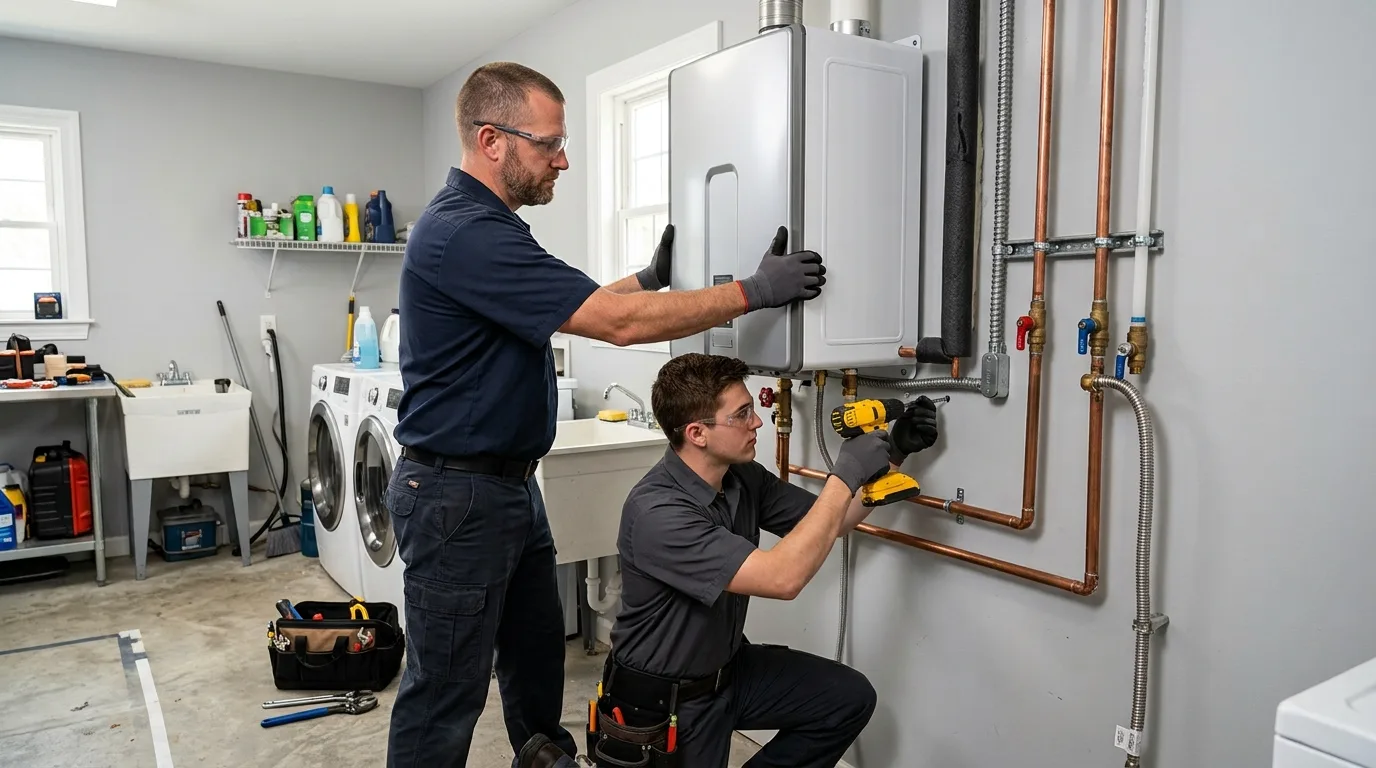
Tankless water heater installation in Orange, CA. The whole cost, up front
Endless hot water is real. So is the gas line upsizing, the sealed vent route and the descaling that hard local water makes non-negotiable. We will tell you when a tank is the better buy.
Ask what the gas supply and venting will cost before choosing a unit. That is where tankless quotes move.
What to expect
Answered 24/7
Every hour, every day, including holidays.
Same-day & emergency
Urgent calls get moved to the front of the queue.
Upfront pricing
A number you approve before work begins.
No hidden fees
The price you agreed to is the price you pay.
Workmanship terms upfront
Ask the plumber what their own workmanship terms are before work starts.
Both sides
What tankless is genuinely good at, and what it is not
Tankless is an excellent product oversold to the wrong houses. Here is the honest version, because the wrong installation is expensive to undo.
Real advantages
Hot water that does not run out, which changes life in a household where showers queue. No standby loss from keeping a tank hot all day. A wall-hung unit reclaims floor space, which matters in a tight closet or a small garage. And no tank means no eventual eighty gallons on the floor when a vessel fails.
Real limitations
Flow rate, not capacity, is the constraint: a unit heats a certain number of gallons per minute by a certain temperature rise, and running two showers plus a dishwasher can exceed it. There is a short delay before hot water arrives, and low-flow draws may not trigger heating at all. Retrofit cost is the bigger issue, a gas tankless unit typically needs a larger gas supply, entirely different venting, and sometimes an electrical circuit, and those three items are where a straightforward-sounding swap becomes a project.
The Orange-specific catch
Hard water. Imported water here scales heat exchangers, and a tankless exchanger is a narrow passage where scale does real damage to both efficiency and lifespan. Manufacturers require periodic descaling, and warranties can depend on it. Factor in either annual service or a softener as part of the true cost, not an optional extra.
Ask what the gas line, the venting and the descaling will actually cost before falling in love with the unit.
Feasibility
The three things that decide whether your house can take one
Gas supply
A tankless unit fires at a far higher input than a tank when it runs. Many older houses have a gas meter and a supply line sized for a tank, a furnace and a range, and adding a tankless unit means checking the whole system: meter capacity, pipe size and length of run to the unit. Sometimes the answer is a larger line from the meter; occasionally it involves the utility. This is the single most common reason a tankless quote comes back much higher than expected, and the most common thing a cheap quote quietly ignores.
Venting
Tankless units use their own sealed venting, usually direct-vent through a wall. You cannot reuse an old atmospheric vent. That means finding an exterior wall route with proper clearance from windows, doors and openings, straightforward in a garage, harder in an interior closet in a 1920s bungalow, and a real design question in an Eichler where the flat roof and glass walls limit where anything can penetrate. In Old Towne, a new exterior vent penetration is exactly the kind of visible change that falls under the city’s Historic Preservation Design Standards, so plan it rather than improvise it.
Water quality and maintenance
With hard water, descaling is scheduled maintenance. Ask for isolation valves with service ports to be fitted at installation; they cost little then and make every future flush quick and cheap. Without them, servicing is an awkward job every time.
Electric tankless deserves a note: whole-house electric units draw very heavily and frequently need a service upgrade, which is why they rarely make sense as a whole-house retrofit here. As a point-of-use unit at a distant bathroom or an ADU, they can be a neat solution.
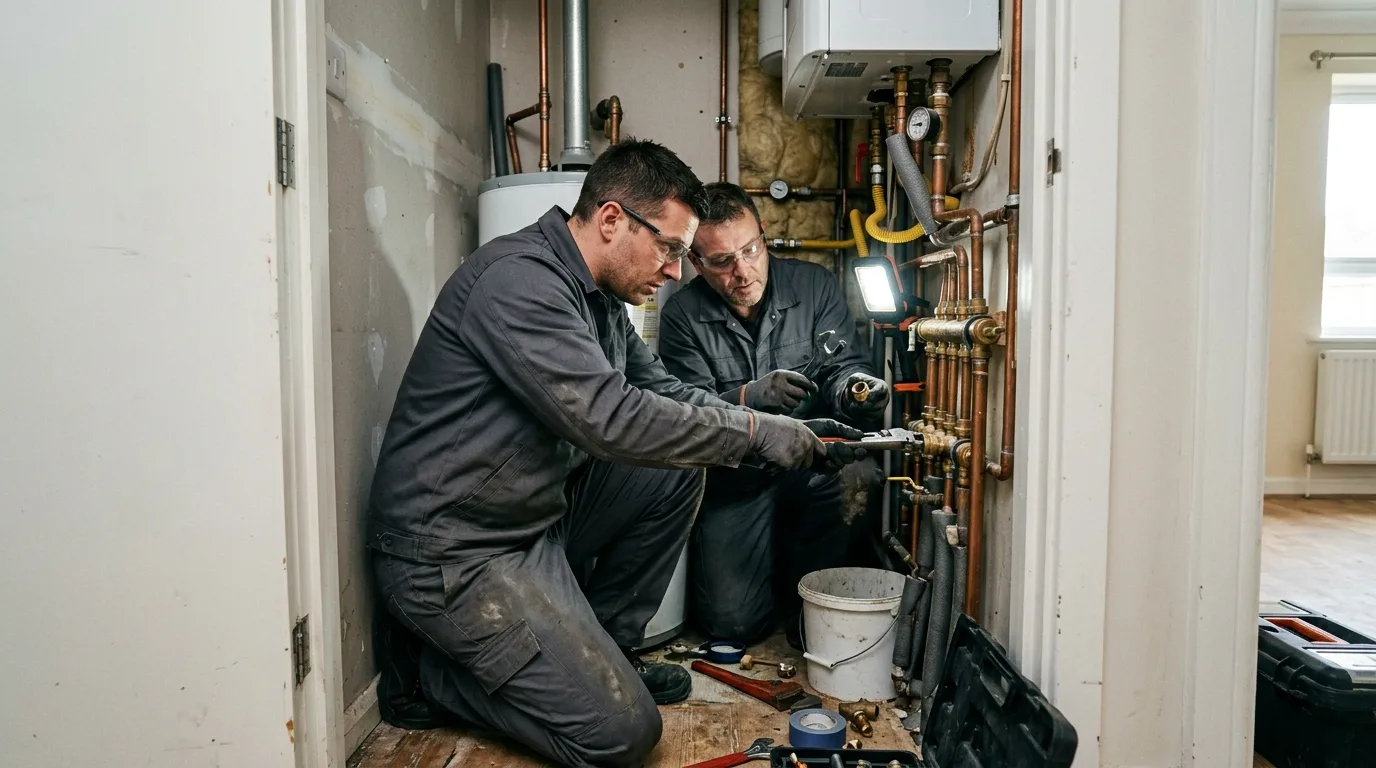
Ask for the isolation valves
Service valves with flush ports, fitted at installation, are the difference between a routine descaling visit and an expensive one. They are inexpensive as part of the install and irritating to add later. If a quote does not mention them, ask why.
Before you commit to tankless
The unit is the cheap part. The gas line and the venting are not.
Get a feasibility check and a real number, with a tank replacement priced beside it for comparison.
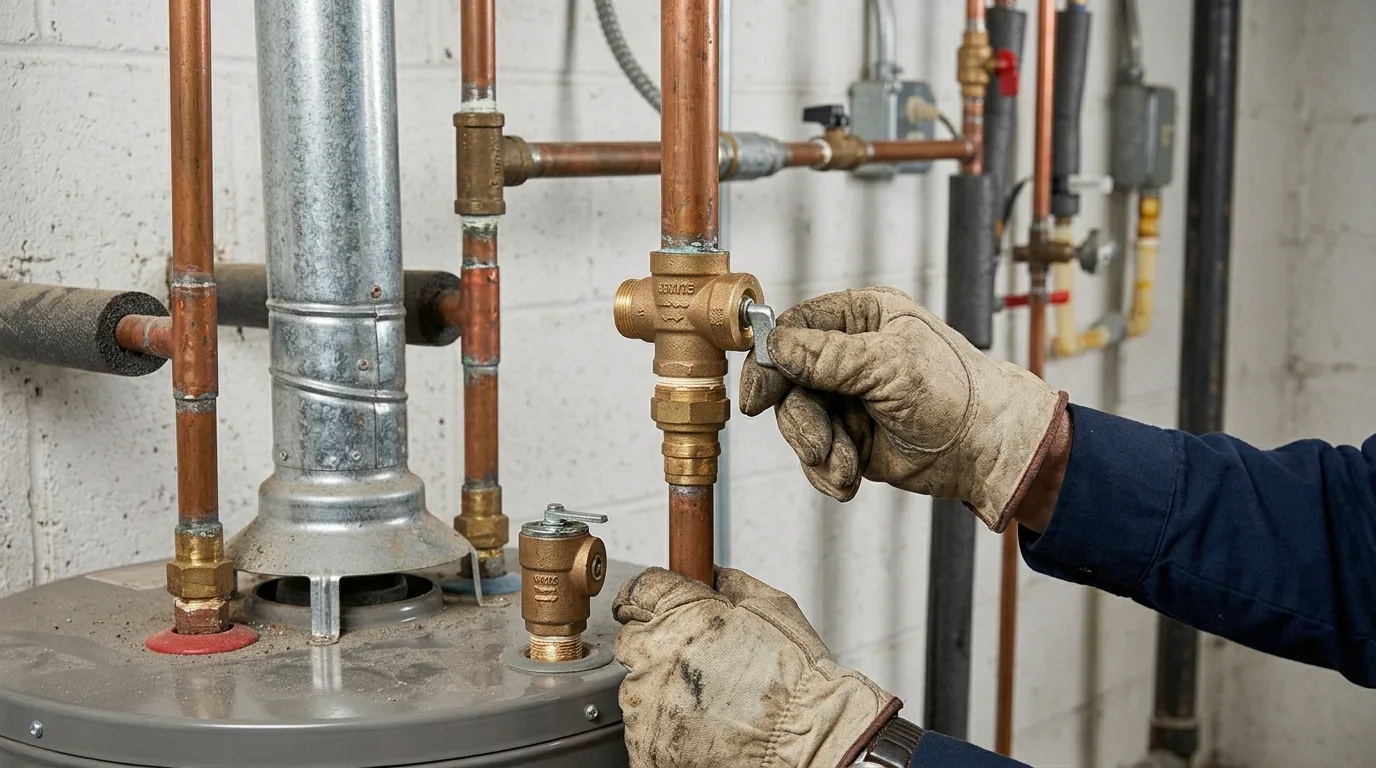
The conversion
What the job involves
Assessment. Gas meter and line capacity, a viable vent route, mounting location, water quality, and how the household actually uses hot water. This is where an honest pro sometimes tells you a tank is the better buy.
Sizing on flow rate. Not gallons of storage but gallons per minute at the temperature rise this climate needs. Undersizing is the most common cause of tankless disappointment: it does not run out of hot water, it runs out of simultaneous hot water.
Remove the old unit, mount the new one. Wall-hung, with the clearances the manufacturer requires and access left for future service.
Gas, water and venting. New or upsized gas supply as required, water connections with isolation and service valves, condensate drainage on a condensing unit, and the sealed vent run to an approved termination.
Commission and demonstrate. Fired, tested, temperature set, and; this part matters, shown to you. You should leave knowing how to check the filter, what the error codes mean and when it needs descaling.
Permit and inspection. Gas and venting work is permitted work. That inspection is your evidence it was done properly.
Money
What drives the cost of going tankless
- Gas line upsizing or a new run
- Meter capacity and utility involvement
- Vent route and termination
- Condensing or non-condensing unit
- Flow rate required
- Mounting location and access
- Isolation and service valves
- Softener or scale protection
- Recirculation, if you want it
- Permit and inspection
The fair comparison is not unit against unit. It is total installed cost plus ten years of maintenance, against a tank replacement plus its maintenance. In a house with adequate gas supply, an easy vent route and heavy simultaneous demand, tankless often wins comfortably. In a 1920s bungalow needing a new gas line, a new vent penetration on a historic frontage and annual descaling for hard water, a well-installed tank is frequently the better decision, and a good plumber will say so.
Get both options quoted side by side. If only one is offered, ask for the other.
Straight answers
Tankless questions, answered without the brochure
Will tankless actually give me endless hot water?
Continuous, yes; it does not run out the way a tank does. But it is limited by flow rate, so two showers plus a dishwasher can exceed what the unit can heat at once.
Sizing on your peak simultaneous demand is what prevents disappointment.
Why is the quote so much higher than a tank replacement?
Usually the gas line and the venting. A tankless unit fires at a much higher input than a tank, so the supply often needs upsizing, and it needs its own sealed vent; you cannot reuse the old one.
Any quote that ignores those two items is not a complete quote.
Does hard water affect a tankless unit?
Significantly, and this area has hard water. Scale builds in the heat exchanger, reducing efficiency and lifespan, and manufacturers require periodic descaling, sometimes as a warranty condition.
Budget for annual service, a softener, or both. Treat it as part of the cost of ownership.
How long does a tankless unit last?
Well maintained, longer than a typical tank; that is one of the main arguments for it. Neglected in hard water, that advantage disappears quickly.
The maintenance is not optional here; it is the deal.
Can I put it where my old tank was?
Sometimes, but the vent route matters more than the footprint. Tankless units vent through a wall with clearance requirements from windows, doors and openings.
A garage or exterior wall is usually easy. An interior closet in an older house, or an Eichler with a flat roof and glass walls, needs the route designed rather than assumed.
Why do I wait longer for hot water at the tap?
There is a brief delay while the unit fires, on top of the normal time for hot water to travel the pipe. On a long run to a distant bathroom that feels like a step backwards.
A recirculation option addresses it, at extra cost and some energy use. Worth discussing on a large or spread-out house.
Is electric tankless an option?
Rarely as a whole-house retrofit, the electrical demand usually means a service upgrade that outweighs the benefit.
As a point-of-use unit at a far bathroom, a garage sink or an ADU, they can work well.
Do I need a permit?
Yes. Gas and venting work is permitted work, and the inspection is your evidence it was done correctly.
In Old Towne, a new exterior vent penetration is a visible change and falls under the city’s Historic Preservation Design Standards. Plan it in advance; we do not obtain historic approvals for you.
Will it lower my gas bill?
It removes standby losses from keeping a tank hot, which is a real saving. How much depends on your usage, and on a heavy-use household the saving is usually modest rather than dramatic.
If the primary goal is a lower bill rather than endless hot water, ask for the numbers before assuming.
Is tankless the right choice for my house?
Sometimes, honestly. Adequate gas supply, an easy vent route and heavy simultaneous demand make it a strong choice. A new gas line, a difficult vent and hard water can make a well-installed tank the better decision.
Get both priced. A pro willing to recommend the tank is a pro worth using.
Tell us where the current heater sits and how many showers run at once. That starts the feasibility conversation.
Often part of the same job
Related services and neighbourhoods
One number, any hour
Find out if your house is actually a candidate.
We will connect you with a local plumbing pro who checks gas and venting first and prices a tank beside it.